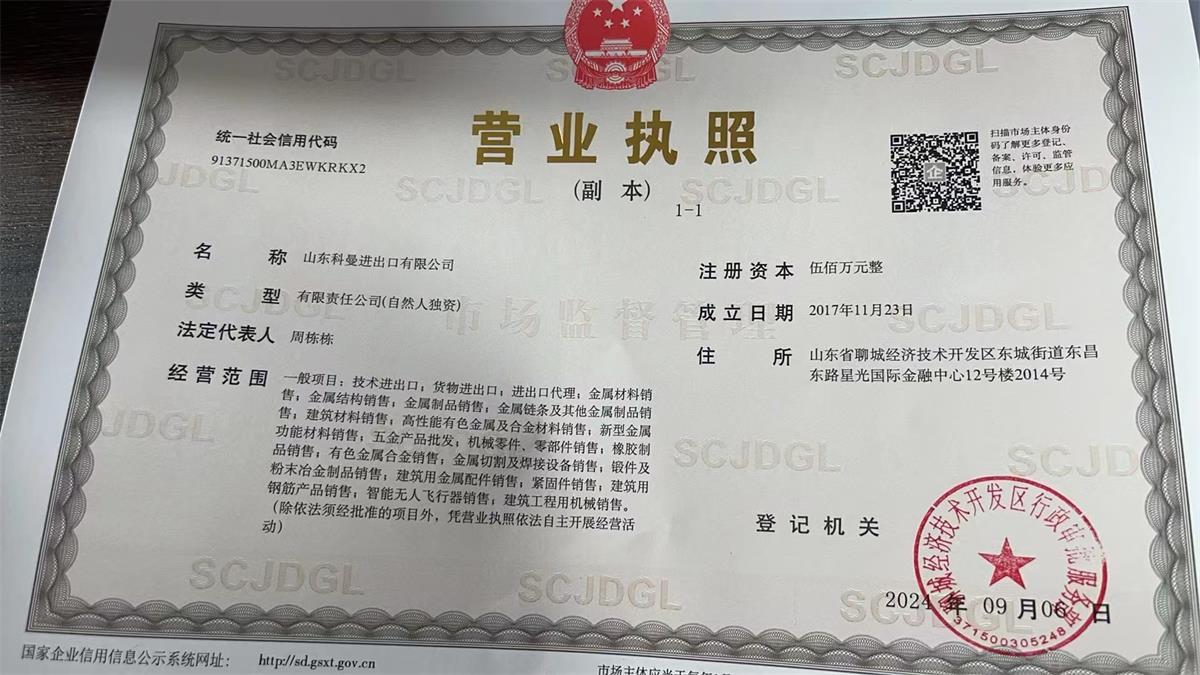
Address:Shandong Keman Import and Export Co., Ltd.

Galvanized Plates: Key Insights for the Metallurgy and Energy Industry
Release time:
2025-11-25
Galvanized plates play a pivotal role in the metallurgy and energy industry, offering a combination of durability, corrosion resistance, and versatility
Galvanized plates, commonly referred to as galvanized steel sheets, are a crucial material in the metallurgy and energy industry. These plates are coated with a layer of zinc to provide enhanced corrosion resistance, making them ideal for a variety of applications, including construction, automotive, and energy production. Understanding the properties and production processes of galvanized plates is essential for industry professionals looking to improve their product offerings and operational efficiency.

The process of galvanization involves immersing steel plates in molten zinc or applying zinc through electroplating methods. This creates a protective barrier that prevents rust and corrosion, significantly extending the lifespan of the metal. The thickness of the zinc coating and the method of application can vary, influencing the performance characteristics of the galvanized plate. For example, hot-dip galvanization typically results in a thicker coating compared to electro-galvanization, making it suitable for harsher environments.
One of the primary benefits of using galvanized plates is their excellent durability. The zinc coating not only protects the underlying steel from environmental factors but also provides a sacrificial layer that will corrode before the steel does. This characteristic is particularly advantageous in applications where exposure to moisture, chemicals, or extreme weather conditions is common. Additionally, galvanized plates require minimal maintenance, further enhancing their appeal for long-term projects.
In the energy sector, galvanized plates are often used in the fabrication of components such as solar panel frames, wind turbine towers, and electrical enclosures. Their resistance to rust and corrosion ensures that these components can withstand the rigors of outdoor installations, thereby contributing to the reliability and efficiency of energy systems. Furthermore, the lightweight nature of galvanized plates facilitates easier handling and installation, which can lead to reduced labor costs.
When selecting galvanized plates for specific applications, it is vital to consider factors such as the required coating thickness, mechanical properties, and intended use. Industry standards and specifications, such as ASTM A123 and ASTM A653, provide guidelines for the quality and performance of galvanized steel products. By adhering to these standards, professionals can ensure that the galvanized plates they use meet the necessary safety and performance benchmarks.
Galvanized plates play a pivotal role in the metallurgy and energy industry, offering a combination of durability, corrosion resistance, and versatility. By understanding the critical aspects of galvanized plates, industry professionals can make informed decisions that enhance their project outcomes and contribute to overall efficiency and sustainability in their operations.
Latest News
Innovative Applications of Carbon Steel Plates in Building Designs
Innovative Applications of Carbon Steel Plates in Building Designs Carbon steel plates have emerged as a cornerstone material in the construction industry, gaining acclaim for their versatility, strength, and aesthetic potential. As the demand for innovative design solutions escalates, architects and builders are increasingly incorporating carbon steel plates into their projects. This article expl
2026-09-22
Understanding A514 Carbon Steel Plate: Key Characteristics and Applications
A514 Carbon Steel Plate is a high-yield strength steel that has become a preferred choice in various industrial applications, particularly in the fields of metallurgy and energy. This type of steel is known for its excellent mechanical properties, making it suitable for demanding environments where strength and durability are paramount. One of the key characteristics of A514 Carbon Steel Plate is
2026-09-17
How A387 Carbon Alloy Steel Plate Enhances Structural Integrity in Construction
How A387 Carbon Alloy Steel Plate Enhances Structural Integrity in Construction Table of Contents 1. Introduction to A387 Carbon Alloy Steel Plate 2. What is A387 Carbon Alloy Steel? 3. Key Properties of A387 Carbon Alloy Steel Plates 4. Manufacturing Process of A387 Steel Plates 5. Applications of A387 Carbon Alloy Steel Plates 6. Advantages of Using A387 Carbon Alloy Ste
2026-09-12
Understanding A285 Carbon Steel Pressure Plates: Essential Insights for Construction and Design
A285 Carbon Steel Pressure Plates are primarily used in pressure vessel fabrication and construction applications. This type of steel is known for its good weldability and formability, making it a favorable choice for various structural components. The ASTM A285 standard specifically governs the specifications for carbon steel plates intended for low-pressure service. One of the key characteristic
2026-09-07
The Role of 5A05 Aluminum Plate in Enhancing Building Aesthetics
The Role of 5A05 Aluminum Plate in Enhancing Building Aesthetics Table of Contents 1. Introduction to 5A05 Aluminum Plates 2. Properties of 5A05 Aluminum Plates 3. Applications of 5A05 Aluminum Plates in Architecture 4. Aesthetic Advantages of Using 5A05 Aluminum Plates 5. Sustainability and Environmental Impact 6. Installation and Maintenance of 5A05 Aluminum Plates 7
2026-09-02
Understanding B500 Steel Reinforcement: Key Insights for Professionals in Construction Machinery
B500 steel reinforcement is a critical component in the construction industry, particularly in manufacturing and processing machinery for engineering and construction projects. This high-strength steel bar is widely used in reinforced concrete structures, providing the necessary tensile strength to support heavy loads and withstand various stresses. One of the defining characteristics of B500 stee
2026-08-28


Copyright 2025 : Shandong Keman Import and Export Co., Ltd. Powered by:CEglobal SEO BUSINESS LICENSE