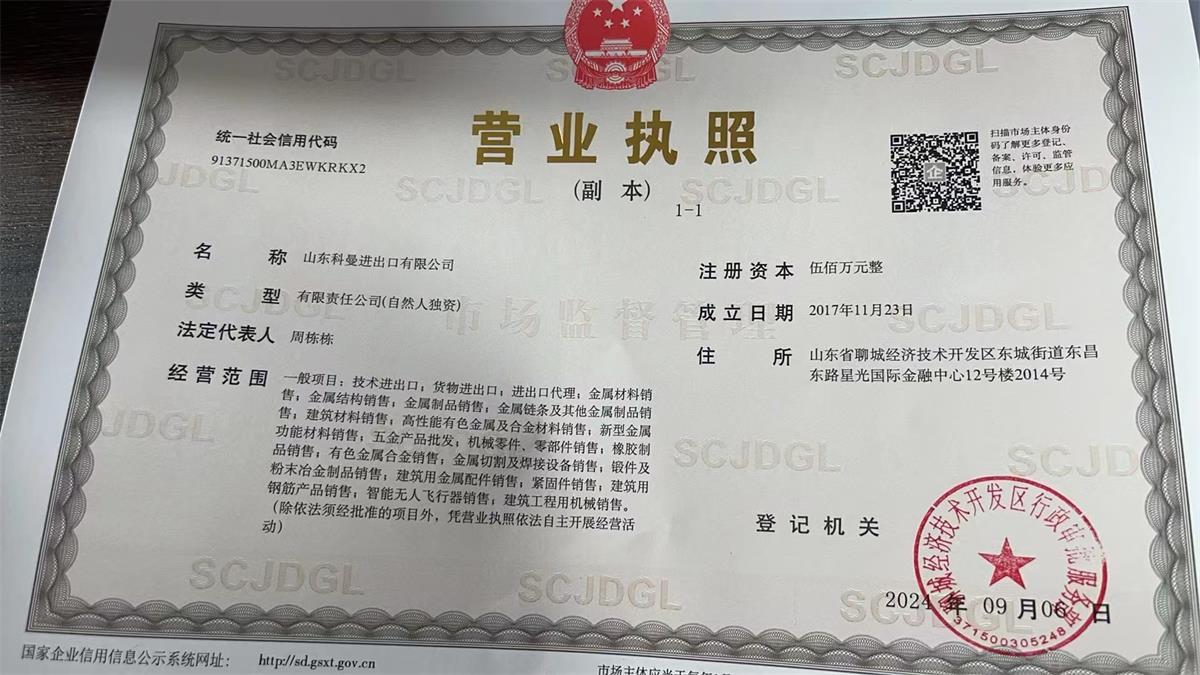
Address:Shandong Keman Import and Export Co., Ltd.

Steel Plate: The Backbone of Modern Industry
Release time:
2025-05-04
Explore the multifaceted world of steel plates, their applications, and why they are crucial in today's industry.
Understanding Steel Plates
When you think about the backbone of modern construction and manufacturing, steel plate comes to mind. This versatile material is not just a flat piece of metal; it's a game-changer in numerous industries. Whether it's in the construction of skyscrapers, ships, or bridges, steel plates play a pivotal role. But what makes these plates so special? Let’s dive in!
What Exactly is a Steel Plate?
In the simplest terms, a steel plate is a flat piece of steel that has been rolled into a specific thickness. Ranging from a mere 1/4 inch to several inches thick, these plates are manufactured through various processes, giving them different properties and qualities. They come in a variety of grades and types, each suited for different applications. Pretty neat, right?
Applications Galore!
So, where do we find steel plates in action? Let’s break it down:
- Construction: From beams to columns, steel plates provide the strength needed to support heavy structures.
- Transportation: Think of cargo ships and trucks; they rely on steel plates for durability and safety.
- Manufacturing: Steel plates are essential in the production of machinery and equipment.
- Energy Sector: In the power industry, these plates are used in the construction of wind turbines and oil rigs.
Why Steel Plates? The Benefits
Now, you might wonder, why choose steel plates over other materials? Well, here are some compelling reasons:
- Durability: Steel is tough! It can withstand extreme conditions without cracking or breaking.
- Versatility: Available in various grades and finishes, steel plates can be tailored to meet specific needs.
- Cost-Effective: When it comes to the lifespan and performance, steel plates offer great value for money.
The Manufacturing Process
Let’s take a quick peek behind the curtain at how these plates are made:
- Steelmaking: Raw materials like iron ore and scrap are melted in a blast furnace.
- Forming: The molten steel is then poured into molds or rolled into sheets and plates.
- Finishing: After cooling, the plates undergo various treatments for strength and durability.
Trends in Steel Plate Usage
As industries evolve, so do the applications of steel plates. For instance, there’s a growing trend toward using high-strength, low-alloy (HSLA) steel plates, particularly in the automotive and aerospace industries. These plates are lighter yet stronger, which is a win-win for manufacturers looking to reduce weight without sacrificing safety.
Future Prospects
Looking ahead, the future of steel plates seems bright! With advancements in technology, we can expect even more innovative applications and improved manufacturing processes. The rise of sustainability trends also means that recycled steel is becoming a hot commodity, further emphasizing the importance of steel plates in eco-friendly construction practices.
Conclusion
In the grand tapestry of modern industry, steel plates are undoubtedly a crucial thread. They not only provide the strength and durability needed for various applications but also adapt to the ever-changing demands of technology and sustainability. So, the next time you see a building, bridge, or even a car, take a moment to appreciate the unsung hero behind it all—steel plates!
Latest News
Innovative Applications of Carbon Steel Plates in Building Designs
Innovative Applications of Carbon Steel Plates in Building Designs Carbon steel plates have emerged as a cornerstone material in the construction industry, gaining acclaim for their versatility, strength, and aesthetic potential. As the demand for innovative design solutions escalates, architects and builders are increasingly incorporating carbon steel plates into their projects. This article expl
2026-09-22
Understanding A514 Carbon Steel Plate: Key Characteristics and Applications
A514 Carbon Steel Plate is a high-yield strength steel that has become a preferred choice in various industrial applications, particularly in the fields of metallurgy and energy. This type of steel is known for its excellent mechanical properties, making it suitable for demanding environments where strength and durability are paramount. One of the key characteristics of A514 Carbon Steel Plate is
2026-09-17
How A387 Carbon Alloy Steel Plate Enhances Structural Integrity in Construction
How A387 Carbon Alloy Steel Plate Enhances Structural Integrity in Construction Table of Contents 1. Introduction to A387 Carbon Alloy Steel Plate 2. What is A387 Carbon Alloy Steel? 3. Key Properties of A387 Carbon Alloy Steel Plates 4. Manufacturing Process of A387 Steel Plates 5. Applications of A387 Carbon Alloy Steel Plates 6. Advantages of Using A387 Carbon Alloy Ste
2026-09-12
Understanding A285 Carbon Steel Pressure Plates: Essential Insights for Construction and Design
A285 Carbon Steel Pressure Plates are primarily used in pressure vessel fabrication and construction applications. This type of steel is known for its good weldability and formability, making it a favorable choice for various structural components. The ASTM A285 standard specifically governs the specifications for carbon steel plates intended for low-pressure service. One of the key characteristic
2026-09-07
The Role of 5A05 Aluminum Plate in Enhancing Building Aesthetics
The Role of 5A05 Aluminum Plate in Enhancing Building Aesthetics Table of Contents 1. Introduction to 5A05 Aluminum Plates 2. Properties of 5A05 Aluminum Plates 3. Applications of 5A05 Aluminum Plates in Architecture 4. Aesthetic Advantages of Using 5A05 Aluminum Plates 5. Sustainability and Environmental Impact 6. Installation and Maintenance of 5A05 Aluminum Plates 7
2026-09-02
Understanding B500 Steel Reinforcement: Key Insights for Professionals in Construction Machinery
B500 steel reinforcement is a critical component in the construction industry, particularly in manufacturing and processing machinery for engineering and construction projects. This high-strength steel bar is widely used in reinforced concrete structures, providing the necessary tensile strength to support heavy loads and withstand various stresses. One of the defining characteristics of B500 stee
2026-08-28


Copyright 2025 : Shandong Keman Import and Export Co., Ltd. Powered by:CEglobal SEO BUSINESS LICENSE