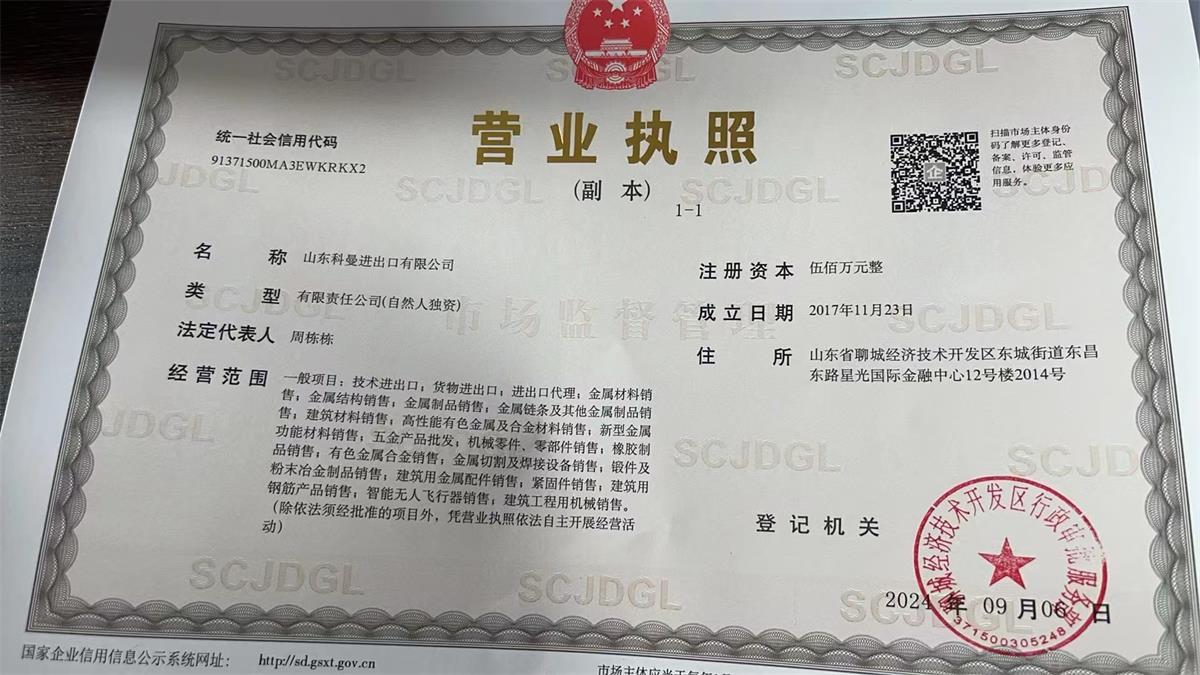
Address:Shandong Keman Import and Export Co., Ltd.

Exploring the Strength: Benefits of SAE/AISI 4000 Series Alloy Steel
Release time:
2025-05-09
Exploring the Strength: Benefits of SAE/AISI 4000 Series Alloy Steel Table of Contents 1. Introduction to SAE/AISI 4000 Series Alloy Steel 2. Key Characteristics of SAE/AISI 4000 Series Alloy Steel 2.1 Chemical Composition 2.2 Mechanical Properties 2.3 Heat Treatment Capabilities 3. Common Applications of SAE/AISI 4000 Series Alloy
Exploring the Strength: Benefits of SAE/AISI 4000 Series Alloy Steel
Table of Contents
- 1. Introduction to SAE/AISI 4000 Series Alloy Steel
- 2. Key Characteristics of SAE/AISI 4000 Series Alloy Steel
- 3. Common Applications of SAE/AISI 4000 Series Alloy Steel
- 4. Advantages of Using SAE/AISI 4000 Series Alloy Steel
- 5. Manufacturing Process of SAE/AISI 4000 Series Alloy Steel
- 6. Future Trends in SAE/AISI 4000 Series Alloy Steel Development
- 7. Frequently Asked Questions (FAQs)
- 8. Conclusion
1. Introduction to SAE/AISI 4000 Series Alloy Steel
The SAE/AISI 4000 series alloy steel is a crucial material in various industries due to its impressive mechanical properties and adaptability. Composed primarily of iron and carbon, this series is enriched with other alloying elements, which enhance its characteristics. The unique balance of these elements results in high tensile strength, excellent wear resistance, and superior toughness. Consequently, SAE/AISI 4000 series alloy steel is widely used in demanding applications where durability and reliability are paramount.
2. Key Characteristics of SAE/AISI 4000 Series Alloy Steel
Understanding the essential characteristics of SAE/AISI 4000 series alloy steel is vital for industries that utilize this material. The following sections highlight its chemical composition, mechanical properties, and heat treatment capabilities.
2.1 Chemical Composition
The SAE/AISI 4000 series is primarily composed of iron, carbon, and several alloying elements such as manganese, chromium, and molybdenum. This combination results in various grades within the series, each tailored for specific applications. For instance, the presence of chromium enhances corrosion resistance, while molybdenum improves strength at high temperatures. The typical carbon content ranges from 0.20% to 0.55%, which contributes to the overall hardness and strength of the alloy.
2.2 Mechanical Properties
SAE/AISI 4000 series alloy steels exhibit outstanding mechanical properties, making them suitable for high-stress applications. Key properties include:
- **Tensile Strength**: This series can achieve a tensile strength range of 600 to 900 MPa, depending on the specific grade and heat treatment.
- **Yield Strength**: The yield strength typically lies between 350 to 600 MPa, providing excellent load-bearing capabilities.
- **Impact Toughness**: Remarkably tough, this alloy can withstand sudden impacts and shocks, which is critical in many applications.
- **Hardness**: The hardness of SAE/AISI 4000 series alloy steel can be tailored through heat treatment processes, making it adaptable to various needs.
2.3 Heat Treatment Capabilities
Heat treatment plays a significant role in enhancing the properties of SAE/AISI 4000 series alloy steel. Processes such as quenching and tempering are often employed to achieve the desired hardness and strength levels. For example, quenching in oil or water followed by tempering can significantly increase toughness while maintaining hardness. This adaptability makes it an ideal choice for components subjected to heavy wear and tear.
3. Common Applications of SAE/AISI 4000 Series Alloy Steel
The versatile nature of SAE/AISI 4000 series alloy steel makes it suitable for various applications across multiple industries. Below are some notable sectors where this alloy is predominantly used.
3.1 Automotive Industry
In the automotive sector, SAE/AISI 4000 series alloy steel is commonly employed for manufacturing gears, shafts, and various structural components. Its outstanding strength-to-weight ratio ensures that vehicles remain lightweight yet durable, which is essential for fuel efficiency and safety.
3.2 Aerospace Applications
The aerospace industry requires materials that can withstand extreme conditions. SAE/AISI 4000 series alloy steel meets these demands with its excellent strength and fatigue resistance. Components such as landing gear and engine mounts are often made from this alloy due to its reliability and performance.
3.3 Construction and Heavy Machinery
In construction, SAE/AISI 4000 series alloy steel is frequently used in heavy machinery, tools, and structural components. Its durability ensures that machinery can endure rigorous operational conditions while maintaining functionality.
4. Advantages of Using SAE/AISI 4000 Series Alloy Steel
Several advantages make SAE/AISI 4000 series alloy steel a preferred choice in various industries. Below, we explore the most notable benefits.
4.1 Cost-Effectiveness
When compared to other high-strength materials, SAE/AISI 4000 series alloy steel offers a more cost-effective solution without compromising quality. The balance of performance and affordability makes it an attractive choice for manufacturers.
4.2 Durability and Strength
One of the primary reasons for the popularity of SAE/AISI 4000 series alloy steel is its remarkable durability. This alloy can withstand harsh environmental conditions, mechanical stresses, and wear, making it an ideal material for various applications.
5. Manufacturing Process of SAE/AISI 4000 Series Alloy Steel
The manufacturing process of SAE/AISI 4000 series alloy steel involves several key stages, from raw material selection to final product fabrication. The process typically includes:
1. **Raw Material Selection**: High-quality iron and alloying elements are sourced to ensure optimal properties.
2. **Melting and Casting**: The raw materials are melted in an electric arc furnace and cast into the desired shape.
3. **Forming**: The cast materials are then formed through processes such as forging or machining to create specific components.
4. **Heat Treatment**: Enhancements in strength and durability are achieved through various heat treatment methods.
5. **Finishing**: Final surface treatments are applied to improve corrosion resistance and overall performance.
6. Future Trends in SAE/AISI 4000 Series Alloy Steel Development
As industries evolve, the demand for advanced materials continues to grow. Future trends in SAE/AISI 4000 series alloy steel development may include:
- **Enhanced Alloys**: Ongoing research aims to develop new alloys with improved properties for specialized applications.
- **Sustainability**: A focus on eco-friendly manufacturing processes and recycling practices to reduce environmental impact.
- **Smart Materials**: Integrating technology to create smart alloys that can adapt to environmental changes, enhancing performance in real-time.
7. Frequently Asked Questions (FAQs)
1. What are the primary uses of SAE/AISI 4000 series alloy steel?
SAE/AISI 4000 series alloy steel is used in automotive, aerospace, construction, and heavy machinery applications.
2. How does heat treatment affect SAE/AISI 4000 series alloy steel?
Heat treatment enhances the hardness and toughness of the alloy, making it suitable for high-stress applications.
3. What are the benefits of using SAE/AISI 4000 series alloy steel?
This alloy offers excellent strength, durability, cost-effectiveness, and versatility for various applications.
4. Is SAE/AISI 4000 series alloy steel environmentally friendly?
Manufacturers are increasingly adopting sustainable practices to reduce the environmental impact of producing this alloy.
5. Can SAE/AISI 4000 series alloy steel be recycled?
Yes, alloy steel can be recycled, making it a sustainable choice for many industries.
8. Conclusion
In summary, SAE/AISI 4000 series alloy steel stands out as a vital material in the metallurgy and energy sectors, known for its impressive strength, durability, and versatility. With its various applications across multiple industries, the benefits of this alloy continue to drive innovation and development. As we move toward a more sustainable future, ongoing advancements in alloy technology will further enhance the performance and environmental viability of SAE/AISI 4000 series alloy steel, ensuring its relevance for years to come.
Latest News
Innovative Applications of Carbon Steel Plates in Building Designs
Innovative Applications of Carbon Steel Plates in Building Designs Carbon steel plates have emerged as a cornerstone material in the construction industry, gaining acclaim for their versatility, strength, and aesthetic potential. As the demand for innovative design solutions escalates, architects and builders are increasingly incorporating carbon steel plates into their projects. This article expl
2026-09-22
Understanding A514 Carbon Steel Plate: Key Characteristics and Applications
A514 Carbon Steel Plate is a high-yield strength steel that has become a preferred choice in various industrial applications, particularly in the fields of metallurgy and energy. This type of steel is known for its excellent mechanical properties, making it suitable for demanding environments where strength and durability are paramount. One of the key characteristics of A514 Carbon Steel Plate is
2026-09-17
How A387 Carbon Alloy Steel Plate Enhances Structural Integrity in Construction
How A387 Carbon Alloy Steel Plate Enhances Structural Integrity in Construction Table of Contents 1. Introduction to A387 Carbon Alloy Steel Plate 2. What is A387 Carbon Alloy Steel? 3. Key Properties of A387 Carbon Alloy Steel Plates 4. Manufacturing Process of A387 Steel Plates 5. Applications of A387 Carbon Alloy Steel Plates 6. Advantages of Using A387 Carbon Alloy Ste
2026-09-12
Understanding A285 Carbon Steel Pressure Plates: Essential Insights for Construction and Design
A285 Carbon Steel Pressure Plates are primarily used in pressure vessel fabrication and construction applications. This type of steel is known for its good weldability and formability, making it a favorable choice for various structural components. The ASTM A285 standard specifically governs the specifications for carbon steel plates intended for low-pressure service. One of the key characteristic
2026-09-07
The Role of 5A05 Aluminum Plate in Enhancing Building Aesthetics
The Role of 5A05 Aluminum Plate in Enhancing Building Aesthetics Table of Contents 1. Introduction to 5A05 Aluminum Plates 2. Properties of 5A05 Aluminum Plates 3. Applications of 5A05 Aluminum Plates in Architecture 4. Aesthetic Advantages of Using 5A05 Aluminum Plates 5. Sustainability and Environmental Impact 6. Installation and Maintenance of 5A05 Aluminum Plates 7
2026-09-02
Understanding B500 Steel Reinforcement: Key Insights for Professionals in Construction Machinery
B500 steel reinforcement is a critical component in the construction industry, particularly in manufacturing and processing machinery for engineering and construction projects. This high-strength steel bar is widely used in reinforced concrete structures, providing the necessary tensile strength to support heavy loads and withstand various stresses. One of the defining characteristics of B500 stee
2026-08-28


Copyright 2025 : Shandong Keman Import and Export Co., Ltd. Powered by:CEglobal SEO BUSINESS LICENSE