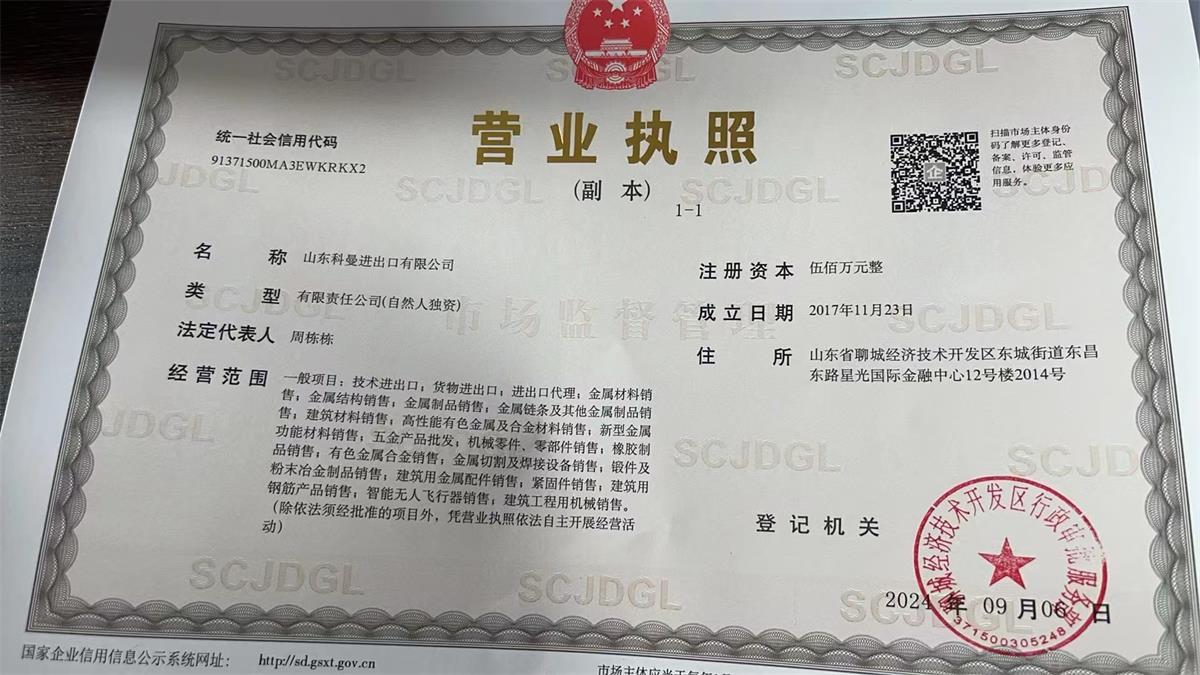
Address:Shandong Keman Import and Export Co., Ltd.

Unveiling the Strength: How Steel Plate Works Wonders in Modern Construction
Release time:
2025-05-13
Discover the fascinating workings of steel plates and their pivotal role in construction and design.
The Marvel of Steel Plate
When it comes to construction, strength and durability are non-negotiable. Enter the steel plate—a true heavyweight champion in the realm of materials. But what exactly is it, and how does it work? Buckle up, because we’re about to dive into the riveting world of steel plates!
What is a Steel Plate?
Simply put, a steel plate is a flat piece of steel that’s thicker than a sheet but thinner than a beam. It typically measures anywhere from a quarter inch to several inches thick. Its wide-ranging applications—from buildings and bridges to ships and heavy machinery—make it an indispensable element in modern construction.
How Do Steel Plates Work?
Alright, let’s break it down. The functionality of a steel plate hinges on its composition and structural properties. Made from iron and carbon, steel plates boast incredible tensile strength, meaning they can withstand significant pulling forces. This property is what allows them to bear heavy loads without bending or breaking.
Strength in Numbers
Ever heard the phrase, "the whole is greater than the sum of its parts?" Well, in the case of steel plates, this couldn’t be more accurate! When used in conjunction with other materials, they enhance the overall strength and stability of the structure. For instance, combining steel plates with concrete creates a composite material that’s both resilient and versatile.
The Manufacturing Process
Now, you might be wondering, "How are these marvelous plates made?" The answer is a blend of science and technology. The process starts with molten steel, which is poured into molds to form slabs. These slabs are then rolled out into plates of the desired thickness. It’s a hot and heavy business, but the results are worth it!
Finishing Touches
After rolling, steel plates undergo various finishing processes such as cutting, welding, or coating. Each of these steps is crucial; they not only dictate the plate’s final form but also enhance its resistance to corrosion and wear. Talk about a glow-up!
Applications Galore
So, where exactly can you find these steel plates? The answer is pretty much everywhere! From skyscrapers scraping the sky to the bridges that connect us, steel plates are the unsung heroes. They’re also used in the manufacturing of automobiles and machinery, making them a cornerstone of modern industry.
Why Choose Steel Plates?
Let’s face it: there are plenty of materials out there. So, why go with steel plates? Well, their strength, durability, and versatility make them a top choice. Plus, they’re recyclable, which is a win-win for both builders and the environment!
The Future of Steel Plates
As technology advances, the future of steel plates looks bright. Innovations in alloying techniques and fabrication processes are paving the way for even stronger and lighter plates. Who knew that such a simple piece of metal could have such a profound impact on our world?
Final Thoughts
In conclusion, the steel plate is more than just a piece of metal; it’s a cornerstone of modern construction and industry. Its strength, versatility, and adaptability ensure that it will remain a critical component for years to come. So, next time you marvel at a skyscraper or cross a sturdy bridge, remember the incredible journey of the steel plate that made it all possible!
Latest News
Innovative Applications of Carbon Steel Plates in Building Designs
Innovative Applications of Carbon Steel Plates in Building Designs Carbon steel plates have emerged as a cornerstone material in the construction industry, gaining acclaim for their versatility, strength, and aesthetic potential. As the demand for innovative design solutions escalates, architects and builders are increasingly incorporating carbon steel plates into their projects. This article expl
2026-09-22
Understanding A514 Carbon Steel Plate: Key Characteristics and Applications
A514 Carbon Steel Plate is a high-yield strength steel that has become a preferred choice in various industrial applications, particularly in the fields of metallurgy and energy. This type of steel is known for its excellent mechanical properties, making it suitable for demanding environments where strength and durability are paramount. One of the key characteristics of A514 Carbon Steel Plate is
2026-09-17
How A387 Carbon Alloy Steel Plate Enhances Structural Integrity in Construction
How A387 Carbon Alloy Steel Plate Enhances Structural Integrity in Construction Table of Contents 1. Introduction to A387 Carbon Alloy Steel Plate 2. What is A387 Carbon Alloy Steel? 3. Key Properties of A387 Carbon Alloy Steel Plates 4. Manufacturing Process of A387 Steel Plates 5. Applications of A387 Carbon Alloy Steel Plates 6. Advantages of Using A387 Carbon Alloy Ste
2026-09-12
Understanding A285 Carbon Steel Pressure Plates: Essential Insights for Construction and Design
A285 Carbon Steel Pressure Plates are primarily used in pressure vessel fabrication and construction applications. This type of steel is known for its good weldability and formability, making it a favorable choice for various structural components. The ASTM A285 standard specifically governs the specifications for carbon steel plates intended for low-pressure service. One of the key characteristic
2026-09-07
The Role of 5A05 Aluminum Plate in Enhancing Building Aesthetics
The Role of 5A05 Aluminum Plate in Enhancing Building Aesthetics Table of Contents 1. Introduction to 5A05 Aluminum Plates 2. Properties of 5A05 Aluminum Plates 3. Applications of 5A05 Aluminum Plates in Architecture 4. Aesthetic Advantages of Using 5A05 Aluminum Plates 5. Sustainability and Environmental Impact 6. Installation and Maintenance of 5A05 Aluminum Plates 7
2026-09-02
Understanding B500 Steel Reinforcement: Key Insights for Professionals in Construction Machinery
B500 steel reinforcement is a critical component in the construction industry, particularly in manufacturing and processing machinery for engineering and construction projects. This high-strength steel bar is widely used in reinforced concrete structures, providing the necessary tensile strength to support heavy loads and withstand various stresses. One of the defining characteristics of B500 stee
2026-08-28


Copyright 2025 : Shandong Keman Import and Export Co., Ltd. Powered by:CEglobal SEO BUSINESS LICENSE