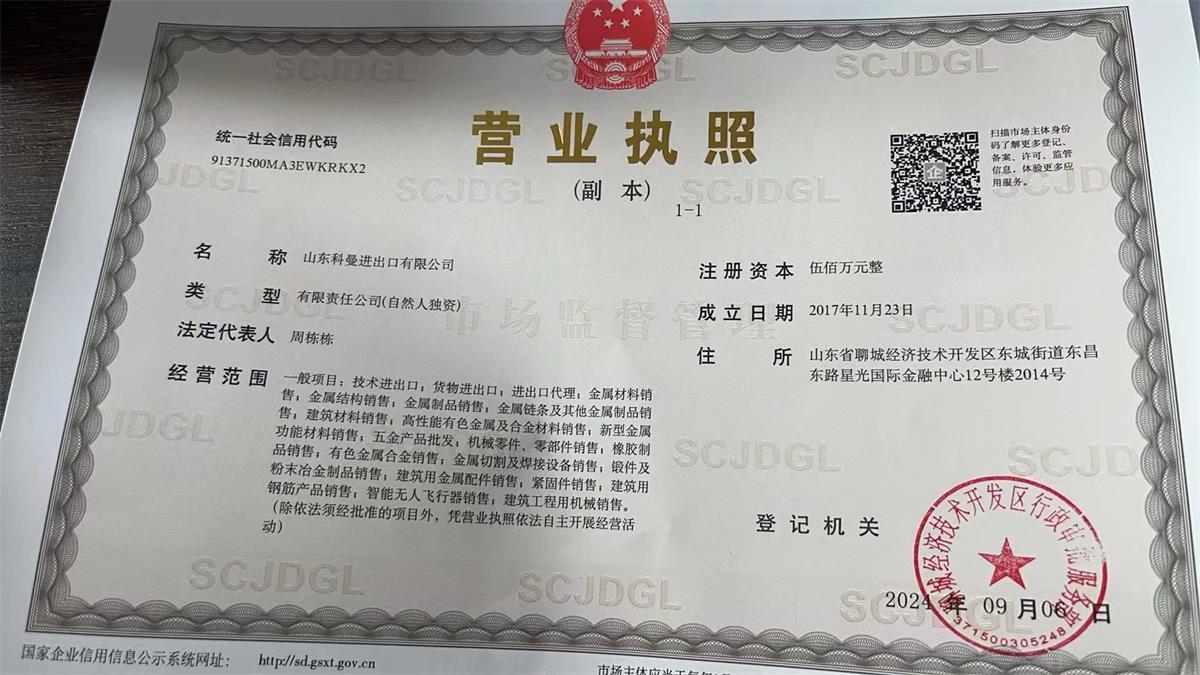
Address:Shandong Keman Import and Export Co., Ltd.

Understanding the Critical Role of B500 Steel Reinforcement in Modern Construction
Release time:
2025-05-15
Understanding the Critical Role of B500 Steel Reinforcement in Modern Construction Table of Contents 1. Introduction to B500 Steel Reinforcement 2. What is B500 Steel Reinforcement? 3. Key Properties of B500 Steel 4. Applications of B500 Steel in Construction 5. Benefits of Using B500 Steel Reinforcement 6. Comparison with Other Steel Grades 7. Installation Techniques
Understanding the Critical Role of B500 Steel Reinforcement in Modern Construction
Table of Contents
- 1. Introduction to B500 Steel Reinforcement
- 2. What is B500 Steel Reinforcement?
- 3. Key Properties of B500 Steel
- 4. Applications of B500 Steel in Construction
- 5. Benefits of Using B500 Steel Reinforcement
- 6. Comparison with Other Steel Grades
- 7. Installation Techniques for B500 Steel
- 8. Sustainability and Environmental Impact
- 9. Future Trends in Steel Reinforcement
- 10. Frequently Asked Questions
- 11. Conclusion
1. Introduction to B500 Steel Reinforcement
In the evolving landscape of construction, the choice of materials plays a pivotal role in determining the longevity, safety, and efficiency of structures. Among these materials, **B500 steel reinforcement** stands out for its unique characteristics and applications. As we delve into the intricacies of B500, it becomes clear that this steel grade is not just a choice but a necessity for modern engineers and builders committed to excellence.
2. What is B500 Steel Reinforcement?
B500 steel reinforcement is a high-strength steel used primarily in concrete structures to enhance tensile strength. This steel is manufactured in accordance with various international standards, ensuring its reliability and performance. The designation "B500" signifies a yield strength of **500 MPa** (Megapascals), making it suitable for a wide range of construction applications.
3. Key Properties of B500 Steel
The properties of B500 steel reinforcement contribute significantly to its effectiveness in construction. Some of the key characteristics include:
3.1 High Yield Strength
With a yield strength of up to 500 MPa, B500 steel can withstand substantial loads, making it ideal for high-rise buildings and other demanding projects.
3.2 Ductility
B500 steel exhibits excellent ductility, allowing it to deform under stress without fracturing. This property is crucial for absorbing energy during seismic events, enhancing the safety of structures.
3.3 Corrosion Resistance
Modern formulations of B500 steel often include protective coatings that enhance its resistance to corrosion. This is particularly important in environments exposed to moisture and chemicals.
4. Applications of B500 Steel in Construction
B500 steel reinforcement finds its application in various aspects of construction, including:
4.1 Residential and Commercial Buildings
From foundations to reinforced concrete slabs, B500 plays a critical role in ensuring structural stability in residential and commercial buildings.
4.2 Infrastructure Projects
B500 is widely used in bridges, tunnels, and highways, where its high strength and durability are essential for supporting heavy loads and traffic.
4.3 Industrial Structures
In industrial applications, B500 steel reinforcement supports heavy machinery and equipment, ensuring longevity and resilience against wear and tear.
5. Benefits of Using B500 Steel Reinforcement
The advantages of incorporating B500 steel in construction projects are numerous:
5.1 Cost-Effectiveness
Although the initial cost of B500 steel may be higher than lower-grade options, its strength and durability lead to reduced maintenance costs and longer lifespans for structures.
5.2 Enhanced Safety
The high yield strength and ductility of B500 steel significantly enhance the safety of buildings, particularly in seismic zones where structural integrity is paramount.
5.3 Versatility
B500 steel can be easily fabricated and shaped, allowing for versatility in design and application across various construction projects.
6. Comparison with Other Steel Grades
When comparing B500 steel with other common reinforcement steel grades, such as B400 and B600, several distinctions emerge:
6.1 Strength and Performance
While B400 steel offers lower yield strength, B600 provides higher strength but may compromise ductility. B500 strikes an optimal balance between strength and flexibility.
6.2 Cost Considerations
Though B400 may be more affordable initially, the long-term benefits of B500—including lower maintenance costs and improved safety—often outweigh the upfront savings.
7. Installation Techniques for B500 Steel
To maximize the benefits of B500 steel reinforcement, proper installation techniques are essential:
7.1 Cutting and Bending
B500 steel can be easily cut and bent to specific requirements, ensuring that it meets the precise needs of the construction project.
7.2 Tying and Splicing
Effective tying and splicing techniques increase the structural integrity of reinforced concrete, preventing failures and ensuring even load distribution.
8. Sustainability and Environmental Impact
The construction industry faces increasing scrutiny regarding sustainability, and B500 steel reinforcement is a step toward environmentally responsible practices:
8.1 Recyclability
Steel, including B500, is highly recyclable, making it a sustainable choice for construction. This not only conserves resources but also reduces waste.
8.2 Reduced Resource Use
The high strength-to-weight ratio of B500 means that less material is required compared to lower-grade steels, leading to reduced resource consumption overall.
9. Future Trends in Steel Reinforcement
As technology advances, the landscape of steel reinforcement continues to evolve. Future trends may include:
9.1 Smart Reinforcement
Innovations in smart reinforcement materials could lead to the development of B500 variants embedded with sensors to monitor structural health in real-time.
9.2 Sustainable Production Methods
As the construction industry shifts toward sustainable practices, we may witness the emergence of greener production methods for B500 steel, reducing its carbon footprint.
10. Frequently Asked Questions
10.1 What is the difference between B500 and B400 steel reinforcement?
B500 has a higher yield strength than B400, making it more suitable for high-load applications.
10.2 Can B500 steel be used in seismic zones?
Yes, B500's ductility and high strength make it ideal for use in seismic zones.
10.3 Is B500 steel environmentally friendly?
Yes, B500 steel is recyclable and contributes to sustainable construction practices.
10.4 How does B500 compare to B600 steel?
B500 strikes a balance between strength and ductility, while B600 offers higher strength at the cost of flexibility.
10.5 What are the key installation techniques for B500 steel?
Proper cutting, bending, tying, and splicing techniques are essential for maximizing the effectiveness of B500 steel in construction.
11. Conclusion
In summary, B500 steel reinforcement is an indispensable material in modern construction, offering unmatched strength, ductility, and versatility. Its applications span various sectors, from residential buildings to massive infrastructure projects, underscoring its critical role in achieving structural integrity and safety. As the industry continues to evolve, the demand for B500 steel will likely grow, driven by its benefits and the increasing focus on sustainable construction practices. Embracing B500 not only enhances project outcomes but also aligns with the broader goals of environmental responsibility and innovation in the construction sector.
Latest News
A Comprehensive Guide to A285 Carbon Steel Pressure Plates in Construction
A285 Carbon Steel Pressure Plates are widely used in various construction applications due to their unique properties and structural integrity. These plates are made from low carbon steel, which provides them with excellent weldability and formability, making them ideal for use in pressure vessels and structural components. One of the key characteristics of A285 Carbon Steel is its ability to with
2026-11-20
Durability and Strength: The Key Features of 5A05 Aluminum Plate
Understanding 5A05 Aluminum Plate: An Overview In the competitive landscape of building materials, the 5A05 aluminum plate stands out due to its impressive durability and strength. This alloy, part of the 5xxx series, is renowned for its high resistance to corrosion and excellent weldability. Given its unique characteristics, it is widely utilized in various sectors, including construction, mari
2026-11-15
Understanding B500 Steel Reinforcement: Key Insights for Manufacturing and Construction
B500 steel reinforcement is a crucial component in the construction and manufacturing sectors, particularly within engineering and building projects. As a high-strength reinforcing steel, B500 offers a combination of durability, flexibility, and resistance to environmental factors, making it an ideal choice for various applications. Understanding its properties and uses is essential for profession
2026-11-10
How Tin Plated Coil Revolutionizes Modern Construction Techniques
How Tin Plated Coil Revolutionizes Modern Construction Techniques Table of Contents 1. Introduction to Tin Plated Coils 2. The Unique Properties of Tin Plated Steel 3. Why Tin Plated Coils Are Essential in Modern Construction 3.1. Enhanced Corrosion Resistance 3.2. Lightweight Yet Durable 3.3. Superior Aesthetic Appeal 4. Applications of Tin Plated Coils in Construction 4.1. Roofing Systems 4.2. W
2026-10-12
Understanding Inconel Alloy Plates: Properties, Applications, and Benefits
Inconel alloy plates are specialized materials that play a critical role in various industries, particularly in metallurgy, mining, and energy sectors. Known for their exceptional resistance to extreme environments, Inconel alloys primarily consist of nickel along with chromium and iron, which contribute to their unique properties. These plates offer a range of benefits, making them suitable for d
2026-10-07
Hastelloy Alloy Plate: The Ultimate Solution for Extreme Environmental Conditions
Hastelloy Alloy Plate: A Solution for Extreme Conditions In today's world, where industries demand materials that can withstand extreme conditions, Hastelloy alloy plates emerge as a vital solution. Known for their remarkable resistance to corrosion and heat, these alloys are indispensable in various applications, from chemical processing to aerospace engineering. Understanding Hastelloy Alloy
2026-10-02


Copyright 2025 : Shandong Keman Import and Export Co., Ltd. Powered by:CEglobal SEO BUSINESS LICENSE