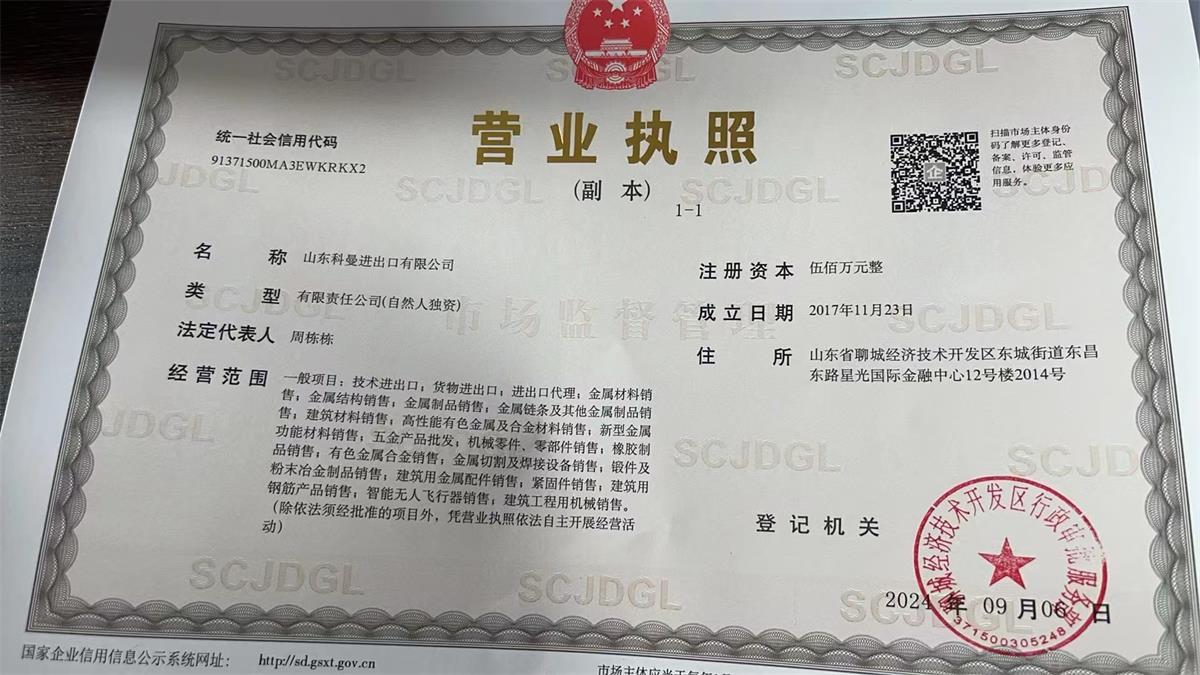
Address:Shandong Keman Import and Export Co., Ltd.

Understanding SAE/AISI 4000 Series Alloy Steel: Properties and Applications
Release time:
2025-05-24
The SAE/AISI 4000 series alloy steel is a group of carbon steels that have been alloyed with various elements to enhance their performance for specific applications. Typically, this series includes steels that contain chromium, molybdenum, and, in some cases, vanadium. These alloying elements contribute to improved hardness, strength, wear resistance, and toughness, making 4000 series steels suita
One of the most notable features of the SAE/AISI 4000 series is its ability to be heat treated. Heat treatment processes such as quenching and tempering can significantly alter the material's properties, allowing manufacturers to tailor the steel to meet specific performance requirements. For instance, through proper heat treatment, the tensile strength of these alloys can be substantially increased, making them ideal for components subjected to high-stress conditions.
In terms of chemical composition, the SAE/AISI 4000 series typically contains about 0.13% to 0.60% carbon and varying amounts of alloying elements. Chromium, for example, not only enhances hardness but also improves corrosion resistance, a crucial property for applications exposed to harsh environments. Moreover, molybdenum contributes to elevated temperature strength and toughness, providing significant advantages in high-temperature applications.
The applications of SAE/AISI 4000 series alloy steel are diverse, spanning sectors such as automotive, construction, and oil and gas. In the automotive industry, components like crankshafts and gears are often made from these alloys due to their superior mechanical properties. In the construction sector, they are used in creating structural components where strength and durability are paramount. Additionally, in the oil and gas industry, these steels are utilized for drilling equipment and various machinery that operate under extreme conditions.
When considering SAE/AISI 4000 series alloy steel for your projects, it is essential to evaluate the specific requirements of your application. Factors such as load-bearing capacity, environmental conditions, and potential exposure to corrosive elements will play a crucial role in determining the most suitable alloy grade. Furthermore, understanding the heat treatment possibilities can help optimize the material’s performance.
In summary, the SAE/AISI 4000 series alloy steel is a vital material in the metallurgy landscape, offering a blend of strength, toughness, and versatility. Its various applications across different industries underline its significance and the importance of selecting the right alloy for your specific needs. This knowledge of the 4000 series can empower professionals to make informed decisions when it comes to material selection and application engineering.
Latest News
Innovative Applications of Carbon Steel Plates in Building Designs
Innovative Applications of Carbon Steel Plates in Building Designs Carbon steel plates have emerged as a cornerstone material in the construction industry, gaining acclaim for their versatility, strength, and aesthetic potential. As the demand for innovative design solutions escalates, architects and builders are increasingly incorporating carbon steel plates into their projects. This article expl
2026-09-22
Understanding A514 Carbon Steel Plate: Key Characteristics and Applications
A514 Carbon Steel Plate is a high-yield strength steel that has become a preferred choice in various industrial applications, particularly in the fields of metallurgy and energy. This type of steel is known for its excellent mechanical properties, making it suitable for demanding environments where strength and durability are paramount. One of the key characteristics of A514 Carbon Steel Plate is
2026-09-17
How A387 Carbon Alloy Steel Plate Enhances Structural Integrity in Construction
How A387 Carbon Alloy Steel Plate Enhances Structural Integrity in Construction Table of Contents 1. Introduction to A387 Carbon Alloy Steel Plate 2. What is A387 Carbon Alloy Steel? 3. Key Properties of A387 Carbon Alloy Steel Plates 4. Manufacturing Process of A387 Steel Plates 5. Applications of A387 Carbon Alloy Steel Plates 6. Advantages of Using A387 Carbon Alloy Ste
2026-09-12
Understanding A285 Carbon Steel Pressure Plates: Essential Insights for Construction and Design
A285 Carbon Steel Pressure Plates are primarily used in pressure vessel fabrication and construction applications. This type of steel is known for its good weldability and formability, making it a favorable choice for various structural components. The ASTM A285 standard specifically governs the specifications for carbon steel plates intended for low-pressure service. One of the key characteristic
2026-09-07
The Role of 5A05 Aluminum Plate in Enhancing Building Aesthetics
The Role of 5A05 Aluminum Plate in Enhancing Building Aesthetics Table of Contents 1. Introduction to 5A05 Aluminum Plates 2. Properties of 5A05 Aluminum Plates 3. Applications of 5A05 Aluminum Plates in Architecture 4. Aesthetic Advantages of Using 5A05 Aluminum Plates 5. Sustainability and Environmental Impact 6. Installation and Maintenance of 5A05 Aluminum Plates 7
2026-09-02
Understanding B500 Steel Reinforcement: Key Insights for Professionals in Construction Machinery
B500 steel reinforcement is a critical component in the construction industry, particularly in manufacturing and processing machinery for engineering and construction projects. This high-strength steel bar is widely used in reinforced concrete structures, providing the necessary tensile strength to support heavy loads and withstand various stresses. One of the defining characteristics of B500 stee
2026-08-28


Copyright 2025 : Shandong Keman Import and Export Co., Ltd. Powered by:CEglobal SEO BUSINESS LICENSE