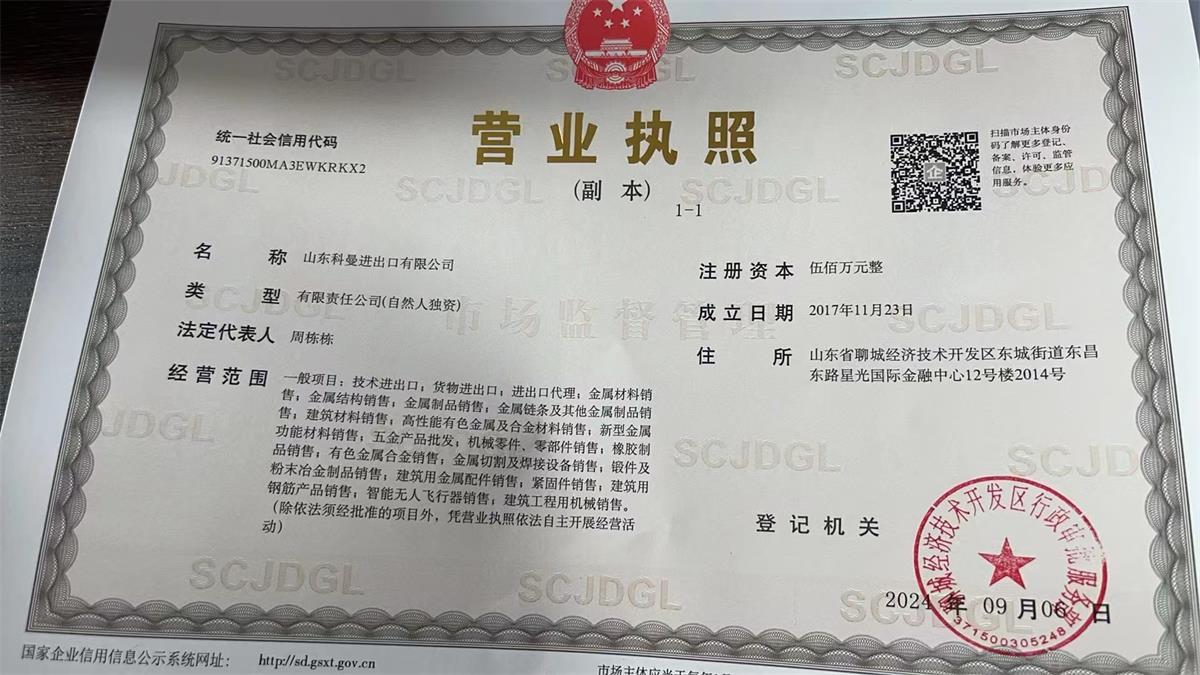
Address:Shandong Keman Import and Export Co., Ltd.

Why Choose SAE/AISI 4000 Series Alloy Steel for Your Next Project?
Release time:
2025-06-08
Why Choose SAE/AISI 4000 Series Alloy Steel for Your Next Project? Table of Contents Introduction to SAE/AISI 4000 Series Alloy Steel Key Properties of SAE/AISI 4000 Series Alloy Steel Manufacturing Processes of Alloy Steel Applications of SAE/AISI 4000 Series Alloy Steel Advantages of Choosing SAE/AISI 4000 Alloy Steel SAE/AISI 4000 vs. Other Alloy Steels Consideratio
Why Choose SAE/AISI 4000 Series Alloy Steel for Your Next Project?
Table of Contents
- Introduction to SAE/AISI 4000 Series Alloy Steel
- Key Properties of SAE/AISI 4000 Series Alloy Steel
- Manufacturing Processes of Alloy Steel
- Applications of SAE/AISI 4000 Series Alloy Steel
- Advantages of Choosing SAE/AISI 4000 Alloy Steel
- SAE/AISI 4000 vs. Other Alloy Steels
- Considerations When Selecting Alloy Steel
- FAQs About SAE/AISI 4000 Series Alloy Steel
- Conclusion
Introduction to SAE/AISI 4000 Series Alloy Steel
The **SAE/AISI 4000 Series Alloy Steel** is a noteworthy category of steels that has gained immense recognition in the metallurgical and mining industry. This series encompasses a range of alloy steels characterized primarily by their chromium and molybdenum content. These elements enhance the mechanical properties of the steel, making it suitable for various applications where strength, toughness, and wear resistance are paramount.
Alloy steels like the SAE/AISI 4000 series are engineered to provide superior performance compared to standard carbon steels. Their versatility makes them a popular choice in sectors that demand high-performance materials, such as automotive, aerospace, and heavy machinery.
Key Properties of SAE/AISI 4000 Series Alloy Steel
The **SAE/AISI 4000 Series** is distinguished by its remarkable properties that make it ideal for demanding applications. Here are some key characteristics:
1. High Strength and Hardness
The alloying elements in the 4000 series significantly enhance the tensile strength and hardness of the material. This makes it suitable for components that must withstand high levels of stress and wear.
2. Excellent Wear Resistance
With its high carbon content, SAE/AISI 4000 series steel exhibits excellent wear resistance. This property is crucial for applications in harsh environments where components are subject to abrasion.
3. Good Toughness
Despite its hardness, this alloy steel maintains good toughness. This balance is essential for preventing catastrophic failures in structural applications.
4. Heat Treatability
The 4000 series is highly responsive to heat treatment processes, allowing manufacturers to tailor the material’s properties to meet specific requirements. This includes processes like quenching and tempering.
5. Corrosion Resistance
Certain grades within the 4000 series offer improved corrosion resistance, particularly when alloyed with chromium, making them suitable for applications exposed to moisture and corrosive agents.
Manufacturing Processes of Alloy Steel
Understanding the manufacturing processes of SAE/AISI 4000 Series Alloy Steel is crucial for its application. Here’s an overview of how this alloy steel is produced:
1. Melting and Refining
The process begins with the melting of raw materials in electric arc furnaces. Various alloying elements are introduced at this stage to achieve desired compositions. Refining processes help to remove impurities, ensuring high-quality steel.
2. Casting
Once the steel is melted and refined, it is cast into semi-finished forms such as billets or slabs. Continuous casting is commonly used to enhance productivity and consistency.
3. Hot Working
The cast steel undergoes hot working processes such as forging and rolling. These methods shape the material while enhancing its mechanical properties through deformation.
4. Heat Treatment
Heat treatment processes are applied to improve specific characteristics of the alloy steel. This can include normalizing, quenching, and tempering, allowing engineers to fine-tune the material’s strength and toughness.
5. Finishing
The final phase involves finishing processes like machining, grinding, and surface treatment. These steps ensure that the steel meets precise specifications for various applications.
Applications of SAE/AISI 4000 Series Alloy Steel
The versatility of **SAE/AISI 4000 Series Alloy Steel** allows it to be employed in a multitude of applications across various industries. Here are some prominent uses:
1. Automotive Components
The automotive industry utilizes SAE/AISI 4000 series steel for manufacturing gears, axles, and crankshafts, where strength and fatigue resistance are critical.
2. Aerospace Parts
In aerospace, this alloy steel is used in turbine components, landing gear, and structural elements, benefiting from its high strength-to-weight ratio.
3. Construction and Heavy Machinery
Construction equipment and heavy machinery components, such as pins and bushings, often employ SAE/AISI 4000 series steel due to its durability and wear resistance.
4. Oil and Gas Industry
In the oil and gas sector, the alloy’s corrosion resistance makes it suitable for pipes and fittings, particularly in harsh environments.
5. Tool Manufacturing
Many tools, including drill bits and cutting tools, are produced using the SAE/AISI 4000 series due to its ability to retain hardness at elevated temperatures.
Advantages of Choosing SAE/AISI 4000 Alloy Steel
Selecting **SAE/AISI 4000 Series Alloy Steel** for your projects comes with numerous advantages that set it apart from other materials. Here are some reasons to consider this alloy:
1. Enhanced Performance
With its superior mechanical properties, this alloy steel significantly enhances the performance and longevity of components, reducing the frequency of repairs and replacements.
2. Cost-Effectiveness
Despite being an alloy steel, the overall lifecycle cost can be lower due to fewer failures and less maintenance required over time.
3. Versatility
The adaptability of SAE/AISI 4000 series steel allows it to be used in a wide range of applications, making it a smart choice for diverse engineering projects.
4. Customizability
The ability to tailor the properties of the steel through heat treatment and alloying enables manufacturers to meet specific project requirements.
5. Compliance with Standards
SAE/AISI 4000 series steels comply with various industry standards, ensuring they meet the necessary specifications for safety and performance.
SAE/AISI 4000 vs. Other Alloy Steels
When comparing **SAE/AISI 4000 Series Alloy Steel** to other alloy steels, several factors come into play:
1. Composition Differences
While other alloy steels, such as the 3000 or 5000 series, may focus more on different alloying elements like nickel or manganese, the 4000 series emphasizes chromium and molybdenum, influencing its mechanical properties and applications.
2. Performance Metrics
SAE/AISI 4000 series typically offers superior wear resistance and toughness compared to many other alloy steels, making it more suitable for high-stress applications.
3. Cost Considerations
While some alloy steels may be cheaper, the long-term benefits of using the 4000 series often outweigh the initial cost due to its durability and lower maintenance needs.
4. Availability
SAE/AISI 4000 series alloy steel is widely available, allowing manufacturers to source it easily for their projects, unlike some specialized grades that may have limited availability.
Considerations When Selecting Alloy Steel
Before choosing **SAE/AISI 4000 Series Alloy Steel**, consider the following factors:
1. Project Requirements
Assess the specific needs of your project, including strength, hardness, and corrosion resistance. This will guide you in selecting the right grade within the series.
2. Environmental Conditions
Consider the environment in which the finished product will operate. Exposure to moisture, chemicals, or extreme temperatures can influence material selection.
3. Processing Capabilities
Evaluate the manufacturing capabilities available to you. Ensure that your processes can accommodate the heat treatment and forming requirements of the chosen alloy steel.
4. Cost-Benefit Analysis
Conduct a thorough cost-benefit analysis to determine if the long-term advantages of using SAE/AISI 4000 series justify any higher upfront costs.
5. Compliance and Standards
Ensure that the selected alloy steel meets the necessary industry standards and regulations pertinent to your specific application.
FAQs About SAE/AISI 4000 Series Alloy Steel
1. What is SAE/AISI 4000 Series Alloy Steel used for?
SAE/AISI 4000 series alloy steel is used in various applications, including automotive, aerospace, construction, and tool manufacturing, due to its high strength and wear resistance.
2. How does SAE/AISI 4000 differ from other steel series?
The 4000 series primarily contains chromium and molybdenum, enhancing its strength and toughness, while other series may focus on different alloying elements.
3. Can SAE/AISI 4000 Series steel be heat-treated?
Yes, SAE/AISI 4000 series steel is highly heat-treatable, allowing for adjustments in its mechanical properties to meet specific project requirements.
4. What are the advantages of using SAE/AISI 4000 Series Alloy Steel?
The advantages include enhanced performance, cost-effectiveness, versatility, customizability, and compliance with various industry standards.
5. Is SAE/AISI 4000 Series Alloy Steel corrosion-resistant?
Certain grades within the 4000 series offer improved corrosion resistance, particularly when alloyed with chromium, making them suitable for applications exposed to corrosive environments.
Conclusion
Choosing **SAE/AISI 4000 Series Alloy Steel** for your next project presents numerous advantages that enhance performance and durability. Its unique properties, versatile applications, and manufacturing processes make it a reliable choice across various industries. By understanding the benefits, considerations, and comparisons with other alloys, you can make informed decisions that contribute to the success of your projects. With a commitment to quality and performance, SAE/AISI 4000 series alloy steel stands out as an exceptional material for engineering solutions.
Latest News
Innovative Applications of Carbon Steel Plates in Building Designs
Innovative Applications of Carbon Steel Plates in Building Designs Carbon steel plates have emerged as a cornerstone material in the construction industry, gaining acclaim for their versatility, strength, and aesthetic potential. As the demand for innovative design solutions escalates, architects and builders are increasingly incorporating carbon steel plates into their projects. This article expl
2026-09-22
Understanding A514 Carbon Steel Plate: Key Characteristics and Applications
A514 Carbon Steel Plate is a high-yield strength steel that has become a preferred choice in various industrial applications, particularly in the fields of metallurgy and energy. This type of steel is known for its excellent mechanical properties, making it suitable for demanding environments where strength and durability are paramount. One of the key characteristics of A514 Carbon Steel Plate is
2026-09-17
How A387 Carbon Alloy Steel Plate Enhances Structural Integrity in Construction
How A387 Carbon Alloy Steel Plate Enhances Structural Integrity in Construction Table of Contents 1. Introduction to A387 Carbon Alloy Steel Plate 2. What is A387 Carbon Alloy Steel? 3. Key Properties of A387 Carbon Alloy Steel Plates 4. Manufacturing Process of A387 Steel Plates 5. Applications of A387 Carbon Alloy Steel Plates 6. Advantages of Using A387 Carbon Alloy Ste
2026-09-12
Understanding A285 Carbon Steel Pressure Plates: Essential Insights for Construction and Design
A285 Carbon Steel Pressure Plates are primarily used in pressure vessel fabrication and construction applications. This type of steel is known for its good weldability and formability, making it a favorable choice for various structural components. The ASTM A285 standard specifically governs the specifications for carbon steel plates intended for low-pressure service. One of the key characteristic
2026-09-07
The Role of 5A05 Aluminum Plate in Enhancing Building Aesthetics
The Role of 5A05 Aluminum Plate in Enhancing Building Aesthetics Table of Contents 1. Introduction to 5A05 Aluminum Plates 2. Properties of 5A05 Aluminum Plates 3. Applications of 5A05 Aluminum Plates in Architecture 4. Aesthetic Advantages of Using 5A05 Aluminum Plates 5. Sustainability and Environmental Impact 6. Installation and Maintenance of 5A05 Aluminum Plates 7
2026-09-02
Understanding B500 Steel Reinforcement: Key Insights for Professionals in Construction Machinery
B500 steel reinforcement is a critical component in the construction industry, particularly in manufacturing and processing machinery for engineering and construction projects. This high-strength steel bar is widely used in reinforced concrete structures, providing the necessary tensile strength to support heavy loads and withstand various stresses. One of the defining characteristics of B500 stee
2026-08-28


Copyright 2025 : Shandong Keman Import and Export Co., Ltd. Powered by:CEglobal SEO BUSINESS LICENSE