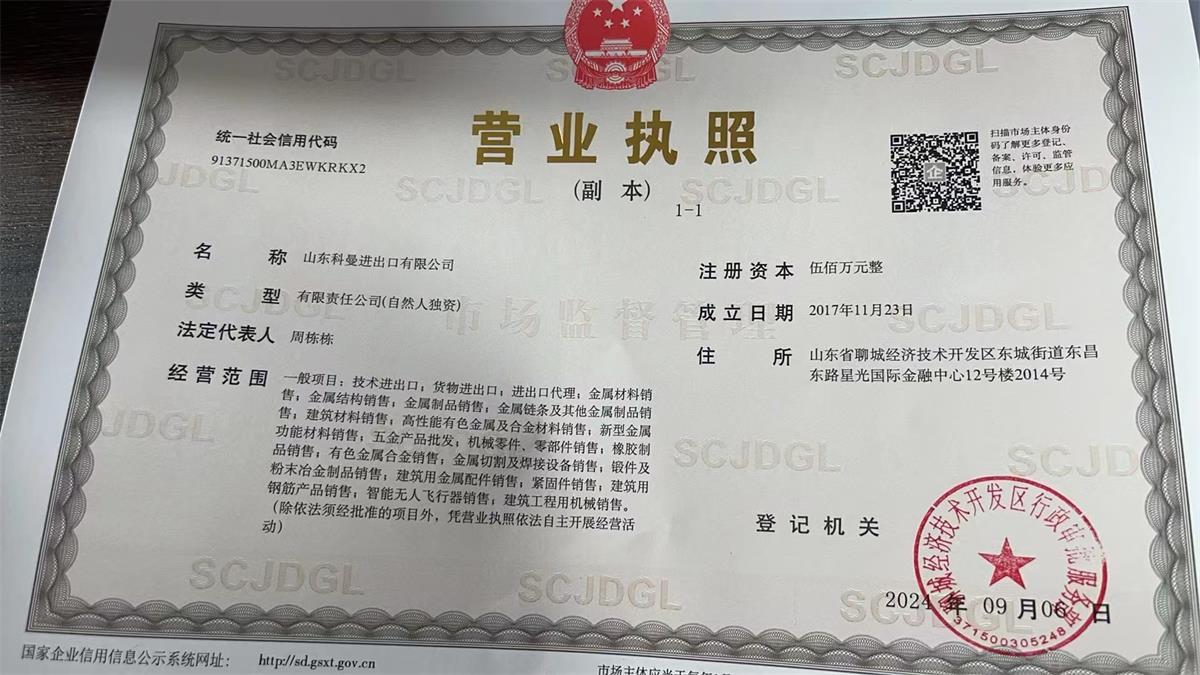
Address:Shandong Keman Import and Export Co., Ltd.

The Marvelous Mechanics of Steel: Unveiling Its Secrets
Release time:
2025-07-12
Discover the fascinating workings of Steel, its properties, and its applications in everyday life.
Introduction
Ah, Steel! That shiny, resilient metal that seems to hold the world together. From skyscrapers to kitchen utensils, it’s hard to imagine life without it. But have you ever stopped to wonder about the 工作原理 of Steel? What makes it so strong yet so versatile? Buckle up, because we’re about to dive deep into the marvels of this incredible material!
What is Steel?
In the simplest terms, Steel is an alloy of iron and carbon, with varying amounts of other elements thrown in for good measure. Its history dates back thousands of years, evolving from simple iron to the complex alloys of today. But what’s the magic behind its strength and durability? Let’s break it down!
The Composition Game
Steel isn’t just a one-hit wonder; it’s a composite superstar! The basic combination is iron (about 98%) and carbon (usually around 0.2-2.1%). But wait, there’s more! Depending on the desired properties, manufacturers often add manganese, nickel, chromium, and other elements. Just like a chef tweaking a recipe, these additions can significantly alter the final product.
Carbon: The Unsung Hero
Let’s not overlook carbon, the true MVP of Steel! Carbon atoms are nestled between iron atoms, creating a lattice structure that enhances strength. Higher carbon content means tougher Steel, perfect for tools and machinery. But too much carbon? Well, that can lead to brittleness. It’s all about balance!
The Process of Creation
So, how is Steel made? It all starts in a blast furnace where iron ore is mixed with coke (not the drink!) and limestone. Picture a fiery cauldron, where intense heat melts the ingredients down, separating impurities. What comes out? Molten iron! But we’re not done yet. This molten iron is refined further to create various types of Steel.
From Molten to Masterpiece
After refining, Steel is cast into shapes (like beams or sheets) and cooled. This cooling process is crucial, as it can either harden the Steel or leave it malleable. And there you have it! A solid material ready to take on the world.
Working Hard: The Applications of Steel
Now that we’ve covered the basics, let’s get into how Steel is put to work. It’s like the jack-of-all-trades in the construction industry!
Construction and Infrastructure
Ever looked up at a skyscraper and thought, “Wow, that’s a lot of Steel!”? Well, you’re not wrong! Steel beams provide the backbone for buildings, bridges, and even stadiums. Its high strength-to-weight ratio means it can support heavy loads without buckling under pressure.
Transportation
From cars to trains, Steel is everywhere in the transportation sector. It’s used in frames, chassis, and even engines. Talk about versatility! Plus, its durability means vehicles can withstand wear and tear, making for safer travel.
Everyday Items
Let’s not forget about the little things. Kitchen knives, forks, and even appliances often contain Steel. Its resistance to rust makes it ideal for kitchenware, while the sharpness of Steel blades makes cooking a breeze.
Innovations in Steel Technology
As technology advances, so does Steel. New methods of production and treatment are being developed to create even stronger and lighter alloys. Ever heard of high-performance Steel? It’s a game-changer in industries requiring extreme durability.
Recycling: The Steel Life Cycle
One of the coolest aspects of Steel is its recyclability. Old Steel can be melted down and repurposed without losing its inherent properties. This not only saves energy but reduces waste. Talk about a win-win!
Conclusion
So there you have it, folks! The intricate workings of Steel, from its composition to its myriad applications. Whether you’re marveling at a towering building or chopping vegetables in the kitchen, Steel is silently working hard. Next time you see a Steel beam or a shiny knife, you’ll know the secrets behind its strength!
Latest News
Innovative Applications of Carbon Steel Plates in Building Designs
Innovative Applications of Carbon Steel Plates in Building Designs Carbon steel plates have emerged as a cornerstone material in the construction industry, gaining acclaim for their versatility, strength, and aesthetic potential. As the demand for innovative design solutions escalates, architects and builders are increasingly incorporating carbon steel plates into their projects. This article expl
2026-09-22
Understanding A514 Carbon Steel Plate: Key Characteristics and Applications
A514 Carbon Steel Plate is a high-yield strength steel that has become a preferred choice in various industrial applications, particularly in the fields of metallurgy and energy. This type of steel is known for its excellent mechanical properties, making it suitable for demanding environments where strength and durability are paramount. One of the key characteristics of A514 Carbon Steel Plate is
2026-09-17
How A387 Carbon Alloy Steel Plate Enhances Structural Integrity in Construction
How A387 Carbon Alloy Steel Plate Enhances Structural Integrity in Construction Table of Contents 1. Introduction to A387 Carbon Alloy Steel Plate 2. What is A387 Carbon Alloy Steel? 3. Key Properties of A387 Carbon Alloy Steel Plates 4. Manufacturing Process of A387 Steel Plates 5. Applications of A387 Carbon Alloy Steel Plates 6. Advantages of Using A387 Carbon Alloy Ste
2026-09-12
Understanding A285 Carbon Steel Pressure Plates: Essential Insights for Construction and Design
A285 Carbon Steel Pressure Plates are primarily used in pressure vessel fabrication and construction applications. This type of steel is known for its good weldability and formability, making it a favorable choice for various structural components. The ASTM A285 standard specifically governs the specifications for carbon steel plates intended for low-pressure service. One of the key characteristic
2026-09-07
The Role of 5A05 Aluminum Plate in Enhancing Building Aesthetics
The Role of 5A05 Aluminum Plate in Enhancing Building Aesthetics Table of Contents 1. Introduction to 5A05 Aluminum Plates 2. Properties of 5A05 Aluminum Plates 3. Applications of 5A05 Aluminum Plates in Architecture 4. Aesthetic Advantages of Using 5A05 Aluminum Plates 5. Sustainability and Environmental Impact 6. Installation and Maintenance of 5A05 Aluminum Plates 7
2026-09-02
Understanding B500 Steel Reinforcement: Key Insights for Professionals in Construction Machinery
B500 steel reinforcement is a critical component in the construction industry, particularly in manufacturing and processing machinery for engineering and construction projects. This high-strength steel bar is widely used in reinforced concrete structures, providing the necessary tensile strength to support heavy loads and withstand various stresses. One of the defining characteristics of B500 stee
2026-08-28


Copyright 2025 : Shandong Keman Import and Export Co., Ltd. Powered by:CEglobal SEO BUSINESS LICENSE