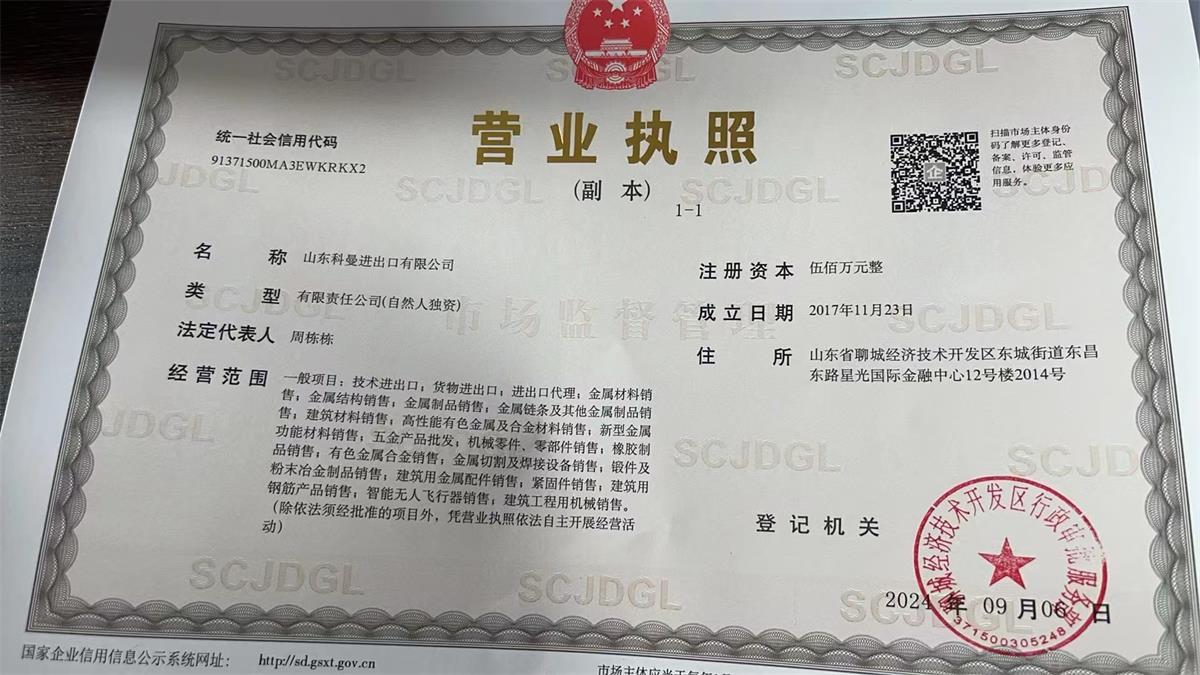
Address:Shandong Keman Import and Export Co., Ltd.

B500 Steel Reinforcement: An In-Depth Guide for Engineers and Construction Professionals
Release time:
2025-07-14
B500 Steel Reinforcement: A Comprehensive Guide for Engineers Table of Contents 1. Introduction to B500 Steel Reinforcement 2. Properties of B500 Steel Reinforcement 3. Applications of B500 Steel Reinforcement in Construction 4. Advantages of Using B500 Steel Reinforcement 5. B500 vs. Other Steel Reinforcement Grades 6. Compliance with International Standards 7. Best P
B500 Steel Reinforcement: A Comprehensive Guide for Engineers
Table of Contents
- 1. Introduction to B500 Steel Reinforcement
- 2. Properties of B500 Steel Reinforcement
- 3. Applications of B500 Steel Reinforcement in Construction
- 4. Advantages of Using B500 Steel Reinforcement
- 5. B500 vs. Other Steel Reinforcement Grades
- 6. Compliance with International Standards
- 7. Best Practices for Installing B500 Steel Reinforcement
- 8. Maintenance and Longevity of B500 Steel Reinforcement
- 9. FAQs about B500 Steel Reinforcement
- 10. Conclusion
1. Introduction to B500 Steel Reinforcement
B500 steel reinforcement bars, often referred to as rebar, are critical components in the construction industry, particularly in reinforced concrete applications. This grade of steel is characterized by its high yield strength, which makes it suitable for various structural elements, including beams, columns, and slabs. Understanding B500 steel reinforcement is essential for engineers and construction professionals aiming to enhance structural integrity and safety in their projects.
2. Properties of B500 Steel Reinforcement
B500 steel reinforcement boasts several properties that make it an ideal choice for construction:
2.1 Mechanical Properties
- **Yield Strength**: B500 has a yield strength of 500 MPa, ensuring high load-bearing capacity.
- **Ultimate Strength**: The ultimate tensile strength is approximately 600-700 MPa, providing additional safety margins in structural applications.
2.2 Corrosion Resistance
Due to its composition, B500 steel can exhibit enhanced resistance to corrosion when compared to standard steel reinforcement. This characteristic is vital for structures exposed to harsh environmental conditions, contributing to the longevity of the structure.
2.3 Ductility
Ductility refers to the ability of steel to deform under stress without breaking. B500 demonstrates good ductility, allowing it to absorb energy during seismic events, thus improving the overall resilience of the structure.
3. Applications of B500 Steel Reinforcement in Construction
B500 steel reinforcement is widely utilized in various construction scenarios, including:
3.1 Residential Buildings
In residential construction, B500 is commonly used in foundations, slabs, and structural walls to ensure stability and durability.
3.2 Commercial Structures
For commercial buildings, B500 steel reinforcement is essential for load-bearing elements, enhancing the safety and performance of high-rise structures.
3.3 Infrastructure Projects
Bridges, tunnels, and highways often incorporate B500 steel reinforcement due to its strength and durability, crucial for withstanding heavy traffic loads and environmental factors.
4. Advantages of Using B500 Steel Reinforcement
Using B500 steel reinforcement offers numerous advantages for construction projects:
4.1 Enhanced Load-Bearing Capacity
The high yield strength of B500 allows structures to support greater loads, making it ideal for heavy-duty applications.
4.2 Improved Structural Integrity
By utilizing B500, engineers can enhance the overall integrity of the structure, reducing the risk of failure and enhancing safety.
4.3 Cost-Effectiveness
Despite a potentially higher initial cost, the long-term benefits of B500, including reduced maintenance and extended service life, make it a cost-effective choice.
5. B500 vs. Other Steel Reinforcement Grades
When considering steel reinforcement options, it’s essential to compare B500 with other grades, such as B400 and B600.
5.1 B400 Steel Reinforcement
B400 features a lower yield strength (400 MPa) compared to B500, making it suitable for less demanding applications. However, it may not provide the same level of structural integrity for high-load situations.
5.2 B600 Steel Reinforcement
While B600 offers a higher yield strength (600 MPa), its increased brittleness can lead to reduced ductility, making B500 often a more balanced choice between strength and flexibility.
6. Compliance with International Standards
B500 steel reinforcement adheres to various international standards, such as:
6.1 ASTM Standards
In the United States, B500 reinforcement complies with ASTM A615 specifications, ensuring quality and safety in construction practices.
6.2 European Standards
In Europe, B500 meets the requirements of EN 1992-1-1, governing the design of concrete structures and ensuring compatibility with other materials.
7. Best Practices for Installing B500 Steel Reinforcement
To ensure optimal performance, following best practices during the installation of B500 steel reinforcement is crucial:
7.1 Proper Spacing and Placement
Maintaining appropriate spacing between bars is essential to achieve the desired structural strength. Engineers must consult design specifications for accurate placement.
7.2 Ensuring Adequate Cover
Providing sufficient concrete cover over the reinforcement minimizes the risk of corrosion and enhances durability.
7.3 Effective Tying and Securing
All reinforcement bars should be securely tied together to prevent movement during concrete pouring, ensuring structural integrity.
8. Maintenance and Longevity of B500 Steel Reinforcement
Maintaining the longevity of B500 steel reinforcement involves regular inspections and preventive measures:
8.1 Regular Inspections
Conducting routine inspections of exposed reinforcement can identify early signs of corrosion or damage, allowing for timely intervention.
8.2 Protective Coatings
Applying protective coatings can further enhance corrosion resistance, especially in high-risk environments.
8.3 Proper Drainage
Ensuring effective drainage around structures prevents water accumulation, reducing the risk of corrosion and extending the lifespan of the reinforcement.
9. FAQs about B500 Steel Reinforcement
9.1 What is the difference between B500 and B400 steel reinforcement?
B500 has a higher yield strength (500 MPa) compared to B400 (400 MPa), making it more suitable for high-load applications.
9.2 How does B500 steel reinforcement perform in seismic conditions?
B500’s ductility allows it to absorb energy during seismic events, enhancing the overall resilience of structures.
9.3 Is B500 steel reinforcement environmentally friendly?
When properly manufactured and installed, B500 can be recycled and reused, contributing to sustainable construction practices.
9.4 What standards govern the use of B500 steel reinforcement?
B500 complies with ASTM A615 in the USA and EN 1992-1-1 in Europe, ensuring quality and safety in engineering practices.
9.5 How can I ensure the proper installation of B500 steel reinforcement?
Following best practices such as proper spacing, adequate cover, and secure tying is crucial for optimal performance.
10. Conclusion
In conclusion, B500 steel reinforcement represents a vital component in modern construction, offering engineers and architects numerous advantages in terms of strength, durability, and compliance with international standards. By understanding its properties and applications, professionals can leverage B500 effectively to enhance structural integrity and ensure the longevity of their projects. As the construction industry continues to evolve, B500 steel reinforcement remains a reliable choice for engineers seeking to achieve excellence in their designs.
Latest News
Innovative Applications of Carbon Steel Plates in Building Designs
Innovative Applications of Carbon Steel Plates in Building Designs Carbon steel plates have emerged as a cornerstone material in the construction industry, gaining acclaim for their versatility, strength, and aesthetic potential. As the demand for innovative design solutions escalates, architects and builders are increasingly incorporating carbon steel plates into their projects. This article expl
2026-09-22
Understanding A514 Carbon Steel Plate: Key Characteristics and Applications
A514 Carbon Steel Plate is a high-yield strength steel that has become a preferred choice in various industrial applications, particularly in the fields of metallurgy and energy. This type of steel is known for its excellent mechanical properties, making it suitable for demanding environments where strength and durability are paramount. One of the key characteristics of A514 Carbon Steel Plate is
2026-09-17
How A387 Carbon Alloy Steel Plate Enhances Structural Integrity in Construction
How A387 Carbon Alloy Steel Plate Enhances Structural Integrity in Construction Table of Contents 1. Introduction to A387 Carbon Alloy Steel Plate 2. What is A387 Carbon Alloy Steel? 3. Key Properties of A387 Carbon Alloy Steel Plates 4. Manufacturing Process of A387 Steel Plates 5. Applications of A387 Carbon Alloy Steel Plates 6. Advantages of Using A387 Carbon Alloy Ste
2026-09-12
Understanding A285 Carbon Steel Pressure Plates: Essential Insights for Construction and Design
A285 Carbon Steel Pressure Plates are primarily used in pressure vessel fabrication and construction applications. This type of steel is known for its good weldability and formability, making it a favorable choice for various structural components. The ASTM A285 standard specifically governs the specifications for carbon steel plates intended for low-pressure service. One of the key characteristic
2026-09-07
The Role of 5A05 Aluminum Plate in Enhancing Building Aesthetics
The Role of 5A05 Aluminum Plate in Enhancing Building Aesthetics Table of Contents 1. Introduction to 5A05 Aluminum Plates 2. Properties of 5A05 Aluminum Plates 3. Applications of 5A05 Aluminum Plates in Architecture 4. Aesthetic Advantages of Using 5A05 Aluminum Plates 5. Sustainability and Environmental Impact 6. Installation and Maintenance of 5A05 Aluminum Plates 7
2026-09-02
Understanding B500 Steel Reinforcement: Key Insights for Professionals in Construction Machinery
B500 steel reinforcement is a critical component in the construction industry, particularly in manufacturing and processing machinery for engineering and construction projects. This high-strength steel bar is widely used in reinforced concrete structures, providing the necessary tensile strength to support heavy loads and withstand various stresses. One of the defining characteristics of B500 stee
2026-08-28


Copyright 2025 : Shandong Keman Import and Export Co., Ltd. Powered by:CEglobal SEO BUSINESS LICENSE