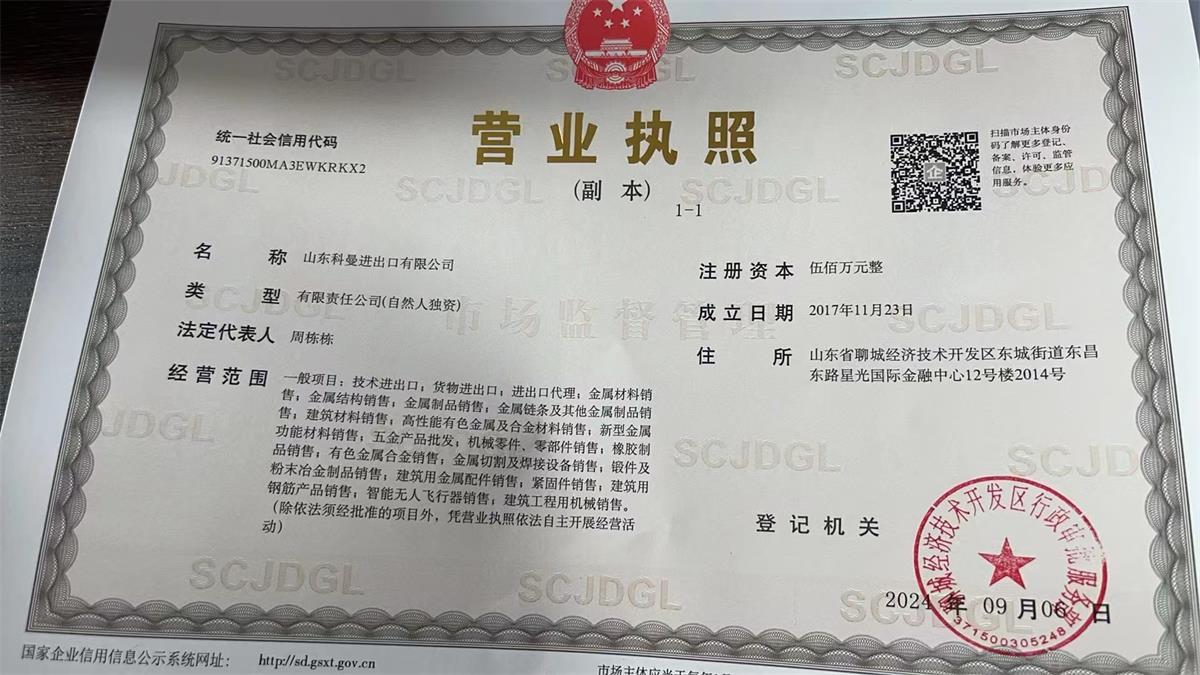
Address:Shandong Keman Import and Export Co., Ltd.

How SAE/AISI 4000 Series Alloy Steel Enhances Industrial Applications
Release time:
2025-08-07
How SAE/AISI 4000 Series Alloy Steel Enhances Industrial Applications Table of Contents 1. Introduction to SAE/AISI 4000 Series Alloy Steel 2. Composition of SAE/AISI 4000 Series Alloy Steel 3. Key Properties of SAE/AISI 4000 Series Alloy Steel 4. Industrial Applications of SAE/AISI 4000 Series Alloy Steel 4.1 Automotive Industry 4.2 Aerospace Indu
How SAE/AISI 4000 Series Alloy Steel Enhances Industrial Applications
Table of Contents
- 1. Introduction to SAE/AISI 4000 Series Alloy Steel
- 2. Composition of SAE/AISI 4000 Series Alloy Steel
- 3. Key Properties of SAE/AISI 4000 Series Alloy Steel
- 4. Industrial Applications of SAE/AISI 4000 Series Alloy Steel
- 5. Advantages of Using SAE/AISI 4000 Series Alloy Steel
- 6. Processing Techniques for SAE/AISI 4000 Series Alloy Steel
- 7. Comparison with Other Alloy Steels
- 8. Frequently Asked Questions
- 9. Conclusion
1. Introduction to SAE/AISI 4000 Series Alloy Steel
SAE/AISI 4000 Series Alloy Steel plays a pivotal role in industries that demand high-performance materials. This series, primarily composed of chromium and molybdenum, is recognized for its exceptional strength, hardenability, and wear resistance. It's an essential material for applications ranging from automotive components to tools and machinery.
2. Composition of SAE/AISI 4000 Series Alloy Steel
SAE/AISI 4000 Series Alloy Steel encompasses a variety of grades, with each grade featuring a unique chemical composition tailored to specific applications. The fundamental elements include:
- **Chromium (Cr)**: Typically ranging from 0.5% to 1.5%, chromium enhances hardenability and corrosion resistance.
- **Molybdenum (Mo)**: Present in amounts ranging from 0.15% to 0.6%, molybdenum improves strength and toughness at elevated temperatures.
- **Carbon (C)**: The carbon content usually varies from 0.4% to 0.9%, influencing hardness and strength.
In addition to these primary elements, trace amounts of nickel, manganese, and silicon may be included to further enhance specific properties.
3. Key Properties of SAE/AISI 4000 Series Alloy Steel
The performance of SAE/AISI 4000 Series Alloy Steel can be attributed to its distinct properties, including:
3.1 Strength and Hardness
SAE/AISI 4000 Series Alloy Steel exhibits remarkable tensile strength and hardness, making it suitable for heavy-duty applications. These properties facilitate the production of components that can withstand significant loads without deforming.
3.2 Toughness and Ductility
Despite its strength, this alloy steel maintains a degree of toughness and ductility, allowing for deformation without fracture. This balance is crucial in applications where components encounter shock loads or impact stresses.
3.3 Heat Resistance
The addition of chromium and molybdenum grants the SAE/AISI 4000 Series excellent heat resistance, making it an ideal choice for high-temperature applications. It retains its mechanical properties even when exposed to extreme conditions.
3.4 Wear Resistance
Enhanced wear resistance ensures that components made from this alloy steel experience minimal degradation, resulting in longer service life and reduced replacement costs.
4. Industrial Applications of SAE/AISI 4000 Series Alloy Steel
The versatile nature of SAE/AISI 4000 Series Alloy Steel allows it to be utilized across various industries. Below are some of the sectors where it proves invaluable:
4.1 Automotive Industry
In the automotive sector, this alloy steel is widely used in manufacturing gears, shafts, and other drivetrain components. Its strength and durability ensure optimal performance, reliability, and safety in vehicles.
4.2 Aerospace Industry
Within the aerospace industry, components such as landing gear, turbine engines, and structural frames utilize SAE/AISI 4000 Series Alloy Steel due to its exceptional strength-to-weight ratio and resistance to thermal stresses.
4.3 Manufacturing Sector
The manufacturing sector employs this alloy steel in the production of tools, dies, and machinery parts. Its ability to withstand high impact and wear makes it a preferred material for precision tooling applications.
5. Advantages of Using SAE/AISI 4000 Series Alloy Steel
Choosing SAE/AISI 4000 Series Alloy Steel for industrial applications comes with a multitude of advantages:
5.1 Cost-Effectiveness
The longevity and durability of components made from this alloy steel translate to reduced maintenance and replacement costs over time. This cost-effectiveness makes it a smart investment for manufacturers.
5.2 Versatility
With its various grades and compositions, SAE/AISI 4000 Series Alloy Steel can be customized to meet the specific needs of different applications, making it a versatile choice across numerous industries.
5.3 Enhanced Performance
The unique combination of strength, toughness, and wear resistance optimizes performance, ensuring that components function effectively under demanding conditions.
5.4 Environmental Resistance
The corrosion resistance attributed to its chromium content allows components made from SAE/AISI 4000 Series Alloy Steel to perform well in harsh environments, reducing the risk of failure due to environmental factors.
6. Processing Techniques for SAE/AISI 4000 Series Alloy Steel
Processing SAE/AISI 4000 Series Alloy Steel requires specialized techniques to maintain its properties. Common methods include:
6.1 Heat Treatment
Heat treatment processes, such as quenching and tempering, enhance the mechanical properties of the alloy, allowing manufacturers to achieve desired hardness and toughness levels.
6.2 Machining
Machining processes must be carefully controlled to avoid overheating, which can lead to loss of hardness. Utilizing the right tools and techniques ensures precision and quality in finished products.
6.3 Welding
Welding SAE/AISI 4000 Series Alloy Steel requires specific filler materials and techniques to maintain the integrity of the alloy. Proper preheating and post-weld heat treatment are essential for achieving a strong bond.
7. Comparison with Other Alloy Steels
When compared to other alloy steels, SAE/AISI 4000 Series stands out due to its balanced properties. While it shares some characteristics with the SAE/AISI 3000 and 5000 Series, each series serves different applications:
7.1 SAE/AISI 3000 Series
This series, typically used for lower-strength applications, lacks the hardenability and wear resistance found in the 4000 Series, making it less suitable for high-performance components.
7.2 SAE/AISI 5000 Series
The 5000 Series offers superior corrosion resistance but may not match the 4000 Series in terms of hardness and wear resistance, limiting its use in demanding environments.
8. Frequently Asked Questions
8.1 What are the common grades of SAE/AISI 4000 Series Alloy Steel?
Common grades include 4130, 4140, and 4150, each designed for different applications based on their composition and properties.
8.2 How does SAE/AISI 4000 Series Alloy Steel compare to stainless steel?
While SAE/AISI 4000 Series Alloy Steel offers strength and wear resistance, stainless steel provides superior corrosion resistance. The choice depends on the specific application requirements.
8.3 Can SAE/AISI 4000 Series Alloy Steel be heat treated?
Yes, it can be heat treated to enhance its mechanical properties, such as hardness and toughness.
8.4 What industries primarily use SAE/AISI 4000 Series Alloy Steel?
It is commonly used in the automotive, aerospace, and manufacturing industries, among others.
8.5 Are there any environmental concerns related to the production of SAE/AISI 4000 Series Alloy Steel?
As with all steel production, there are environmental concerns; however, advancements in production methods are continually being made to reduce environmental impact.
9. Conclusion
SAE/AISI 4000 Series Alloy Steel is a cornerstone in industrial applications, providing unmatched strength, toughness, and wear resistance. Its unique properties and versatility make it an ideal choice for various sectors, including automotive, aerospace, and manufacturing. By understanding its composition, advantages, and processing techniques, industries can leverage this alloy steel to enhance performance and reliability. As technology evolves, the applications of SAE/AISI 4000 Series Alloy Steel are expected to expand, driving innovation and efficiency in industrial processes.
Latest News
Innovative Applications of Carbon Steel Plates in Building Designs
Innovative Applications of Carbon Steel Plates in Building Designs Carbon steel plates have emerged as a cornerstone material in the construction industry, gaining acclaim for their versatility, strength, and aesthetic potential. As the demand for innovative design solutions escalates, architects and builders are increasingly incorporating carbon steel plates into their projects. This article expl
2026-09-22
Understanding A514 Carbon Steel Plate: Key Characteristics and Applications
A514 Carbon Steel Plate is a high-yield strength steel that has become a preferred choice in various industrial applications, particularly in the fields of metallurgy and energy. This type of steel is known for its excellent mechanical properties, making it suitable for demanding environments where strength and durability are paramount. One of the key characteristics of A514 Carbon Steel Plate is
2026-09-17
How A387 Carbon Alloy Steel Plate Enhances Structural Integrity in Construction
How A387 Carbon Alloy Steel Plate Enhances Structural Integrity in Construction Table of Contents 1. Introduction to A387 Carbon Alloy Steel Plate 2. What is A387 Carbon Alloy Steel? 3. Key Properties of A387 Carbon Alloy Steel Plates 4. Manufacturing Process of A387 Steel Plates 5. Applications of A387 Carbon Alloy Steel Plates 6. Advantages of Using A387 Carbon Alloy Ste
2026-09-12
Understanding A285 Carbon Steel Pressure Plates: Essential Insights for Construction and Design
A285 Carbon Steel Pressure Plates are primarily used in pressure vessel fabrication and construction applications. This type of steel is known for its good weldability and formability, making it a favorable choice for various structural components. The ASTM A285 standard specifically governs the specifications for carbon steel plates intended for low-pressure service. One of the key characteristic
2026-09-07
The Role of 5A05 Aluminum Plate in Enhancing Building Aesthetics
The Role of 5A05 Aluminum Plate in Enhancing Building Aesthetics Table of Contents 1. Introduction to 5A05 Aluminum Plates 2. Properties of 5A05 Aluminum Plates 3. Applications of 5A05 Aluminum Plates in Architecture 4. Aesthetic Advantages of Using 5A05 Aluminum Plates 5. Sustainability and Environmental Impact 6. Installation and Maintenance of 5A05 Aluminum Plates 7
2026-09-02
Understanding B500 Steel Reinforcement: Key Insights for Professionals in Construction Machinery
B500 steel reinforcement is a critical component in the construction industry, particularly in manufacturing and processing machinery for engineering and construction projects. This high-strength steel bar is widely used in reinforced concrete structures, providing the necessary tensile strength to support heavy loads and withstand various stresses. One of the defining characteristics of B500 stee
2026-08-28


Copyright 2025 : Shandong Keman Import and Export Co., Ltd. Powered by:CEglobal SEO BUSINESS LICENSE