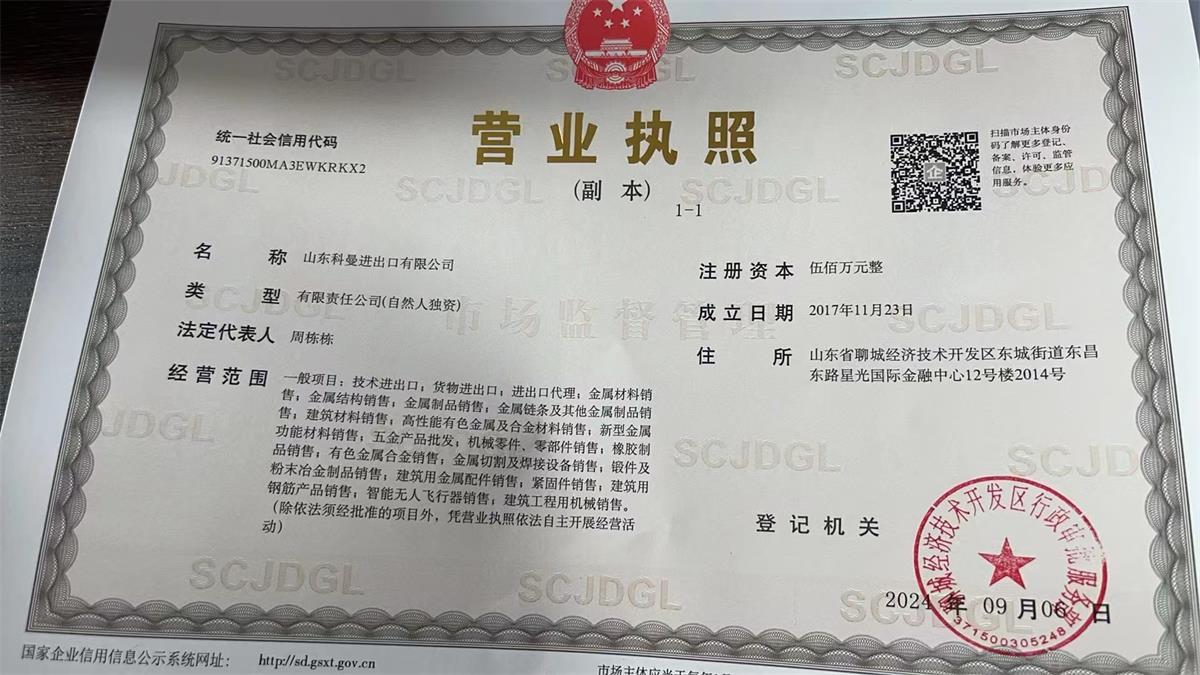
Address:Shandong Keman Import and Export Co., Ltd.

Understanding Carbon Steel Plates: Their Importance in Construction and Structural Applications
Release time:
2025-11-07
Carbon steel plates are essential components in the construction and decorative materials industry, widely utilized for their strength, versatility, and cost-effectiveness. Composed primarily of iron and carbon, these plates exhibit unique properties that make them suitable for a variety of structural applications. The carbon content in these plates typically ranges from 0.05% to 2.0%, influencing
One of the most significant advantages of carbon steel plates is their high strength-to-weight ratio. This characteristic allows for the design of robust structures that are still lightweight, making them ideal for both residential and commercial buildings. Additionally, carbon steel plates are known for their excellent weldability and machinability, which facilitates easier construction and fabrication processes. These properties enable builders and manufacturers to create complex shapes and designs that meet specific architectural requirements.
In terms of applications, carbon steel plates are commonly used in the construction of bridges, buildings, and various industrial structures. They can also be found in the manufacturing of equipment and machinery, where strength and durability are paramount. Furthermore, carbon steel plates are often utilized in the production of structural components such as beams, columns, and trusses, which form the backbone of any construction project.
Another noteworthy aspect of carbon steel plates is their adaptability to different environments. While they are generally resistant to wear and tear, protective coatings can be applied to enhance their corrosion resistance, especially in harsh environments. This makes carbon steel plates a reliable choice for both indoor and outdoor applications, ensuring that structures maintain their integrity over time.
It’s also essential to consider the economic aspect of using carbon steel plates. They are typically more affordable compared to other steel types or construction materials, making them an attractive option for budget-conscious projects without compromising quality. The availability of carbon steel plates in various thicknesses and dimensions further adds to their appeal, allowing for customized solutions tailored to specific needs.
In summary, carbon steel plates play a pivotal role in the construction and decorative materials industry due to their strength, versatility, and cost-effectiveness. Their applications range from structural components in buildings to equipment manufacturing, highlighting their importance in modern construction practices. Understanding the properties and benefits of carbon steel plates can help industry professionals make informed decisions, ensuring the successful execution of their projects.
Latest News
Innovative Applications of Carbon Steel Plates in Building Designs
Innovative Applications of Carbon Steel Plates in Building Designs Carbon steel plates have emerged as a cornerstone material in the construction industry, gaining acclaim for their versatility, strength, and aesthetic potential. As the demand for innovative design solutions escalates, architects and builders are increasingly incorporating carbon steel plates into their projects. This article expl
2026-09-22
Understanding A514 Carbon Steel Plate: Key Characteristics and Applications
A514 Carbon Steel Plate is a high-yield strength steel that has become a preferred choice in various industrial applications, particularly in the fields of metallurgy and energy. This type of steel is known for its excellent mechanical properties, making it suitable for demanding environments where strength and durability are paramount. One of the key characteristics of A514 Carbon Steel Plate is
2026-09-17
How A387 Carbon Alloy Steel Plate Enhances Structural Integrity in Construction
How A387 Carbon Alloy Steel Plate Enhances Structural Integrity in Construction Table of Contents 1. Introduction to A387 Carbon Alloy Steel Plate 2. What is A387 Carbon Alloy Steel? 3. Key Properties of A387 Carbon Alloy Steel Plates 4. Manufacturing Process of A387 Steel Plates 5. Applications of A387 Carbon Alloy Steel Plates 6. Advantages of Using A387 Carbon Alloy Ste
2026-09-12
Understanding A285 Carbon Steel Pressure Plates: Essential Insights for Construction and Design
A285 Carbon Steel Pressure Plates are primarily used in pressure vessel fabrication and construction applications. This type of steel is known for its good weldability and formability, making it a favorable choice for various structural components. The ASTM A285 standard specifically governs the specifications for carbon steel plates intended for low-pressure service. One of the key characteristic
2026-09-07
The Role of 5A05 Aluminum Plate in Enhancing Building Aesthetics
The Role of 5A05 Aluminum Plate in Enhancing Building Aesthetics Table of Contents 1. Introduction to 5A05 Aluminum Plates 2. Properties of 5A05 Aluminum Plates 3. Applications of 5A05 Aluminum Plates in Architecture 4. Aesthetic Advantages of Using 5A05 Aluminum Plates 5. Sustainability and Environmental Impact 6. Installation and Maintenance of 5A05 Aluminum Plates 7
2026-09-02
Understanding B500 Steel Reinforcement: Key Insights for Professionals in Construction Machinery
B500 steel reinforcement is a critical component in the construction industry, particularly in manufacturing and processing machinery for engineering and construction projects. This high-strength steel bar is widely used in reinforced concrete structures, providing the necessary tensile strength to support heavy loads and withstand various stresses. One of the defining characteristics of B500 stee
2026-08-28


Copyright 2025 : Shandong Keman Import and Export Co., Ltd. Powered by:CEglobal SEO BUSINESS LICENSE