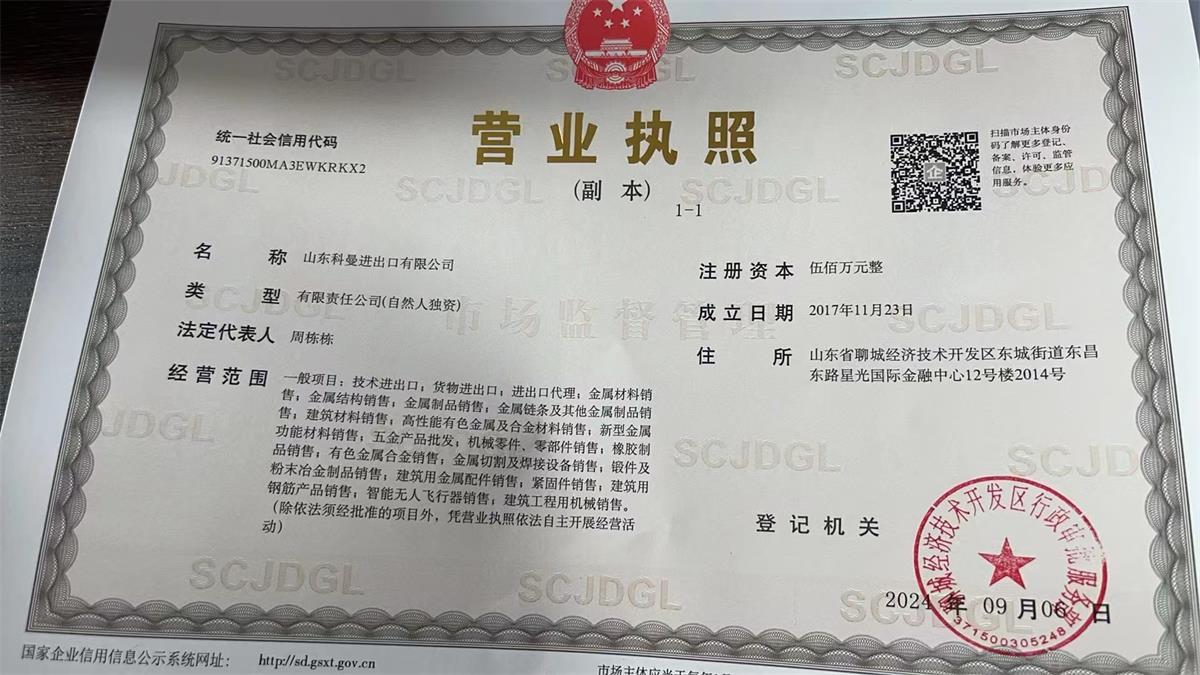
Address:Shandong Keman Import and Export Co., Ltd.

Hastelloy Alloy Plate: A Critical Element for Success in the Oil and Gas Industry
Release time:
2025-11-16
Introduction to Hastelloy Alloy Plates in the Oil and Gas Sector In the constantly evolving oil and gas industry, the demand for materials that can withstand extreme conditions is paramount. **Hastelloy alloy plates** have emerged as a vital component due to their unmatched resistance to corrosion, heat, and mechanical stress. This article delves into the significance of Hastelloy alloy plates, th
Introduction to Hastelloy Alloy Plates in the Oil and Gas Sector
In the constantly evolving oil and gas industry, the demand for materials that can withstand extreme conditions is paramount. **Hastelloy alloy plates** have emerged as a vital component due to their unmatched resistance to corrosion, heat, and mechanical stress. This article delves into the significance of Hastelloy alloy plates, their unique properties, applications, and reasons they are indispensable in the oil and gas sector.
Understanding Hastelloy: Composition and Properties
Hastelloy is a registered trademark of Haynes International, Inc., and refers to a series of high-performance alloys primarily composed of nickel, molybdenum, and chromium. These alloys are engineered for exceptional strength and corrosion resistance, making them suitable for harsh environments.
Key Characteristics of Hastelloy Alloy Plates
1. **Corrosion Resistance**: Hastelloy alloys excel in resisting a wide range of corrosive media, including sulfuric acid, hydrochloric acid, and chlorine. This property is crucial for oil and gas operations where exposure to aggressive chemicals is common.
2. **High-Temperature Stability**: Hastelloy plates maintain their integrity and performance at elevated temperatures, making them ideal for applications in refineries and offshore platforms.
3. **Mechanical Strength**: The alloys exhibit remarkable tensile strength, which is essential for components that undergo significant mechanical stress during extraction and processing.
4. **Versatility**: Hastelloy alloys can be easily fabricated and welded, allowing for diverse applications in the oil and gas industry.
Applications of Hastelloy Alloy Plates in the Oil and Gas Industry
Hastelloy alloy plates are utilized across various applications in the oil and gas sector. Their unique properties enable them to perform effectively in multiple environments.
1. Oil Refining Processes
In the refining industry, Hastelloy alloys are employed in heat exchangers, reactors, and piping systems. Their corrosion resistance is particularly beneficial in processes involving sour crude oils, where traditional materials may fail.
2. Offshore Oil and Gas Exploration
The offshore sector often encounters harsh marine environments. Hastelloy plates are used in subsea piping and equipment to ensure durability and prevent failures due to corrosion and extreme pressure.
3. Chemical Processing Equipment
Hastelloy plates are extensively used in chemical processing equipment due to their ability to withstand aggressive chemicals and high temperatures. Applications include scrubbers, distillation columns, and storage tanks.
4. LNG and LPG Applications
Liquefied natural gas (LNG) and liquefied petroleum gas (LPG) operations require materials that can endure cryogenic temperatures. Hastelloy alloys are effective in these applications, providing stability and reliability.
The Benefits of Using Hastelloy Alloy Plates
The advantages of utilizing Hastelloy alloy plates in the oil and gas sector are manifold.
1. Enhanced Safety
By minimizing the risk of equipment failure and leaks, Hastelloy alloy plates contribute significantly to safety in operations. Their robust nature ensures that equipment remains functional, even in challenging conditions.
2. Cost-Effectiveness
While Hastelloy alloys may have a higher initial cost, their longevity and reduced maintenance requirements translate to lower total operational costs in the long run. Investing in Hastelloy plates can lead to significant savings over time.
3. Regulatory Compliance
Adhering to safety and environmental regulations is crucial in the oil and gas industry. The use of Hastelloy plates helps companies meet stringent standards, thereby avoiding potential legal and financial repercussions.
4. Improved Performance
Hastelloy alloy plates enhance the overall performance of equipment and processes. Their ability to maintain integrity under extreme conditions leads to higher efficiency and productivity.
Challenges and Considerations in Using Hastelloy Alloys
While Hastelloy alloys present numerous benefits, certain challenges and considerations must be addressed.
1. Fabrication Challenges
The fabrication of Hastelloy alloys requires specialized techniques due to their hardness. Companies must invest in proper training and equipment to ensure successful processing.
2. Availability and Cost
Hastelloy alloys can be more expensive and less readily available than conventional materials. Proper planning and sourcing strategies are essential to mitigate these challenges.
3. Selection of Appropriate Alloy Grade
Different Hastelloy grades possess varying properties suited for specific applications. Understanding the requirements for each application is critical to selecting the appropriate alloy grade.
Future Trends in Hastelloy Alloy Usage in the Oil and Gas Sector
As the oil and gas industry continues to evolve, so do the applications and technologies surrounding Hastelloy alloys.
1. Advances in Alloy Development
Ongoing research and development efforts are likely to yield new Hastelloy grades with enhanced properties tailored for specific applications, thus broadening their use in the sector.
2. Emphasis on Sustainability
With a growing focus on sustainability, the oil and gas industry is exploring the use of Hastelloy alloys in renewable energy applications and cleaner technologies.
3. Integration with Digital Technologies
The integration of digital technologies in the oil and gas sector may lead to better monitoring and management of equipment utilizing Hastelloy alloys, enhancing operational efficiency and safety.
FAQs About Hastelloy Alloy Plates
1. What is the primary advantage of using Hastelloy alloy plates in the oil and gas sector?
The primary advantage is their exceptional resistance to corrosion and high temperatures, making them ideal for harsh environments.
2. How do Hastelloy alloys compare to other metals in terms of cost?
While Hastelloy alloys may have higher upfront costs, their durability and lower maintenance needs often result in cost savings over time.
3. Can Hastelloy alloy plates be welded?
Yes, Hastelloy alloys can be welded, but specialized techniques and training are recommended to ensure quality.
4. What are the common grades of Hastelloy used in the oil and gas industry?
Common grades include Hastelloy C-276, C-22, and B-2, each suited for different applications.
5. Are there any environmental concerns with using Hastelloy alloys?
Hastelloy alloys are designed to withstand extreme conditions, which can help reduce the likelihood of leaks and environmental contamination during operations.
Conclusion
Hastelloy alloy plates play a critical role in the oil and gas sector, providing unmatched durability, reliability, and effectiveness in challenging environments. Their unique properties make them indispensable for a wide range of applications, from oil refining to offshore exploration. As the industry continues to evolve, the importance of Hastelloy alloys is only set to increase, making them a cornerstone of modern oil and gas operations. Leveraging the advantages of Hastelloy will not only enhance safety and performance but also contribute to a more sustainable future in the energy sector.
Latest News
Innovative Applications of Carbon Steel Plates in Building Designs
Innovative Applications of Carbon Steel Plates in Building Designs Carbon steel plates have emerged as a cornerstone material in the construction industry, gaining acclaim for their versatility, strength, and aesthetic potential. As the demand for innovative design solutions escalates, architects and builders are increasingly incorporating carbon steel plates into their projects. This article expl
2026-09-22
Understanding A514 Carbon Steel Plate: Key Characteristics and Applications
A514 Carbon Steel Plate is a high-yield strength steel that has become a preferred choice in various industrial applications, particularly in the fields of metallurgy and energy. This type of steel is known for its excellent mechanical properties, making it suitable for demanding environments where strength and durability are paramount. One of the key characteristics of A514 Carbon Steel Plate is
2026-09-17
How A387 Carbon Alloy Steel Plate Enhances Structural Integrity in Construction
How A387 Carbon Alloy Steel Plate Enhances Structural Integrity in Construction Table of Contents 1. Introduction to A387 Carbon Alloy Steel Plate 2. What is A387 Carbon Alloy Steel? 3. Key Properties of A387 Carbon Alloy Steel Plates 4. Manufacturing Process of A387 Steel Plates 5. Applications of A387 Carbon Alloy Steel Plates 6. Advantages of Using A387 Carbon Alloy Ste
2026-09-12
Understanding A285 Carbon Steel Pressure Plates: Essential Insights for Construction and Design
A285 Carbon Steel Pressure Plates are primarily used in pressure vessel fabrication and construction applications. This type of steel is known for its good weldability and formability, making it a favorable choice for various structural components. The ASTM A285 standard specifically governs the specifications for carbon steel plates intended for low-pressure service. One of the key characteristic
2026-09-07
The Role of 5A05 Aluminum Plate in Enhancing Building Aesthetics
The Role of 5A05 Aluminum Plate in Enhancing Building Aesthetics Table of Contents 1. Introduction to 5A05 Aluminum Plates 2. Properties of 5A05 Aluminum Plates 3. Applications of 5A05 Aluminum Plates in Architecture 4. Aesthetic Advantages of Using 5A05 Aluminum Plates 5. Sustainability and Environmental Impact 6. Installation and Maintenance of 5A05 Aluminum Plates 7
2026-09-02
Understanding B500 Steel Reinforcement: Key Insights for Professionals in Construction Machinery
B500 steel reinforcement is a critical component in the construction industry, particularly in manufacturing and processing machinery for engineering and construction projects. This high-strength steel bar is widely used in reinforced concrete structures, providing the necessary tensile strength to support heavy loads and withstand various stresses. One of the defining characteristics of B500 stee
2026-08-28


Copyright 2025 : Shandong Keman Import and Export Co., Ltd. Powered by:CEglobal SEO BUSINESS LICENSE