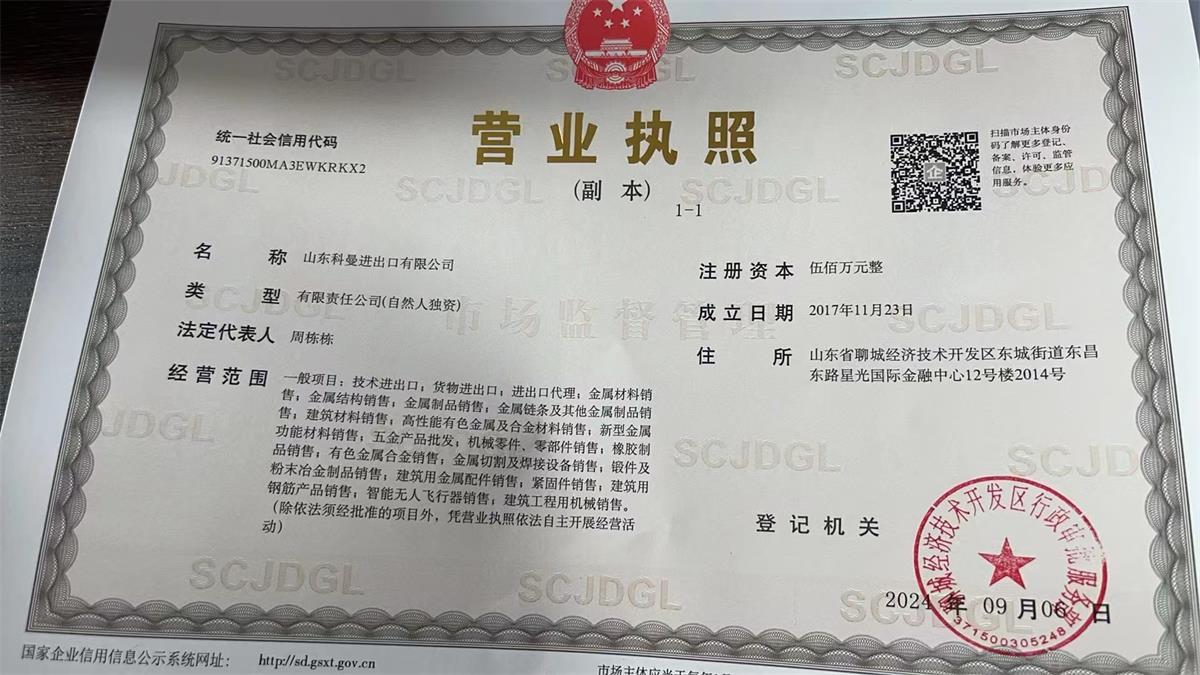
Address:Shandong Keman Import and Export Co., Ltd.

Why Choose Inconel Alloy Plate for Your Next Project? Discover the Advantages and Applications
Release time:
2025-11-28
Why Choose Inconel Alloy Plate for Your Next Project? In the quest for materials that can withstand extreme environments and demanding applications, Inconel alloy plates emerge as a frontrunner. Designed to endure high temperatures, corrosion, and oxidation, these alloys have established a reputable presence across various industries. In this article, we will explore the multifaceted advantages of
Why Choose Inconel Alloy Plate for Your Next Project?
In the quest for materials that can withstand extreme environments and demanding applications, Inconel alloy plates emerge as a frontrunner. Designed to endure high temperatures, corrosion, and oxidation, these alloys have established a reputable presence across various industries. In this article, we will explore the multifaceted advantages of Inconel alloy plates and why they should be your material of choice for your next project.
Understanding Inconel Alloys
Inconel is a registered trademark for a series of superalloys primarily composed of nickel, chromium, and iron. These alloys are known for their excellent strength and resistance to oxidation and corrosion at high temperatures. The most common types of Inconel include Inconel 600, Inconel 625, and Inconel 718, each designed for specific applications and environmental conditions.
The Properties That Set Inconel Apart
The unique properties of Inconel alloys make them suitable for a wide range of applications:
- **Corrosion Resistance**: Inconel alloys provide exceptional resistance to various corrosive environments, including acidic and alkaline solutions.
- **High-Temperature Stability**: They maintain their mechanical integrity and strength even at elevated temperatures, making them ideal for aerospace and chemical processing applications.
- **Oxidation Resistance**: Inconel alloys form a protective oxide layer that prevents deterioration in high-temperature environments.
- **Weldability**: Inconel plates can be easily welded and fabricated, allowing for versatility in design and application.
Applications of Inconel Alloy Plates
Inconel alloy plates are utilized in a multitude of industries, including:
- **Aerospace**: Inconel is a critical material in jet engines and gas turbines, where it withstands extreme heat and pressure.
- **Chemical Processing**: Its corrosion resistance makes it suitable for tanks, heat exchangers, and other equipment in the chemical industry.
- **Oil and Gas**: Inconel is used in downhole tubing and components that operate in high-pressure and high-temperature environments.
- **Marine Engineering**: The alloy's resistance to seawater corrosion makes it a reliable choice for marine applications.
Advantages of Using Inconel Alloy Plates
Choosing Inconel alloy plates brings numerous advantages to your projects:
1. Superior Strength-to-Weight Ratio
Inconel alloys offer a remarkable strength-to-weight ratio, allowing for lightweight designs without compromising structural integrity. This property is especially advantageous in aerospace applications where weight savings can lead to significant performance improvements.
2. Long-Term Cost Efficiency
While the initial cost of Inconel alloy plates may be higher than standard materials, their durability and longevity result in lower maintenance and replacement costs over time. Investing in Inconel means fewer disruptions to operations and reduced downtime.
3. Versatility in Design
Inconel alloy plates can be fabricated into various shapes and sizes, accommodating diverse project requirements. Their weldability allows seamless integration with other materials and structures, providing flexibility in design.
4. Resistance to Thermal Fatigue
Thermal fatigue can severely impact material performance in environments with fluctuating temperatures. Inconel's ability to withstand thermal cycling ensures reliability across applications that experience drastic temperature changes.
5. Compliance with Industry Standards
Inconel alloys meet or exceed various industry standards, ensuring quality and performance. This compliance is crucial for sectors such as aerospace and oil and gas, where safety is paramount.
Comparing Inconel to Other Alloys
When considering materials for high-performance applications, it's vital to compare Inconel to other alloys like stainless steel and titanium.
Inconel vs. Stainless Steel
While stainless steel is popular for its corrosion resistance, it lacks the high-temperature stability that Inconel offers. Inconel can perform in environments exceeding 1000°F, whereas most stainless steels degrade at elevated temperatures.
Inconel vs. Titanium
Titanium is lightweight and corrosion-resistant, but it cannot match Inconel’s strength at high temperatures. Inconel is often the preferred choice in critical applications where both strength and heat resistance are required.
How to Select the Right Inconel Alloy Plate for Your Project
Choosing the appropriate Inconel alloy plate involves understanding your project's specific requirements. Consider the following factors:
1. Operating Environment
Identify the environmental conditions your material will face, including temperature ranges, pressure levels, and corrosive elements. This information will guide you in selecting the right alloy variant.
2. Fabrication Needs
Evaluate how the Inconel plates will be processed and fabricated. Some alloys may be easier to weld or machine, which could influence your selection.
3. Regulatory Compliance
Ensure that the selected Inconel alloy meets all relevant industry standards and regulatory requirements for your specific application.
Frequently Asked Questions (FAQs)
1. What is the primary composition of Inconel alloys?
Inconel alloys are primarily composed of nickel, chromium, and iron, providing their unique properties.
2. Can Inconel alloy plates be welded?
Yes, Inconel alloys can be easily welded and are compatible with various welding techniques.
3. What are the typical applications for Inconel alloy plates?
They are commonly used in aerospace, chemical processing, oil and gas, and marine engineering applications.
4. Is Inconel more expensive than other materials?
Yes, Inconel alloys typically have a higher initial cost than standard materials, but their long-term performance can lead to cost savings.
5. How do I maintain Inconel alloy components?
Inconel alloys generally require minimal maintenance due to their resistance to corrosion and oxidation, but regular inspections are recommended to ensure performance.
Conclusion
Inconel alloy plates represent an invaluable asset for projects requiring durability, heat resistance, and corrosion protection. Their versatility and superior mechanical properties make them suitable for a wide range of applications across various industries. By choosing Inconel, you invest in a material that not only meets but exceeds the demands of extreme environments. Whether you are in aerospace, chemical processing, or marine engineering, Inconel alloy plates can enhance the performance and longevity of your projects. Embrace the benefits of Inconel and ensure your next project stands the test of time.
Latest News
Innovative Applications of Carbon Steel Plates in Building Designs
Innovative Applications of Carbon Steel Plates in Building Designs Carbon steel plates have emerged as a cornerstone material in the construction industry, gaining acclaim for their versatility, strength, and aesthetic potential. As the demand for innovative design solutions escalates, architects and builders are increasingly incorporating carbon steel plates into their projects. This article expl
2026-09-22
Understanding A514 Carbon Steel Plate: Key Characteristics and Applications
A514 Carbon Steel Plate is a high-yield strength steel that has become a preferred choice in various industrial applications, particularly in the fields of metallurgy and energy. This type of steel is known for its excellent mechanical properties, making it suitable for demanding environments where strength and durability are paramount. One of the key characteristics of A514 Carbon Steel Plate is
2026-09-17
How A387 Carbon Alloy Steel Plate Enhances Structural Integrity in Construction
How A387 Carbon Alloy Steel Plate Enhances Structural Integrity in Construction Table of Contents 1. Introduction to A387 Carbon Alloy Steel Plate 2. What is A387 Carbon Alloy Steel? 3. Key Properties of A387 Carbon Alloy Steel Plates 4. Manufacturing Process of A387 Steel Plates 5. Applications of A387 Carbon Alloy Steel Plates 6. Advantages of Using A387 Carbon Alloy Ste
2026-09-12
Understanding A285 Carbon Steel Pressure Plates: Essential Insights for Construction and Design
A285 Carbon Steel Pressure Plates are primarily used in pressure vessel fabrication and construction applications. This type of steel is known for its good weldability and formability, making it a favorable choice for various structural components. The ASTM A285 standard specifically governs the specifications for carbon steel plates intended for low-pressure service. One of the key characteristic
2026-09-07
The Role of 5A05 Aluminum Plate in Enhancing Building Aesthetics
The Role of 5A05 Aluminum Plate in Enhancing Building Aesthetics Table of Contents 1. Introduction to 5A05 Aluminum Plates 2. Properties of 5A05 Aluminum Plates 3. Applications of 5A05 Aluminum Plates in Architecture 4. Aesthetic Advantages of Using 5A05 Aluminum Plates 5. Sustainability and Environmental Impact 6. Installation and Maintenance of 5A05 Aluminum Plates 7
2026-09-02
Understanding B500 Steel Reinforcement: Key Insights for Professionals in Construction Machinery
B500 steel reinforcement is a critical component in the construction industry, particularly in manufacturing and processing machinery for engineering and construction projects. This high-strength steel bar is widely used in reinforced concrete structures, providing the necessary tensile strength to support heavy loads and withstand various stresses. One of the defining characteristics of B500 stee
2026-08-28


Copyright 2025 : Shandong Keman Import and Export Co., Ltd. Powered by:CEglobal SEO BUSINESS LICENSE