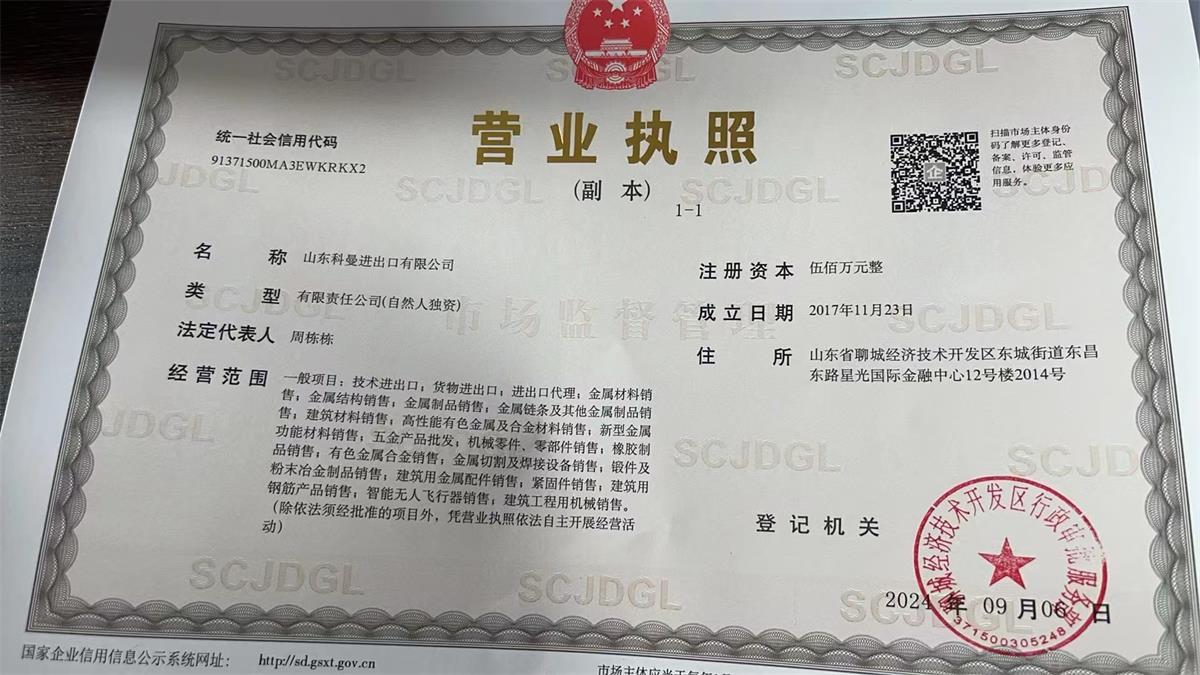
Address:Shandong Keman Import and Export Co., Ltd.

Why Galvanized Plates Are Essential for Corrosion Resistance
Release time:
2025-12-10
Why Galvanized Plates Are Essential for Corrosion Resistance Table of Contents 1. Introduction to Galvanized Plates 2. Understanding Corrosion and Its Impact 3. The Process of Galvanization 3.1 Hot-Dip Galvanization 3.2 Electrogalvanization 4. Benefits of Galvanized Plates for Corrosion Resistance 4.1 Longevity and Durability 4.2 Cost-Effectiveness 4.3 Low Maintenance Requireme
Why Galvanized Plates Are Essential for Corrosion Resistance
Table of Contents
1. Introduction to Galvanized Plates
2. Understanding Corrosion and Its Impact
3. The Process of Galvanization
3.1 Hot-Dip Galvanization
3.2 Electrogalvanization
4. Benefits of Galvanized Plates for Corrosion Resistance
4.1 Longevity and Durability
4.2 Cost-Effectiveness
4.3 Low Maintenance Requirements
5. Applications of Galvanized Plates in Various Industries
5.1 Construction and Infrastructure
5.2 Automotive Industry
5.3 Energy Sector
6. Best Practices for Using Galvanized Plates
7. FAQs About Galvanized Plates
8. Conclusion
1. Introduction to Galvanized Plates
Galvanized plates, coated with a layer of zinc, serve as a robust barrier against corrosion. These plates are crucial in various applications, providing structural integrity and protecting underlying metals from environmental factors. The use of galvanized materials has become a standard practice in industries where metal exposure is inevitable, making them an essential component in modern construction, automotive manufacturing, and energy projects.
2. Understanding Corrosion and Its Impact
Corrosion is a natural process that deteriorates metals through chemical reactions with their environment. Factors such as moisture, salt, and pollutants accelerate this degradation. The consequences of corrosion are severe, leading to structural failures, costly repairs, and potential hazards. Understanding the nature of corrosion is vital to developing effective prevention strategies, such as the use of galvanized plates.
3. The Process of Galvanization
The galvanization process involves applying a protective zinc coating to steel or iron surfaces, which not only prevents oxidation but also provides a sacrificial layer. There are two primary methods of galvanization:
3.1 Hot-Dip Galvanization
In hot-dip galvanization, steel parts are submerged in molten zinc. This method produces a thick, durable coating that adheres well to the metal, providing excellent corrosion protection. The resulting galvanized steel can withstand extreme environmental conditions, making it ideal for outdoor applications.
3.2 Electrogalvanization
Electrogalvanization employs an electrochemical process to deposit a thin layer of zinc onto the metal surface. While it provides adequate protection, it is typically used in applications where aesthetics and minimal weight are crucial, such as in the automotive industry.
4. Benefits of Galvanized Plates for Corrosion Resistance
Utilizing galvanized plates offers numerous advantages that make them indispensable for various applications.
4.1 Longevity and Durability
Galvanized plates can endure harsh conditions, with a lifespan often exceeding 50 years in many environments. The zinc coating not only protects against corrosion but also forms a barrier that resists damage from impact and abrasion.
4.2 Cost-Effectiveness
While the initial investment in galvanized materials may be higher than non-galvanized alternatives, the long-term savings in maintenance and replacement costs make it a cost-effective choice. By reducing the frequency of repairs, galvanized plates significantly lower overall project expenses.
4.3 Low Maintenance Requirements
Galvanized plates require minimal maintenance compared to other materials. The protective coating eliminates the need for regular painting or treatment, allowing for more efficient resource allocation over time.
5. Applications of Galvanized Plates in Various Industries
The versatility of galvanized plates makes them suitable for a wide range of applications across different sectors.
5.1 Construction and Infrastructure
In construction, galvanized plates are used for roofing, siding, and structural components, providing essential protection against moisture and environmental stressors. Their resilience contributes to the longevity of buildings and infrastructure projects.
5.2 Automotive Industry
Within the automotive sector, galvanized steel is commonly used in the production of body panels, frames, and other components. The corrosion resistance of these plates helps extend the life of vehicles, ensuring safety and reliability for consumers.
5.3 Energy Sector
Galvanized plates are integral to the energy industry, particularly in power generation and distribution. They are often used for pipelines, electrical towers, and wind turbine structures, where their resistance to corrosion is critical for operational efficiency and safety.
6. Best Practices for Using Galvanized Plates
To maximize the benefits of galvanized plates, it's essential to follow best practices during installation and maintenance:
- **Proper Surface Preparation**: Ensure that surfaces are clean and free from contaminants prior to installation.
- **Avoiding Dissimilar Metals**: When connecting galvanized plates to other metals, use non-corrosive materials to prevent galvanic corrosion.
- **Regular Inspections**: Conduct periodic assessments to identify any signs of wear or damage to the coating.
7. FAQs About Galvanized Plates
Q1: How are galvanized plates manufactured?
A1: Galvanized plates are manufactured through hot-dip galvanization or electrogalvanization processes, where a protective zinc coating is applied to steel or iron surfaces.
Q2: What is the lifespan of galvanized plates?
A2: Galvanized plates can last over 50 years in many environments, depending on factors like climate and exposure to corrosive agents.
Q3: Can galvanized plates be painted?
A3: Yes, galvanized plates can be painted, but it is essential to use compatible paint that adheres properly to the zinc surface.
Q4: Are galvanized plates environmentally friendly?
A4: Galvanization is considered environmentally friendly, as the zinc used can be recycled, and the process generates minimal waste compared to other coatings.
Q5: What industries benefit the most from galvanized plates?
A5: The construction, automotive, and energy industries are among the top sectors that benefit from the corrosion resistance and durability of galvanized plates.
8. Conclusion
Galvanized plates are a vital solution for combating corrosion, providing exceptional durability, cost-effectiveness, and low maintenance requirements across various industries. Understanding the benefits and applications of these plates is essential for making informed decisions in construction, automotive manufacturing, and energy production. By prioritizing the use of galvanized materials, businesses can enhance their structural integrity while significantly extending the lifespan of their projects. Embracing galvanized plates not only protects investments but also promotes sustainability and efficiency in the long run.
Latest News
Innovative Applications of Carbon Steel Plates in Building Designs
Innovative Applications of Carbon Steel Plates in Building Designs Carbon steel plates have emerged as a cornerstone material in the construction industry, gaining acclaim for their versatility, strength, and aesthetic potential. As the demand for innovative design solutions escalates, architects and builders are increasingly incorporating carbon steel plates into their projects. This article expl
2026-09-22
Understanding A514 Carbon Steel Plate: Key Characteristics and Applications
A514 Carbon Steel Plate is a high-yield strength steel that has become a preferred choice in various industrial applications, particularly in the fields of metallurgy and energy. This type of steel is known for its excellent mechanical properties, making it suitable for demanding environments where strength and durability are paramount. One of the key characteristics of A514 Carbon Steel Plate is
2026-09-17
How A387 Carbon Alloy Steel Plate Enhances Structural Integrity in Construction
How A387 Carbon Alloy Steel Plate Enhances Structural Integrity in Construction Table of Contents 1. Introduction to A387 Carbon Alloy Steel Plate 2. What is A387 Carbon Alloy Steel? 3. Key Properties of A387 Carbon Alloy Steel Plates 4. Manufacturing Process of A387 Steel Plates 5. Applications of A387 Carbon Alloy Steel Plates 6. Advantages of Using A387 Carbon Alloy Ste
2026-09-12
Understanding A285 Carbon Steel Pressure Plates: Essential Insights for Construction and Design
A285 Carbon Steel Pressure Plates are primarily used in pressure vessel fabrication and construction applications. This type of steel is known for its good weldability and formability, making it a favorable choice for various structural components. The ASTM A285 standard specifically governs the specifications for carbon steel plates intended for low-pressure service. One of the key characteristic
2026-09-07
The Role of 5A05 Aluminum Plate in Enhancing Building Aesthetics
The Role of 5A05 Aluminum Plate in Enhancing Building Aesthetics Table of Contents 1. Introduction to 5A05 Aluminum Plates 2. Properties of 5A05 Aluminum Plates 3. Applications of 5A05 Aluminum Plates in Architecture 4. Aesthetic Advantages of Using 5A05 Aluminum Plates 5. Sustainability and Environmental Impact 6. Installation and Maintenance of 5A05 Aluminum Plates 7
2026-09-02
Understanding B500 Steel Reinforcement: Key Insights for Professionals in Construction Machinery
B500 steel reinforcement is a critical component in the construction industry, particularly in manufacturing and processing machinery for engineering and construction projects. This high-strength steel bar is widely used in reinforced concrete structures, providing the necessary tensile strength to support heavy loads and withstand various stresses. One of the defining characteristics of B500 stee
2026-08-28


Copyright 2025 : Shandong Keman Import and Export Co., Ltd. Powered by:CEglobal SEO BUSINESS LICENSE