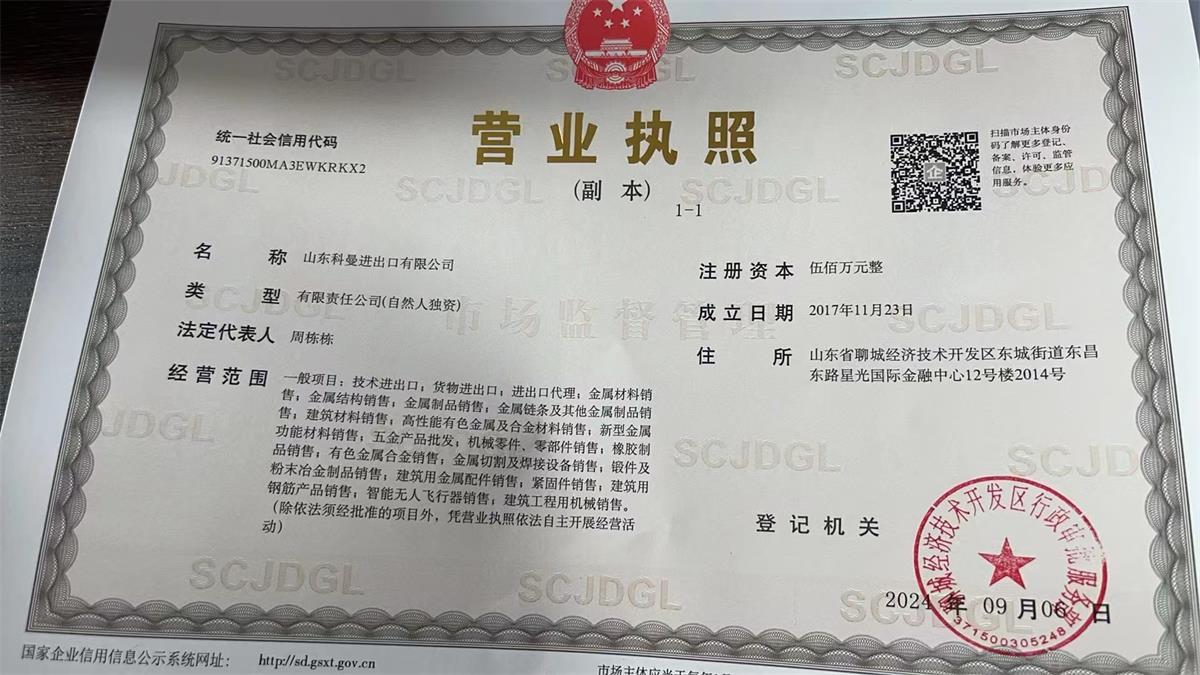
Address:Shandong Keman Import and Export Co., Ltd.

Comparing Hastelloy Alloy Plate with Other Nickel Alloys: What You Need to Know
Release time:
2025-12-16
Comparing Hastelloy Alloy Plate with Other Nickel Alloys: What You Need to Know Table of Contents 1. Introduction to Nickel Alloys 2. Overview of Hastelloy Alloys 3. Types of Nickel Alloys 3.1 Monel Alloys 3.2 Inconel Alloys 3.3 Nichrome Alloys 4. Hastelloy vs. Other Nickel Alloys 4.1 Corrosion Resistance
Comparing Hastelloy Alloy Plate with Other Nickel Alloys: What You Need to Know
Table of Contents
- 1. Introduction to Nickel Alloys
- 2. Overview of Hastelloy Alloys
- 3. Types of Nickel Alloys
- 4. Hastelloy vs. Other Nickel Alloys
- 5. Applications of Hastelloy and Other Nickel Alloys
- 6. Welding and Fabrication Techniques
- 7. Cost Considerations for Hastelloy vs. Other Nickel Alloys
- 8. Conclusion
- 9. Frequently Asked Questions
1. Introduction to Nickel Alloys
Nickel alloys are critical materials in various industries, known for their excellent mechanical properties and resistance to corrosion. These alloys are predominantly used in environments where temperature and chemical reactions can degrade standard metals. Among these, Hastelloy alloy plates stand out due to their unique compositions and properties. This article aims to provide a detailed comparison between Hastelloy and other nickel alloys, offering insights that are crucial for engineers and manufacturers.
2. Overview of Hastelloy Alloys
Hastelloy is a registered trademark for a series of **high-performance nickel-based alloys** known for their exceptional resistance to corrosion and heat. Originally developed for the chemical processing industry, Hastelloy has become a go-to choice for many applications, including aerospace, nuclear power, and oil and gas exploration. The key to Hastelloy's performance lies in its carefully balanced composition, often containing elements such as chromium, molybdenum, and iron, which enhance its overall stability and strength.
3. Types of Nickel Alloys
There are several categories of nickel alloys, each designed for specific applications and environments. Understanding these types helps in making informed choices when selecting materials for projects.
3.1 Monel Alloys
Monel alloys are primarily composed of nickel and copper, offering excellent corrosion resistance in marine environments. These alloys can withstand high temperatures and pressures, making them suitable for use in chemical processing and oil refineries.
3.2 Inconel Alloys
Inconel is another category of nickel alloys, known for its ability to maintain its strength at elevated temperatures. This makes Inconel ideal for applications in the aerospace and nuclear sectors, where high heat and oxidation resistance are crucial.
3.3 Nichrome Alloys
Nichrome is an alloy of nickel and chromium, primarily used in heating elements due to its high electrical resistance and ability to withstand extreme temperatures. It is commonly found in toasters, hair dryers, and industrial furnaces.
4. Hastelloy vs. Other Nickel Alloys
When comparing Hastelloy to other nickel alloys, several factors must be considered, including **corrosion resistance**, **temperature resistance**, and **mechanical properties**.
4.1 Corrosion Resistance
Hastelloy alloys exhibit superior corrosion resistance compared to many other nickel alloys. This is primarily due to their high nickel content and the addition of molybdenum and chromium, which form a protective oxide layer on the surface. In highly corrosive environments, such as chemical processing plants, Hastelloy can often outlast other alloys like Monel and Inconel.
4.2 Temperature Resistance
Temperature resistance is another critical area where Hastelloy excels. Withstanding extreme temperatures without losing strength or becoming brittle is vital for applications in aerospace and nuclear industries. Hastelloy's unique composition allows it to maintain its mechanical properties at elevated temperatures, making it a preferred choice over many other nickel-based alloys.
4.3 Mechanical Properties
In terms of mechanical properties, Hastelloy alloys offer excellent tensile strength and ductility. The ability to be fabricated into various shapes and sizes without compromising its structural integrity is a significant advantage. Other nickel alloys, while strong, often do not match Hastelloy’s balance of strength and malleability.
5. Applications of Hastelloy and Other Nickel Alloys
The applications of Hastelloy and other nickel alloys are vast and varied. Hastelloy is commonly used in:
- **Chemical processing**: Particularly in reactors and heat exchangers.
- **Aerospace**: For components that must withstand high stress and temperature variations.
- **Oil and gas**: In downhole and subsea applications where corrosion is prevalent.
Conversely, Monel and Inconel find applications in:
- **Marine environments**: Monel is often used in shipbuilding and offshore oil rigs.
- **High-temperature applications**: Inconel is prevalent in gas turbine engines and nuclear reactors.
6. Welding and Fabrication Techniques
Welding Hastelloy requires specific techniques to maintain its integrity and performance. Preheating and post-weld heat treatment can help prevent cracking and distortion. Similarly, the welding of other nickel alloys, such as Monel and Inconel, requires expertise to ensure a strong bond without compromising their protective properties.
7. Cost Considerations for Hastelloy vs. Other Nickel Alloys
Cost is often a deciding factor when selecting materials. Hastelloy, while offering superior properties, is typically more expensive than other nickel alloys like Monel and Inconel. However, the longevity and performance of Hastelloy can lead to lower overall costs in applications where failure could result in significant losses.
8. Conclusion
In summary, Hastelloy alloy plates stand out in the realm of nickel alloys due to their exceptional resistance to corrosion and high temperatures, robust mechanical properties, and versatility in applications. While other nickel alloys, such as Monel and Inconel, have their benefits, Hastelloy often proves to be the superior choice when durability and performance are paramount. Understanding the distinctions between these alloys is crucial for professionals in engineering and manufacturing sectors, ensuring informed decisions that align with specific project requirements.
9. Frequently Asked Questions
1. What is Hastelloy?
Hastelloy is a series of high-performance nickel-based alloys known for their excellent resistance to corrosion and high-temperature strength.
2. How does Hastelloy compare to Monel?
While both Hastelloy and Monel are nickel-based alloys, Hastelloy offers superior corrosion resistance, especially in extreme conditions, whereas Monel excels in marine environments.
3. Can Hastelloy be welded?
Yes, Hastelloy can be welded, but it requires specific techniques to prevent cracking and maintain its properties.
4. What industries commonly use Hastelloy?
Hastelloy is widely used in industries such as chemical processing, aerospace, and oil and gas.
5. Is Hastelloy more expensive than other nickel alloys?
Typically, yes. Hastelloy is more costly than other nickel alloys due to its superior properties, but it can lead to lower overall costs in the long run due to its durability.
Latest News
Innovative Applications of Carbon Steel Plates in Building Designs
Innovative Applications of Carbon Steel Plates in Building Designs Carbon steel plates have emerged as a cornerstone material in the construction industry, gaining acclaim for their versatility, strength, and aesthetic potential. As the demand for innovative design solutions escalates, architects and builders are increasingly incorporating carbon steel plates into their projects. This article expl
2026-09-22
Understanding A514 Carbon Steel Plate: Key Characteristics and Applications
A514 Carbon Steel Plate is a high-yield strength steel that has become a preferred choice in various industrial applications, particularly in the fields of metallurgy and energy. This type of steel is known for its excellent mechanical properties, making it suitable for demanding environments where strength and durability are paramount. One of the key characteristics of A514 Carbon Steel Plate is
2026-09-17
How A387 Carbon Alloy Steel Plate Enhances Structural Integrity in Construction
How A387 Carbon Alloy Steel Plate Enhances Structural Integrity in Construction Table of Contents 1. Introduction to A387 Carbon Alloy Steel Plate 2. What is A387 Carbon Alloy Steel? 3. Key Properties of A387 Carbon Alloy Steel Plates 4. Manufacturing Process of A387 Steel Plates 5. Applications of A387 Carbon Alloy Steel Plates 6. Advantages of Using A387 Carbon Alloy Ste
2026-09-12
Understanding A285 Carbon Steel Pressure Plates: Essential Insights for Construction and Design
A285 Carbon Steel Pressure Plates are primarily used in pressure vessel fabrication and construction applications. This type of steel is known for its good weldability and formability, making it a favorable choice for various structural components. The ASTM A285 standard specifically governs the specifications for carbon steel plates intended for low-pressure service. One of the key characteristic
2026-09-07
The Role of 5A05 Aluminum Plate in Enhancing Building Aesthetics
The Role of 5A05 Aluminum Plate in Enhancing Building Aesthetics Table of Contents 1. Introduction to 5A05 Aluminum Plates 2. Properties of 5A05 Aluminum Plates 3. Applications of 5A05 Aluminum Plates in Architecture 4. Aesthetic Advantages of Using 5A05 Aluminum Plates 5. Sustainability and Environmental Impact 6. Installation and Maintenance of 5A05 Aluminum Plates 7
2026-09-02
Understanding B500 Steel Reinforcement: Key Insights for Professionals in Construction Machinery
B500 steel reinforcement is a critical component in the construction industry, particularly in manufacturing and processing machinery for engineering and construction projects. This high-strength steel bar is widely used in reinforced concrete structures, providing the necessary tensile strength to support heavy loads and withstand various stresses. One of the defining characteristics of B500 stee
2026-08-28


Copyright 2025 : Shandong Keman Import and Export Co., Ltd. Powered by:CEglobal SEO BUSINESS LICENSE