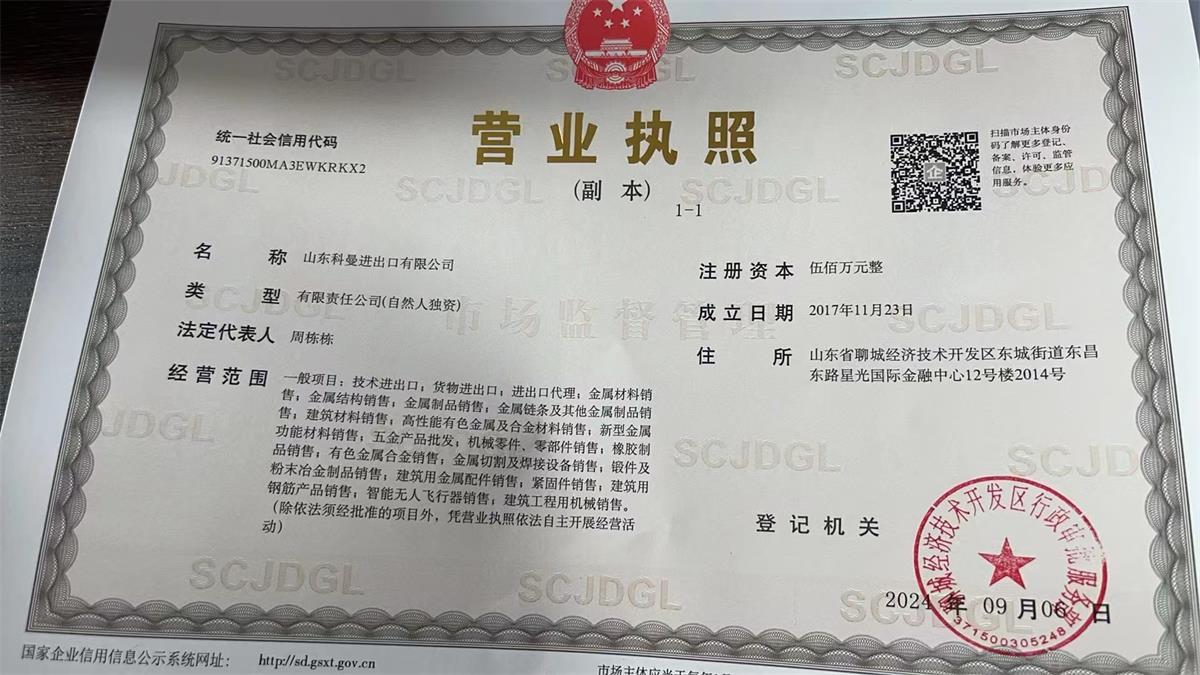
Address:Shandong Keman Import and Export Co., Ltd.

Exploring the Benefits of Carbon Steel Plates in Modern Architecture
Release time:
2025-12-23
Exploring the Benefits of Carbon Steel Plates in Modern Architecture Table of Contents 1. Introduction to Carbon Steel Plates in Architecture 2. Understanding Carbon Steel: A Material of Choice 3. Structural Strength and Durability 4. Aesthetic Versatility of Carbon Steel Plates 5. Cost-Effectiveness of Using Carbon Steel Plates 6. Environmental Sustainability of Carbon Steel 7. Ap
Exploring the Benefits of Carbon Steel Plates in Modern Architecture
Table of Contents
1. Introduction to Carbon Steel Plates in Architecture
2. Understanding Carbon Steel: A Material of Choice
3. Structural Strength and Durability
4. Aesthetic Versatility of Carbon Steel Plates
5. Cost-Effectiveness of Using Carbon Steel Plates
6. Environmental Sustainability of Carbon Steel
7. Applications of Carbon Steel Plates in Modern Architecture
8. Frequently Asked Questions about Carbon Steel Plates
9. Conclusion
1. Introduction to Carbon Steel Plates in Architecture
In the realm of modern architecture, the choice of materials significantly impacts both functionality and aesthetics. **Carbon steel plates**, recognized for their exceptional properties, have emerged as a preferred option for architects and builders alike. Their ability to blend strength with versatility makes them ideal for a variety of applications, from structural supports to decorative facades. This article explores the multifaceted benefits of carbon steel plates, highlighting their pivotal role in contemporary architectural design.
2. Understanding Carbon Steel: A Material of Choice
Carbon steel is an alloy of iron and carbon, and its properties can be modified by adjusting the carbon content. This adaptability results in a range of steel types, each with unique characteristics suited for different applications. The most common types include **mild steel**, **medium carbon steel**, and **high carbon steel**. Mild steel, with its low carbon content, is particularly favored in construction due to its malleability and weldability.
2.1 The Composition of Carbon Steel Plates
Carbon steel plates are generally composed of between 0.05% to 2.0% carbon, along with other elements such as manganese, silicon, and copper. This composition is essential in determining the material's strength, ductility, and ability to be worked into various shapes.
2.2 Comparison with Other Materials
When compared to materials like stainless steel, aluminum, and concrete, carbon steel plates stand out for their superior strength-to-weight ratio and cost-effectiveness. While stainless steel offers corrosion resistance, carbon steel can be treated with protective coatings, making it equally viable for various environments.
3. Structural Strength and Durability
One of the most compelling reasons to incorporate carbon steel plates in architectural design is their **structural strength**. Their ability to withstand significant loads and resist deformation under stress is crucial for ensuring the safety and longevity of a building.
3.1 Load-Bearing Capacities
Carbon steel plates excel in load-bearing applications. Their high tensile strength allows them to support heavy structures such as bridges, skyscrapers, and industrial buildings without compromising stability. This characteristic is particularly beneficial in environments subjected to severe weather or seismic activity.
3.2 Longevity and Maintenance
Buildings constructed with carbon steel plates can boast impressive durability. When properly maintained, these structures can withstand the test of time. Regular inspections and protective treatments, such as galvanization, can further enhance the lifespan of carbon steel, reducing the need for costly repairs or replacements over time.
4. Aesthetic Versatility of Carbon Steel Plates
Beyond their functional attributes, carbon steel plates offer remarkable aesthetic flexibility. Architects can design visually striking buildings that stand out in urban landscapes.
4.1 Customization Options
Carbon steel plates can be customized in terms of shape, size, and finish. From polished surfaces to textured finishes, the design possibilities are virtually limitless. This versatility allows for creative architectural expressions, making it easier to align with a project's vision.
4.2 Integration in Modern Design
In modern architecture, carbon steel is often used in innovative ways. Its incorporation into facade systems, staircases, and even furniture allows for a seamless blend of form and function. Architects utilize carbon steel not only for its structural properties but also for its ability to enhance visual appeal.
5. Cost-Effectiveness of Using Carbon Steel Plates
Economics play a significant role in material selection in construction. Carbon steel plates are generally more affordable than many alternatives, making them an attractive option for budget-conscious projects.
5.1 Initial and Lifecycle Costs
While the initial cost of carbon steel plates may be lower than other materials, their durability and required maintenance contribute to lower lifecycle costs. When evaluating total expenses over the life of a building, carbon steel often proves to be the more economical choice.
5.2 Availability and Sourcing
Carbon steel is widely available and can be sourced from numerous suppliers, ensuring that project timelines are met without delays. This accessibility also helps maintain competitive pricing, benefiting contractors and developers alike.
6. Environmental Sustainability of Carbon Steel
Sustainability is a critical consideration in modern construction. Carbon steel is both recyclable and reusable, contributing to a **circular economy**.
6.1 Recyclability and Life Cycle Analysis
Carbon steel can be recycled infinitely without losing its properties. This characteristic not only reduces waste but also minimizes the carbon footprint associated with new steel production. Life cycle analyses show that utilizing recycled steel can significantly impact the sustainability of building projects.
6.2 Energy Efficiency in Manufacturing
The manufacturing process for carbon steel is energy-efficient compared to other materials. Innovations in production techniques continue to reduce energy consumption and emissions, aligning with global sustainability goals.
7. Applications of Carbon Steel Plates in Modern Architecture
The versatility of carbon steel plates allows for a wide range of applications in various architectural contexts.
7.1 Structural Applications
In high-rise buildings, carbon steel plates are often used for beams, columns, and frame structures. Their strength ensures that these components can support extensive loads, making them indispensable in skyscraper construction.
7.2 Decorative Features
Architects increasingly use carbon steel in decorative features such as cladding, railings, and artistic installations. Its ability to be manipulated into intricate designs adds a unique touch to modern buildings.
7.3 Infrastructure Projects
From bridges to tunnels, carbon steel plates play a vital role in public infrastructure projects. Their resistance to stress and environmental factors ensures that these structures remain safe and functional over time.
8. Frequently Asked Questions about Carbon Steel Plates
8.1 What are the main advantages of using carbon steel plates in architecture?
Carbon steel plates offer numerous advantages, including exceptional strength, durability, aesthetic versatility, cost-effectiveness, and sustainability.
8.2 How do carbon steel plates compare to stainless steel?
While stainless steel is corrosion-resistant and often used in environments where moisture is prevalent, carbon steel is more affordable and can be treated for protection. The choice depends on specific project needs.
8.3 Are carbon steel plates environmentally friendly?
Yes, carbon steel plates are recyclable and reusable, making them environmentally friendly. Their production processes are also becoming increasingly energy-efficient.
8.4 What types of projects benefit from using carbon steel plates?
Carbon steel plates are ideal for a variety of projects, including commercial buildings, residential complexes, bridges, and decorative architectural elements.
8.5 How do maintenance requirements differ between carbon steel and other materials?
While carbon steel requires regular maintenance to prevent rust, it can last for decades with proper care. In contrast, materials like stainless steel may require less maintenance but are often more expensive.
9. Conclusion
Carbon steel plates represent a powerful material in the toolkit of modern architecture. Their combination of strength, durability, aesthetic flexibility, and cost-effectiveness positions them as a frontrunner in contemporary building projects. As architects and builders continue to embrace sustainable practices, the role of carbon steel will only grow, facilitating innovative designs while contributing to environmental stewardship. By understanding and leveraging the myriad benefits of carbon steel plates, stakeholders in the construction industry can create structures that are not only functional but also visually stunning and sustainable.
Latest News
Innovative Applications of Carbon Steel Plates in Building Designs
Innovative Applications of Carbon Steel Plates in Building Designs Carbon steel plates have emerged as a cornerstone material in the construction industry, gaining acclaim for their versatility, strength, and aesthetic potential. As the demand for innovative design solutions escalates, architects and builders are increasingly incorporating carbon steel plates into their projects. This article expl
2026-09-22
Understanding A514 Carbon Steel Plate: Key Characteristics and Applications
A514 Carbon Steel Plate is a high-yield strength steel that has become a preferred choice in various industrial applications, particularly in the fields of metallurgy and energy. This type of steel is known for its excellent mechanical properties, making it suitable for demanding environments where strength and durability are paramount. One of the key characteristics of A514 Carbon Steel Plate is
2026-09-17
How A387 Carbon Alloy Steel Plate Enhances Structural Integrity in Construction
How A387 Carbon Alloy Steel Plate Enhances Structural Integrity in Construction Table of Contents 1. Introduction to A387 Carbon Alloy Steel Plate 2. What is A387 Carbon Alloy Steel? 3. Key Properties of A387 Carbon Alloy Steel Plates 4. Manufacturing Process of A387 Steel Plates 5. Applications of A387 Carbon Alloy Steel Plates 6. Advantages of Using A387 Carbon Alloy Ste
2026-09-12
Understanding A285 Carbon Steel Pressure Plates: Essential Insights for Construction and Design
A285 Carbon Steel Pressure Plates are primarily used in pressure vessel fabrication and construction applications. This type of steel is known for its good weldability and formability, making it a favorable choice for various structural components. The ASTM A285 standard specifically governs the specifications for carbon steel plates intended for low-pressure service. One of the key characteristic
2026-09-07
The Role of 5A05 Aluminum Plate in Enhancing Building Aesthetics
The Role of 5A05 Aluminum Plate in Enhancing Building Aesthetics Table of Contents 1. Introduction to 5A05 Aluminum Plates 2. Properties of 5A05 Aluminum Plates 3. Applications of 5A05 Aluminum Plates in Architecture 4. Aesthetic Advantages of Using 5A05 Aluminum Plates 5. Sustainability and Environmental Impact 6. Installation and Maintenance of 5A05 Aluminum Plates 7
2026-09-02
Understanding B500 Steel Reinforcement: Key Insights for Professionals in Construction Machinery
B500 steel reinforcement is a critical component in the construction industry, particularly in manufacturing and processing machinery for engineering and construction projects. This high-strength steel bar is widely used in reinforced concrete structures, providing the necessary tensile strength to support heavy loads and withstand various stresses. One of the defining characteristics of B500 stee
2026-08-28


Copyright 2025 : Shandong Keman Import and Export Co., Ltd. Powered by:CEglobal SEO BUSINESS LICENSE