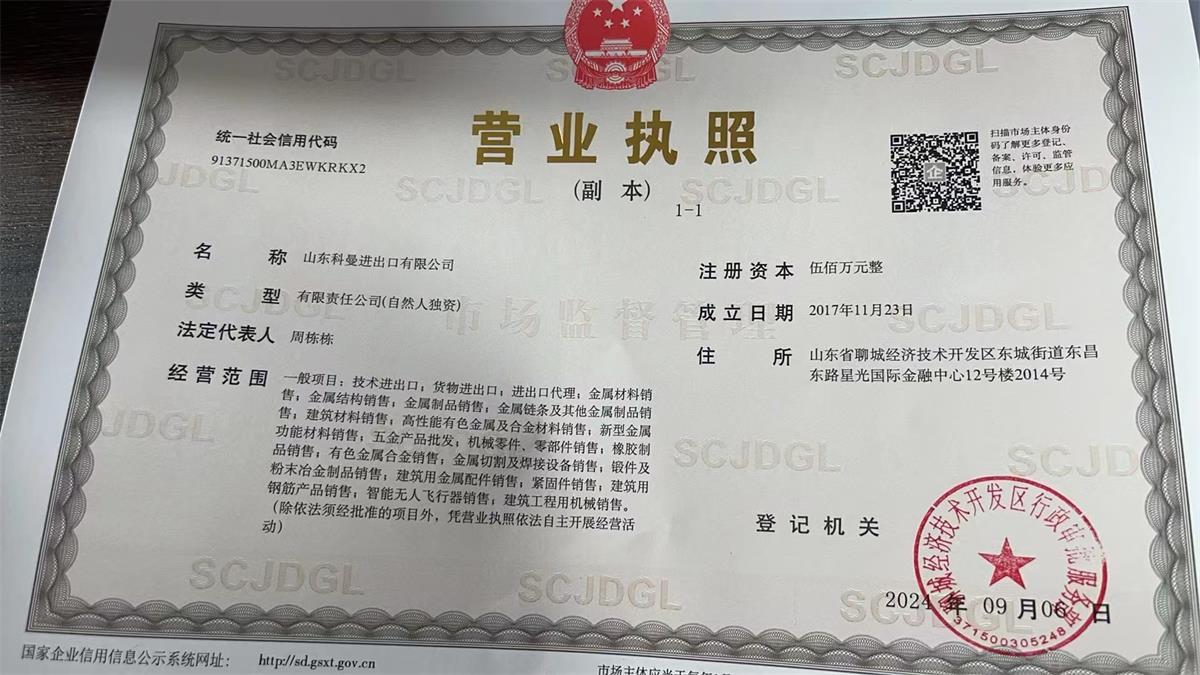
Address:Shandong Keman Import and Export Co., Ltd.

The Role of Tin Plated Coil in Enhancing Structural Integrity
Release time:
2026-01-07
The Role of Tin Plated Coil in Enhancing Structural Integrity Introduction to Tin Plated Coils Tin plated coils are essential components in the construction and architectural industries. Their unique properties make them ideal for various applications, especially where structural integrity and durability are paramount. By providing corrosion resistance and enhancing adhesion, these coils serve
The Role of Tin Plated Coil in Enhancing Structural Integrity
Introduction to Tin Plated Coils
Tin plated coils are essential components in the construction and architectural industries. Their unique properties make them ideal for various applications, especially where structural integrity and durability are paramount. By providing corrosion resistance and enhancing adhesion, these coils serve as a reliable choice for engineers and builders.
Understanding the Composition of Tin Plated Coils
Tin plated coils consist mainly of steel that has undergone a plating process with tin. This process ensures that the steel retains its strength while benefiting from tin's superior protective qualities.
The Plating Process Explained
The tin plating process involves several steps that enhance the steel’s characteristics:
- **Surface Preparation**: The steel surface is cleaned to remove any contaminants.
- **Plating**: The cleaned steel is submerged in molten tin, allowing the tin to bond with the steel.
- **Cooling**: The plated coil is cooled, solidifying the bond and creating a protective layer.
Key Properties of Tin Plated Coils
Tin plated coils exhibit several advantageous properties:
- **Corrosion Resistance**: The tin layer protects the underlying steel from rust and environmental factors.
- **Improved Adhesion**: Tin enhances the adhesion of paints and other coatings, making it suitable for various finishes.
- **Electrical Conductivity**: Tin is an excellent conductor, making these coils ideal for electrical applications.
Applications of Tin Plated Coils in Construction
The versatility of tin plated coils allows them to be utilized in numerous construction applications.
Roofing and Cladding Materials
Tin plated coils are frequently used in roofing and cladding, providing a durable and corrosion-resistant barrier against the elements. Their lightweight nature makes them easy to install, reducing labor costs and construction time.
Structural Components
In structural applications, tin plated coils can be used in beams, columns, and other load-bearing elements. Their enhanced strength and stability contribute to the overall structural integrity of buildings.
Electrical and Mechanical Components
Due to their excellent conductivity, tin plated coils are often found in electrical junctions and mechanical components. They ensure reliable performance in electrical circuits and reduce the risk of failures due to oxidation.
Benefits of Using Tin Plated Coils in Construction
Incorporating tin plated coils into construction projects offers several key benefits:
Enhanced Durability
The corrosion-resistant properties of tin plated coils extend the lifespan of structural components, reducing the need for frequent repairs or replacements.
Cost-Effectiveness
While the initial investment in tin plated coils may be slightly higher than traditional materials, the long-term savings due to reduced maintenance and increased lifespan make them a cost-effective choice.
Environmental Considerations
Tin plated coils are recyclable, making them an eco-friendly option for sustainable building practices. Their durability also means less waste is generated over the lifecycle of the building.
Comparative Analysis: Tin Plated Coils vs. Other Coating Materials
When evaluating the effectiveness of tin plated coils, it's essential to compare them with other common coating materials.
Galvanized Steel
While galvanized steel offers excellent corrosion resistance, tin plated coils provide superior paint adhesion and electrical conductivity. This makes tin plated coils a more versatile choice in applications requiring both durability and aesthetic finishes.
Aluminum Coated Steel
Aluminum coated steel is lightweight and resistant to corrosion, but it lacks the strong adhesion properties of tin plated coils. For applications where paint and additional coatings are required, tin plated coils are often the preferred choice.
Technical Standards and Specifications for Tin Plated Coils
Understanding the technical standards governing tin plated coils is crucial for ensuring quality and performance in construction.
Industry Standards
Tin plated coils must meet specific industry standards, such as ASTM A623, which outlines the specifications for tin mill products. Compliance with these standards guarantees the quality and reliability of the coils used in construction.
Quality Control Measures
Manufacturers implement stringent quality control measures during production, including:
- **Thickness Measurement**: Ensuring the tin coating meets required thickness specifications.
- **Adhesion Testing**: Verifying the bond strength between the tin and steel substrate.
- **Corrosion Resistance Testing**: Conducting tests to determine the longevity of the protective layer.
Future Trends in the Use of Tin Plated Coils
As technology advances, the applications and efficiency of tin plated coils are expected to evolve.
Innovations in Coating Technologies
Research into advanced coating technologies may lead to even more effective tin plating processes, enhancing the properties of these coils and expanding their applications.
Growing Demand in Sustainable Construction
With an increasing emphasis on sustainable building materials, the demand for tin plated coils is likely to grow, given their recyclable nature and long-term durability.
Frequently Asked Questions (FAQs)
1. What are the advantages of using tin plated coils in construction?
Tin plated coils offer corrosion resistance, enhanced adhesion for coatings, and improved electrical conductivity, making them suitable for various structural applications.
2. How do tin plated coils compare to galvanized steel?
While galvanized steel is excellent for corrosion resistance, tin plated coils provide better paint adhesion and electrical conductivity, making them more versatile for specific applications.
3. Are tin plated coils environmentally friendly?
Yes, tin plated coils are recyclable and contribute to sustainable building practices due to their long lifespan, which reduces waste.
4. What industry standards govern tin plated coils?
Tin plated coils must comply with standards like ASTM A623, which outlines specifications for tin mill products to ensure quality and performance.
5. What are the future trends for tin plated coils in construction?
Future trends include advancements in coating technologies and increased demand for sustainable building materials, leading to greater adoption of tin plated coils.
Conclusion
Tin plated coils play a critical role in enhancing the structural integrity of construction projects. Their unique properties, such as corrosion resistance, improved adhesion, and electrical conductivity, make them indispensable in modern architecture. As we continue to prioritize sustainability and durability in construction, the demand for tin plated coils is expected to rise. By understanding their benefits and applications, builders and engineers can make informed decisions that contribute to the longevity and strength of their structures.
Latest News
Innovative Applications of Carbon Steel Plates in Building Designs
Innovative Applications of Carbon Steel Plates in Building Designs Carbon steel plates have emerged as a cornerstone material in the construction industry, gaining acclaim for their versatility, strength, and aesthetic potential. As the demand for innovative design solutions escalates, architects and builders are increasingly incorporating carbon steel plates into their projects. This article expl
2026-09-22
Understanding A514 Carbon Steel Plate: Key Characteristics and Applications
A514 Carbon Steel Plate is a high-yield strength steel that has become a preferred choice in various industrial applications, particularly in the fields of metallurgy and energy. This type of steel is known for its excellent mechanical properties, making it suitable for demanding environments where strength and durability are paramount. One of the key characteristics of A514 Carbon Steel Plate is
2026-09-17
How A387 Carbon Alloy Steel Plate Enhances Structural Integrity in Construction
How A387 Carbon Alloy Steel Plate Enhances Structural Integrity in Construction Table of Contents 1. Introduction to A387 Carbon Alloy Steel Plate 2. What is A387 Carbon Alloy Steel? 3. Key Properties of A387 Carbon Alloy Steel Plates 4. Manufacturing Process of A387 Steel Plates 5. Applications of A387 Carbon Alloy Steel Plates 6. Advantages of Using A387 Carbon Alloy Ste
2026-09-12
Understanding A285 Carbon Steel Pressure Plates: Essential Insights for Construction and Design
A285 Carbon Steel Pressure Plates are primarily used in pressure vessel fabrication and construction applications. This type of steel is known for its good weldability and formability, making it a favorable choice for various structural components. The ASTM A285 standard specifically governs the specifications for carbon steel plates intended for low-pressure service. One of the key characteristic
2026-09-07
The Role of 5A05 Aluminum Plate in Enhancing Building Aesthetics
The Role of 5A05 Aluminum Plate in Enhancing Building Aesthetics Table of Contents 1. Introduction to 5A05 Aluminum Plates 2. Properties of 5A05 Aluminum Plates 3. Applications of 5A05 Aluminum Plates in Architecture 4. Aesthetic Advantages of Using 5A05 Aluminum Plates 5. Sustainability and Environmental Impact 6. Installation and Maintenance of 5A05 Aluminum Plates 7
2026-09-02
Understanding B500 Steel Reinforcement: Key Insights for Professionals in Construction Machinery
B500 steel reinforcement is a critical component in the construction industry, particularly in manufacturing and processing machinery for engineering and construction projects. This high-strength steel bar is widely used in reinforced concrete structures, providing the necessary tensile strength to support heavy loads and withstand various stresses. One of the defining characteristics of B500 stee
2026-08-28


Copyright 2025 : Shandong Keman Import and Export Co., Ltd. Powered by:CEglobal SEO BUSINESS LICENSE