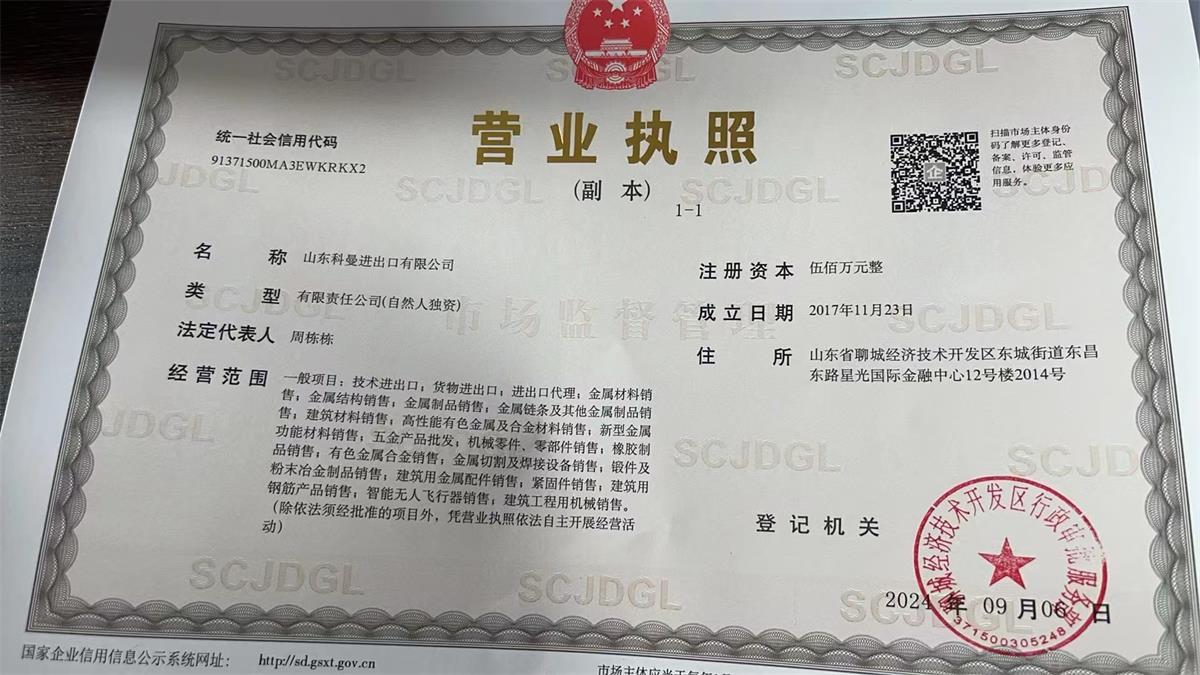
Address:Shandong Keman Import and Export Co., Ltd.

Customizing A633 Carbon Steel Plate for Enhanced Building Applications
Release time:
2026-03-14
A633 Carbon Steel Plate is renowned for its excellent weldability, strength, and resistance to atmospheric corrosion, making it a prime choice in the construction and decorative materials sector. Customizing this type of steel plate can significantly enhance its performance and adaptability to various architectural designs and structural requirements. Here, we delve into several key aspects of cus
**Understanding A633 Carbon Steel Plate**
A633 Carbon Steel Plate is primarily composed of carbon and specific alloying elements that contribute to its mechanical properties. It is categorized as a high-strength low-alloy (HSLA) steel, designed to withstand harsh weather conditions while maintaining its structural integrity. Its yield strength typically ranges from 50 to 65 ksi, making it suitable for a variety of applications, including buildings, bridges, and other structures demanding robustness.
**Customization Techniques**
1. **Cutting and Shaping**: One of the most fundamental ways to customize A633 Carbon Steel Plate is through precise cutting and shaping. Techniques such as laser cutting, plasma cutting, or water jet cutting allow for intricate shapes and dimensions that meet specific project requirements. These methods ensure minimal waste and high accuracy, which are crucial in modern construction practices.
2. **Surface Treatments**: Customization may also involve various surface treatments to enhance durability and aesthetics. Processes such as galvanization, powder coating, or painting can provide additional protection against corrosion while improving the visual appeal. Choosing the right surface treatment depends on the intended use and environmental exposure of the steel plate.
3. **Heat Treatment**: Heat treatment processes like annealing can be employed to modify the mechanical properties of A633 Carbon Steel Plate. This step can improve ductility and toughness, ensuring that the plate can withstand dynamic loads often encountered in building applications.
4. **Welding and Assembly**: The ability to customize the welding process is vital for projects that require joining multiple steel plates. Techniques such as MIG and TIG welding can be tailored according to the thickness and type of steel, ensuring strong and durable joints critical for structural integrity.
**Applications in Building and Decoration**
Customized A633 Carbon Steel Plates find extensive use in various architectural and structural applications. From large-scale commercial buildings to artistic decorative elements, the adaptability of this material allows architects and engineers to bring innovative designs to life. Furthermore, its high strength-to-weight ratio facilitates the creation of lightweight structures without compromising strength.
In summary, customizing A633 Carbon Steel Plate through cutting, surface treatment, heat treatment, and welding techniques enables professionals in the construction and decorative materials industry to enhance their projects. Understanding these customization options can lead to improved performance, aesthetics, and durability, ultimately resulting in a more successful and efficient building process.
Latest News
Innovative Applications of Carbon Steel Plates in Building Designs
Innovative Applications of Carbon Steel Plates in Building Designs Carbon steel plates have emerged as a cornerstone material in the construction industry, gaining acclaim for their versatility, strength, and aesthetic potential. As the demand for innovative design solutions escalates, architects and builders are increasingly incorporating carbon steel plates into their projects. This article expl
2026-09-22
Understanding A514 Carbon Steel Plate: Key Characteristics and Applications
A514 Carbon Steel Plate is a high-yield strength steel that has become a preferred choice in various industrial applications, particularly in the fields of metallurgy and energy. This type of steel is known for its excellent mechanical properties, making it suitable for demanding environments where strength and durability are paramount. One of the key characteristics of A514 Carbon Steel Plate is
2026-09-17
How A387 Carbon Alloy Steel Plate Enhances Structural Integrity in Construction
How A387 Carbon Alloy Steel Plate Enhances Structural Integrity in Construction Table of Contents 1. Introduction to A387 Carbon Alloy Steel Plate 2. What is A387 Carbon Alloy Steel? 3. Key Properties of A387 Carbon Alloy Steel Plates 4. Manufacturing Process of A387 Steel Plates 5. Applications of A387 Carbon Alloy Steel Plates 6. Advantages of Using A387 Carbon Alloy Ste
2026-09-12
Understanding A285 Carbon Steel Pressure Plates: Essential Insights for Construction and Design
A285 Carbon Steel Pressure Plates are primarily used in pressure vessel fabrication and construction applications. This type of steel is known for its good weldability and formability, making it a favorable choice for various structural components. The ASTM A285 standard specifically governs the specifications for carbon steel plates intended for low-pressure service. One of the key characteristic
2026-09-07
The Role of 5A05 Aluminum Plate in Enhancing Building Aesthetics
The Role of 5A05 Aluminum Plate in Enhancing Building Aesthetics Table of Contents 1. Introduction to 5A05 Aluminum Plates 2. Properties of 5A05 Aluminum Plates 3. Applications of 5A05 Aluminum Plates in Architecture 4. Aesthetic Advantages of Using 5A05 Aluminum Plates 5. Sustainability and Environmental Impact 6. Installation and Maintenance of 5A05 Aluminum Plates 7
2026-09-02
Understanding B500 Steel Reinforcement: Key Insights for Professionals in Construction Machinery
B500 steel reinforcement is a critical component in the construction industry, particularly in manufacturing and processing machinery for engineering and construction projects. This high-strength steel bar is widely used in reinforced concrete structures, providing the necessary tensile strength to support heavy loads and withstand various stresses. One of the defining characteristics of B500 stee
2026-08-28


Copyright 2025 : Shandong Keman Import and Export Co., Ltd. Powered by:CEglobal SEO BUSINESS LICENSE