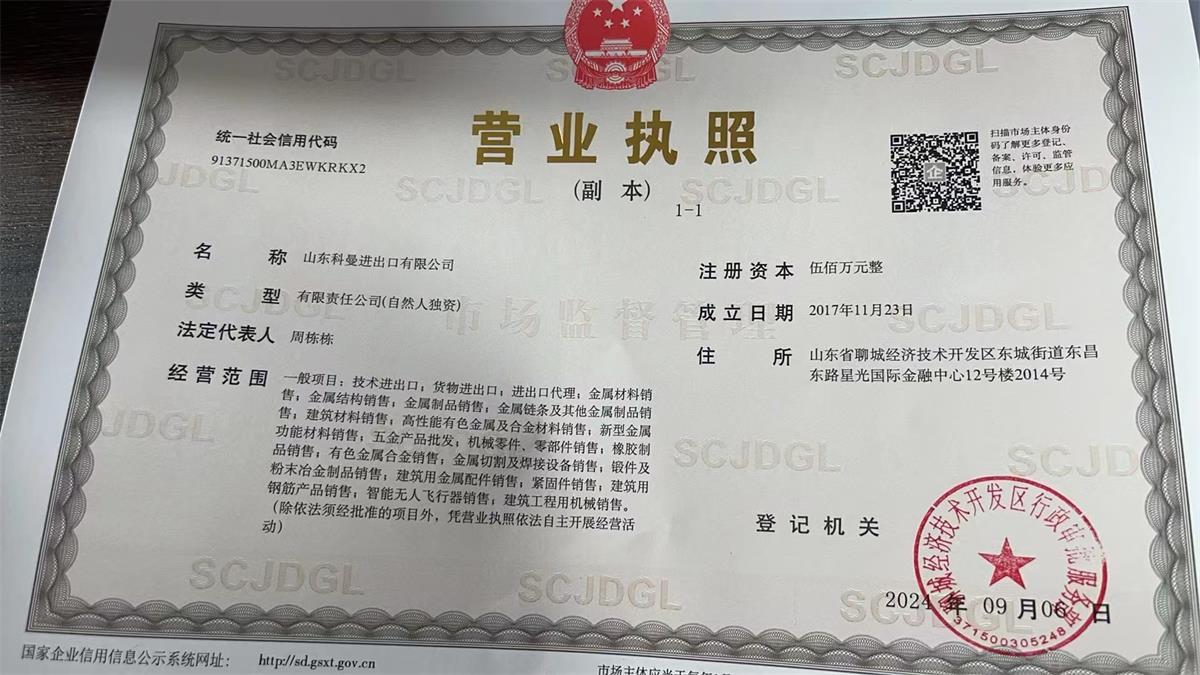
Address:Shandong Keman Import and Export Co., Ltd.

Understanding OEM SAE/AISI 4000 Series Alloy Steel: Properties and Applications
Release time:
2026-03-27
Alloy steels are integral to a wide range of applications due to their enhanced mechanical properties and versatility. The OEM SAE/AISI 4000 Series Alloy Steel is particularly notable within the metallurgy sector, especially in the production of high-performance components. This series comprises several alloy steels with specific elemental compositions, primarily including chromium, molybdenum, an
One of the key features of the 4000 Series is its improved hardenability, which allows it to achieve greater strength and toughness when subjected to heat treatment processes. This series typically contains 0.30% to 0.50% carbon and varying percentages of other alloying elements, which significantly improve wear resistance and tensile strength. The presence of chromium, for example, enhances corrosion resistance and overall durability, making it ideal for applications in challenging environments.
In terms of applications, OEM SAE/AISI 4000 Series Alloy Steel is widely used in the automotive and aerospace industries, where high strength and lightweight materials are critical. Components such as gears, shafts, and crankshafts often utilize this alloy for its performance characteristics. Additionally, the oil and gas industry also benefits from this steel series, particularly in manufacturing drilling equipment and other machinery that requires robust materials capable of withstanding high pressures and temperatures.
The manufacturing process of the 4000 Series alloy steel typically involves melting, casting, and forming, which can be tailored to meet specific requirements. It is important to consider the heat treatment processes, such as quenching and tempering, which can significantly alter the mechanical properties of the steel. Proper heat treatment can enhance toughness while maintaining a fine balance between hardness and ductility, which is essential for various applications.
Moreover, the environmental impact and sustainability of using OEM SAE/AISI 4000 Series Alloy Steel are becoming increasingly important. Manufacturers are continuously seeking ways to minimize energy consumption during production and reduce waste. This effort not only helps in complying with regulations but also enhances the life cycle of products made from this series, contributing to a more sustainable industrial practice.
In conclusion, OEM SAE/AISI 4000 Series Alloy Steel is a critical component in the metallurgy industry, providing unmatched strength and versatility for various applications. Understanding its properties and uses can significantly aid manufacturers and engineers in selecting the right materials for their projects, ensuring reliability and performance in demanding environments.
Latest News
Innovative Applications of Carbon Steel Plates in Building Designs
Innovative Applications of Carbon Steel Plates in Building Designs Carbon steel plates have emerged as a cornerstone material in the construction industry, gaining acclaim for their versatility, strength, and aesthetic potential. As the demand for innovative design solutions escalates, architects and builders are increasingly incorporating carbon steel plates into their projects. This article expl
2026-09-22
Understanding A514 Carbon Steel Plate: Key Characteristics and Applications
A514 Carbon Steel Plate is a high-yield strength steel that has become a preferred choice in various industrial applications, particularly in the fields of metallurgy and energy. This type of steel is known for its excellent mechanical properties, making it suitable for demanding environments where strength and durability are paramount. One of the key characteristics of A514 Carbon Steel Plate is
2026-09-17
How A387 Carbon Alloy Steel Plate Enhances Structural Integrity in Construction
How A387 Carbon Alloy Steel Plate Enhances Structural Integrity in Construction Table of Contents 1. Introduction to A387 Carbon Alloy Steel Plate 2. What is A387 Carbon Alloy Steel? 3. Key Properties of A387 Carbon Alloy Steel Plates 4. Manufacturing Process of A387 Steel Plates 5. Applications of A387 Carbon Alloy Steel Plates 6. Advantages of Using A387 Carbon Alloy Ste
2026-09-12
Understanding A285 Carbon Steel Pressure Plates: Essential Insights for Construction and Design
A285 Carbon Steel Pressure Plates are primarily used in pressure vessel fabrication and construction applications. This type of steel is known for its good weldability and formability, making it a favorable choice for various structural components. The ASTM A285 standard specifically governs the specifications for carbon steel plates intended for low-pressure service. One of the key characteristic
2026-09-07
The Role of 5A05 Aluminum Plate in Enhancing Building Aesthetics
The Role of 5A05 Aluminum Plate in Enhancing Building Aesthetics Table of Contents 1. Introduction to 5A05 Aluminum Plates 2. Properties of 5A05 Aluminum Plates 3. Applications of 5A05 Aluminum Plates in Architecture 4. Aesthetic Advantages of Using 5A05 Aluminum Plates 5. Sustainability and Environmental Impact 6. Installation and Maintenance of 5A05 Aluminum Plates 7
2026-09-02
Understanding B500 Steel Reinforcement: Key Insights for Professionals in Construction Machinery
B500 steel reinforcement is a critical component in the construction industry, particularly in manufacturing and processing machinery for engineering and construction projects. This high-strength steel bar is widely used in reinforced concrete structures, providing the necessary tensile strength to support heavy loads and withstand various stresses. One of the defining characteristics of B500 stee
2026-08-28


Copyright 2025 : Shandong Keman Import and Export Co., Ltd. Powered by:CEglobal SEO BUSINESS LICENSE