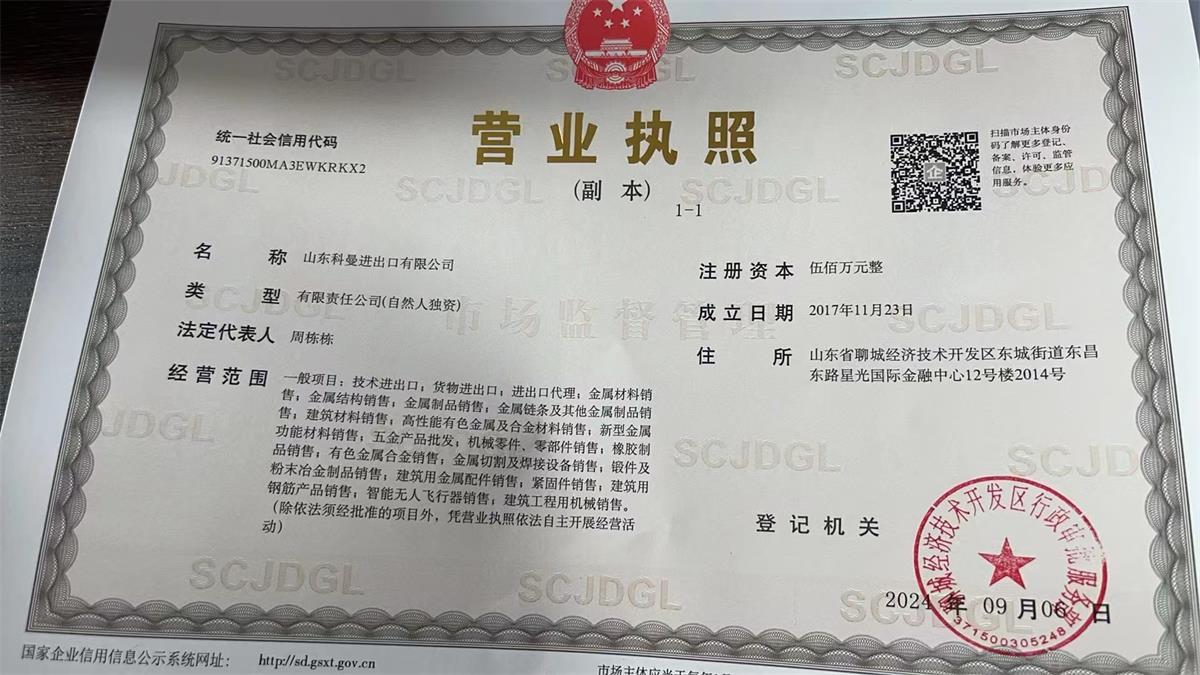
Address:Shandong Keman Import and Export Co., Ltd.

A387 Carbon Alloy Steel Plate: Key Properties That Make It Stand Out
Release time:
2026-04-11
A387 Carbon Alloy Steel Plate: Key Properties That Make It Stand Out Table of Contents 1. Introduction to A387 Carbon Alloy Steel Plate 2. What is A387 Carbon Alloy Steel? 3. Key Properties of A387 Carbon Alloy Steel Plate 3.1 High-Temperature Resistance 3.2 Corrosion Resistance 3.3 Strength and Durability 3.4 Weldability
A387 Carbon Alloy Steel Plate: Key Properties That Make It Stand Out
Table of Contents
- 1. Introduction to A387 Carbon Alloy Steel Plate
- 2. What is A387 Carbon Alloy Steel?
- 3. Key Properties of A387 Carbon Alloy Steel Plate
- 3.1 High-Temperature Resistance
- 3.2 Corrosion Resistance
- 3.3 Strength and Durability
- 3.4 Weldability
- 4. Applications of A387 Carbon Alloy Steel Plate
- 5. Manufacturing Process of A387 Steel Plates
- 6. Maintenance and Care for A387 Steel Plates
- 7. Comparison with Other Materials
- 8. Frequently Asked Questions
- 9. Conclusion
1. Introduction to A387 Carbon Alloy Steel Plate
In the world of construction and various industrial applications, choosing the right materials is crucial. One material that consistently stands out is **A387 Carbon Alloy Steel Plate**. Renowned for its robustness and versatility, this alloy is designed to perform under extreme conditions, making it a preferred choice in diverse sectors. Understanding its properties, applications, and maintenance can help engineers and architects make informed decisions.
2. What is A387 Carbon Alloy Steel?
A387 Carbon Alloy Steel, often referred to as **A387 steel**, is a type of alloy steel designed for elevated temperature applications. Composed of chromium and molybdenum, A387 steel offers mechanical properties that make it suitable for high-stress environments. The designation A387 is part of the ASTM standard, specifically ASTM A387/A387M, which outlines specifications for pressure vessels and heat exchangers, particularly in oil and gas industries.
3. Key Properties of A387 Carbon Alloy Steel Plate
A387 Carbon Alloy Steel Plate boasts several properties that contribute to its unique performance characteristics.
3.1 High-Temperature Resistance
One of the defining features of A387 Carbon Alloy Steel Plates is their exceptional **high-temperature resistance**. Withstanding temperatures up to 1,000 °F (538 °C), these plates are ideal for applications such as power plants and petrochemical facilities where heat exposure is a constant challenge. The alloy’s ability to maintain its structural integrity under extreme conditions significantly reduces the risk of material failures.
3.2 Corrosion Resistance
Corrosion is a primary concern in many industrial applications, particularly those involving fluids and chemicals. A387 Carbon Alloy Steel Plates are designed with enhanced **corrosion resistance**, thanks to their chromium content. This property ensures longevity and reliability, minimizing maintenance costs and downtime in operations where corrosive elements are present.
3.3 Strength and Durability
The **strength and durability** of A387 Carbon Alloy Steel Plates are among their most significant advantages. The alloy's composition provides formidable tensile strength, allowing it to endure heavy loads and mechanical stress without compromising performance. This durability translates to extended service life and reliability in demanding applications.
3.4 Weldability
Welding is a critical process in the fabrication of steel structures. A387 Carbon Alloy Steel exhibits excellent **weldability**, enabling fabricators to join plates and components seamlessly. The alloy's chemical composition facilitates various welding techniques, making it easier for engineers to design and construct complex structures while ensuring integrity and performance.
4. Applications of A387 Carbon Alloy Steel Plate
A387 Carbon Alloy Steel Plates are utilized across a broad spectrum of industries due to their versatile properties.
- **Power Generation**: In power plants, A387 plates are used in the construction of boilers and piping systems, where high temperatures and pressures are constants.
- **Oil and Gas**: The petroleum industry relies on A387 steel for constructing pressure vessels and heat exchangers, essential for processing and transporting oil and gas.
- **Chemical Processing**: Facilities that handle corrosive chemicals often choose A387 for storage tanks and reactor vessels, ensuring safety and durability.
- **Shipbuilding**: The marine industry benefits from A387 plates due to their resistance to saltwater corrosion and high strength, which is essential for ship structures.
5. Manufacturing Process of A387 Steel Plates
The manufacturing of A387 Carbon Alloy Steel Plates involves several critical steps to ensure the quality and performance of the final product.
1. **Melting and Alloying**: The process begins with melting iron ore and adding alloying elements, such as chromium and molybdenum, to achieve the desired chemical composition.
2. **Casting**: The molten steel is poured into molds and allowed to solidify, forming ingots.
3. **Hot Rolling**: The ingots are then heated and rolled into plates at high temperatures, enhancing their mechanical properties.
4. **Heat Treatment**: A heat treatment process is often applied to further refine the plates, improving their hardness and strength.
5. **Quality Control**: Finally, the plates undergo rigorous testing and inspections to ensure they meet industry standards before being shipped to clients.
6. Maintenance and Care for A387 Steel Plates
Maintaining A387 Carbon Alloy Steel Plates is essential to prolonging their lifespan and ensuring optimal performance. Here are several tips for proper maintenance:
- **Regular Inspections**: Routine checks for signs of wear, corrosion, or structural damage can help identify issues early.
- **Protective Coatings**: Applying protective coatings can enhance corrosion resistance, especially in harsh environments.
- **Cleaning**: Keeping the plates clean from dirt and chemicals can minimize corrosion risks.
Implementing these practices can help maintain the integrity and performance of A387 Carbon Alloy Steel Plates over time.
7. Comparison with Other Materials
When evaluating A387 Carbon Alloy Steel Plates, it’s essential to compare them with other materials commonly used in similar applications.
- **Stainless Steel**: While stainless steel offers excellent corrosion resistance, it may not withstand high temperatures as effectively as A387. Additionally, A387 typically presents a better strength-to-weight ratio under high thermal conditions.
- **Carbon Steel**: Carbon steel is less expensive but may lack the high-temperature and corrosion-resistant properties of A387, making it unsuitable for demanding applications.
- **Aluminum Alloys**: Though lightweight and corrosion-resistant, aluminum alloys do not possess the same strength and temperature resistance as A387 plates, limiting their application in high-stress environments.
In summary, A387 Carbon Alloy Steel Plates often outperform comparable materials when it comes to high-temperature and high-stress applications.
8. Frequently Asked Questions
Q1: What industries commonly use A387 Carbon Alloy Steel Plates?
A1: A387 plates are widely used in the power generation, oil and gas, chemical processing, and shipbuilding industries.
Q2: What are the main benefits of using A387 Carbon Alloy Steel?
A2: The main benefits include high-temperature resistance, corrosion resistance, strength and durability, and excellent weldability.
Q3: How should I maintain A387 Carbon Alloy Steel Plates?
A3: Regular inspections, applying protective coatings, and routine cleaning are critical for maintaining A387 plates.
Q4: Can A387 Carbon Alloy Steel be welded?
A4: Yes, A387 steel exhibits excellent weldability, making it suitable for various welding techniques.
Q5: How does A387 compare to stainless steel?
A5: A387 has superior high-temperature resistance and strength compared to stainless steel, though stainless steel may be better for corrosion resistance in some scenarios.
9. Conclusion
A387 Carbon Alloy Steel Plate stands out as a premium choice for applications requiring exceptional strength, durability, and resistance to high temperatures and corrosion. Its impressive properties make it invaluable in sectors such as power generation, oil and gas, and chemical processing. By understanding the key characteristics and maintenance requirements of A387 steel, industries can leverage its capabilities to enhance safety, performance, and longevity in challenging environments. As we continue to innovate and push the boundaries of engineering, A387 Carbon Alloy Steel Plate will undoubtedly remain a critical component in the development of robust and reliable structures.
Latest News
Innovative Applications of Carbon Steel Plates in Building Designs
Innovative Applications of Carbon Steel Plates in Building Designs Carbon steel plates have emerged as a cornerstone material in the construction industry, gaining acclaim for their versatility, strength, and aesthetic potential. As the demand for innovative design solutions escalates, architects and builders are increasingly incorporating carbon steel plates into their projects. This article expl
2026-09-22
Understanding A514 Carbon Steel Plate: Key Characteristics and Applications
A514 Carbon Steel Plate is a high-yield strength steel that has become a preferred choice in various industrial applications, particularly in the fields of metallurgy and energy. This type of steel is known for its excellent mechanical properties, making it suitable for demanding environments where strength and durability are paramount. One of the key characteristics of A514 Carbon Steel Plate is
2026-09-17
How A387 Carbon Alloy Steel Plate Enhances Structural Integrity in Construction
How A387 Carbon Alloy Steel Plate Enhances Structural Integrity in Construction Table of Contents 1. Introduction to A387 Carbon Alloy Steel Plate 2. What is A387 Carbon Alloy Steel? 3. Key Properties of A387 Carbon Alloy Steel Plates 4. Manufacturing Process of A387 Steel Plates 5. Applications of A387 Carbon Alloy Steel Plates 6. Advantages of Using A387 Carbon Alloy Ste
2026-09-12
Understanding A285 Carbon Steel Pressure Plates: Essential Insights for Construction and Design
A285 Carbon Steel Pressure Plates are primarily used in pressure vessel fabrication and construction applications. This type of steel is known for its good weldability and formability, making it a favorable choice for various structural components. The ASTM A285 standard specifically governs the specifications for carbon steel plates intended for low-pressure service. One of the key characteristic
2026-09-07
The Role of 5A05 Aluminum Plate in Enhancing Building Aesthetics
The Role of 5A05 Aluminum Plate in Enhancing Building Aesthetics Table of Contents 1. Introduction to 5A05 Aluminum Plates 2. Properties of 5A05 Aluminum Plates 3. Applications of 5A05 Aluminum Plates in Architecture 4. Aesthetic Advantages of Using 5A05 Aluminum Plates 5. Sustainability and Environmental Impact 6. Installation and Maintenance of 5A05 Aluminum Plates 7
2026-09-02
Understanding B500 Steel Reinforcement: Key Insights for Professionals in Construction Machinery
B500 steel reinforcement is a critical component in the construction industry, particularly in manufacturing and processing machinery for engineering and construction projects. This high-strength steel bar is widely used in reinforced concrete structures, providing the necessary tensile strength to support heavy loads and withstand various stresses. One of the defining characteristics of B500 stee
2026-08-28


Copyright 2025 : Shandong Keman Import and Export Co., Ltd. Powered by:CEglobal SEO BUSINESS LICENSE