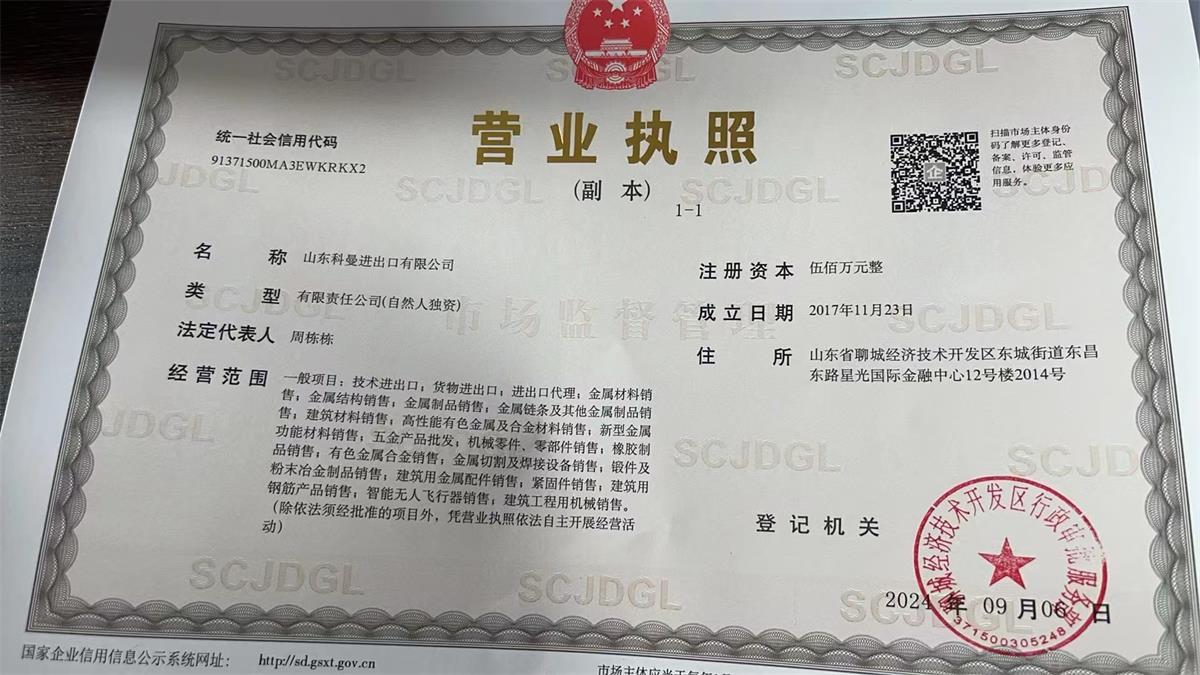
Address:Shandong Keman Import and Export Co., Ltd.

Double Reduced Cold Rolled Tinplate: Comprehensive Overview of Safety Standards and Certifications
Release time:
2026-04-23
Double Reduced Cold Rolled Tinplate: Safety Standards and Certifications Explained Introduction to Double Reduced Cold Rolled Tinplate Double Reduced Cold Rolled Tinplate (DRCR) is a specialized steel product that undergoes a meticulous manufacturing process to achieve unique properties. This form of tinplate is primarily used in the packaging industry due to its lightweight, corrosion-resistant c
Double Reduced Cold Rolled Tinplate: Safety Standards and Certifications Explained
Introduction to Double Reduced Cold Rolled Tinplate
Double Reduced Cold Rolled Tinplate (DRCR) is a specialized steel product that undergoes a meticulous manufacturing process to achieve unique properties. This form of tinplate is primarily used in the packaging industry due to its lightweight, corrosion-resistant characteristics. The manufacturing process involves cold rolling the iron and steel flat products, which enhances the material's strength and durability. This article aims to provide an extensive overview of the safety standards and certifications that govern DRCR tinplate, ensuring its reliability for various applications.
Understanding the Manufacturing Process of Double Reduced Cold Rolled Tinplate
The production of DRCR tinplate involves several key stages, including:
1. Steel Preparation
The process begins with high-quality steel slabs, which are cleaned and treated to remove impurities. This initial step is crucial in ensuring the integrity of the final product.
2. Cold Rolling
The cleaned steel is then cold-rolled multiple times to reduce its thickness. This process enhances the mechanical properties of the steel, making it more suitable for applications requiring strength and flexibility.
3. Annealing
After cold rolling, the tinplate undergoes annealing – a heat treatment process that alters the microstructure of the steel, thereby improving its ductility and formability.
4. Tin Coating
Following the annealing process, a tin coating is applied to the surface of the steel. This layer acts as a barrier against corrosion and is essential for maintaining the product's performance in various environments.
Importance of Safety Standards in Double Reduced Cold Rolled Tinplate
Safety standards are critical in ensuring that DRCR tinplate meets the rigorous demands of various industries. These standards help manufacturers maintain quality, safety, and environmental compliance. They also foster consumer confidence in the products being used.
1. Global Safety Regulations
Various international and national organizations establish safety standards for DRCR tinplate, including:
- ISO (International Organization for Standardization)
- ASTM (American Society for Testing and Materials)
- EN (European Standards)
These organizations provide guidelines related to material properties, environmental impact, and safety measures during production.
2. Quality Assurance Standards
Quality assurance plays a vital role in the production of DRCR tinplate. Standards such as ISO 9001 outline requirements for a quality management system, ensuring that manufacturers consistently produce products that meet customer and regulatory requirements.
Key Certifications for Double Reduced Cold Rolled Tinplate
Manufacturers often pursue various certifications to prove compliance with safety and quality standards. Here are some notable certifications relevant to DRCR tinplate:
1. ISO 9001 Certification
ISO 9001 certification demonstrates a manufacturer's commitment to quality management principles. This certification ensures that organizations have a robust quality management system in place.
2. ISO 14001 Certification
ISO 14001 focuses on environmental management systems. This certification indicates that the manufacturer is committed to reducing its environmental impact, which is particularly important in industries such as packaging.
3. Food Safety Certifications
For tinplate used in food packaging, certifications such as ISO 22000 (Food Safety Management) and FDA compliance are critical. These certifications ensure that the materials used are safe for food contact and do not pose any health risks.
4. RoHS Compliance
RoHS (Restriction of Hazardous Substances) compliance ensures that the tinplate does not contain harmful materials, such as lead or cadmium. This compliance is increasingly important due to growing environmental concerns.
Testing Methods for Safety and Quality Assurance
Various testing methods are employed to verify the safety and quality of DRCR tinplate, including:
1. Mechanical Testing
Mechanical testing involves assessing properties such as tensile strength, yield strength, and elongation. These tests ensure that the tinplate can withstand the demands of its intended applications.
2. Corrosion Resistance Testing
Corrosion resistance testing evaluates how well the tinplate performs in different environments. This testing is crucial for applications where exposure to moisture and chemicals is common.
3. Coating Thickness Measurement
The thickness of the tin coating is essential for ensuring corrosion protection. Testing methods, such as X-ray fluorescence (XRF), are used to accurately measure coating thickness.
Challenges in Meeting Safety Standards
Manufacturers face various challenges when striving to meet safety standards and certifications:
1. Evolving Regulations
Safety regulations are continually evolving, requiring manufacturers to stay updated on new requirements and adapt their processes accordingly.
2. Cost Implications
Achieving and maintaining certifications can incur significant costs, which may impact smaller manufacturers more than larger corporations.
3. Supply Chain Management
Ensuring compliance throughout the supply chain can be complex, particularly when sourcing raw materials or working with various suppliers.
Future Trends in Double Reduced Cold Rolled Tinplate Standards
As industries evolve, so do the safety standards and certifications for DRCR tinplate. Some emerging trends include:
1. Sustainability Focus
There is a growing emphasis on sustainability, with standards reflecting environmental concerns. Manufacturers are expected to adopt eco-friendly practices in production and packaging.
2. Increased Transparency
Consumers are demanding transparency regarding the materials used in products. Certifications that provide insights into sourcing, manufacturing practices, and safety standards are becoming more prevalent.
3. Advancements in Testing Technologies
Innovative testing methods, including non-destructive testing and real-time monitoring, are becoming essential in ensuring ongoing compliance with safety standards.
FAQs about Double Reduced Cold Rolled Tinplate Safety Standards
Q1: What is the primary use of Double Reduced Cold Rolled Tinplate?
A1: DRCR tinplate is mainly used in the packaging industry, particularly for food and beverage containers due to its lightweight and corrosion-resistant properties.
Q2: What certifications should I look for when purchasing DRCR tinplate?
A2: Look for certifications such as ISO 9001, ISO 14001, FDA compliance, and RoHS compliance to ensure safety and quality.
Q3: How do safety standards impact the manufacturing process of DRCR tinplate?
A3: Safety standards impact every stage of manufacturing, from raw material selection to final quality assurance, ensuring that products are safe and reliable.
Q4: Are there specific safety standards for food packaging made from DRCR tinplate?
A4: Yes, food packaging must comply with standards such as ISO 22000 and FDA regulations to ensure that materials are safe for food contact.
Q5: What are the common challenges manufacturers face in meeting safety certifications?
A5: Common challenges include evolving regulations, cost implications, and managing compliance throughout the supply chain.
Conclusion
Double Reduced Cold Rolled Tinplate is an essential material in various industries, especially in packaging applications. Understanding the safety standards and certifications that govern its production is crucial for maintaining quality and ensuring consumer safety. As manufacturers navigate the complexities of compliance, they must remain committed to upholding these standards to foster trust and reliability in their products. The continued evolution of safety regulations and consumer expectations will shape the future of DRCR tinplate, driving innovation and ensuring the sustainability of the industry.
Latest News
Innovative Applications of Carbon Steel Plates in Building Designs
Innovative Applications of Carbon Steel Plates in Building Designs Carbon steel plates have emerged as a cornerstone material in the construction industry, gaining acclaim for their versatility, strength, and aesthetic potential. As the demand for innovative design solutions escalates, architects and builders are increasingly incorporating carbon steel plates into their projects. This article expl
2026-09-22
Understanding A514 Carbon Steel Plate: Key Characteristics and Applications
A514 Carbon Steel Plate is a high-yield strength steel that has become a preferred choice in various industrial applications, particularly in the fields of metallurgy and energy. This type of steel is known for its excellent mechanical properties, making it suitable for demanding environments where strength and durability are paramount. One of the key characteristics of A514 Carbon Steel Plate is
2026-09-17
How A387 Carbon Alloy Steel Plate Enhances Structural Integrity in Construction
How A387 Carbon Alloy Steel Plate Enhances Structural Integrity in Construction Table of Contents 1. Introduction to A387 Carbon Alloy Steel Plate 2. What is A387 Carbon Alloy Steel? 3. Key Properties of A387 Carbon Alloy Steel Plates 4. Manufacturing Process of A387 Steel Plates 5. Applications of A387 Carbon Alloy Steel Plates 6. Advantages of Using A387 Carbon Alloy Ste
2026-09-12
Understanding A285 Carbon Steel Pressure Plates: Essential Insights for Construction and Design
A285 Carbon Steel Pressure Plates are primarily used in pressure vessel fabrication and construction applications. This type of steel is known for its good weldability and formability, making it a favorable choice for various structural components. The ASTM A285 standard specifically governs the specifications for carbon steel plates intended for low-pressure service. One of the key characteristic
2026-09-07
The Role of 5A05 Aluminum Plate in Enhancing Building Aesthetics
The Role of 5A05 Aluminum Plate in Enhancing Building Aesthetics Table of Contents 1. Introduction to 5A05 Aluminum Plates 2. Properties of 5A05 Aluminum Plates 3. Applications of 5A05 Aluminum Plates in Architecture 4. Aesthetic Advantages of Using 5A05 Aluminum Plates 5. Sustainability and Environmental Impact 6. Installation and Maintenance of 5A05 Aluminum Plates 7
2026-09-02
Understanding B500 Steel Reinforcement: Key Insights for Professionals in Construction Machinery
B500 steel reinforcement is a critical component in the construction industry, particularly in manufacturing and processing machinery for engineering and construction projects. This high-strength steel bar is widely used in reinforced concrete structures, providing the necessary tensile strength to support heavy loads and withstand various stresses. One of the defining characteristics of B500 stee
2026-08-28


Copyright 2025 : Shandong Keman Import and Export Co., Ltd. Powered by:CEglobal SEO BUSINESS LICENSE