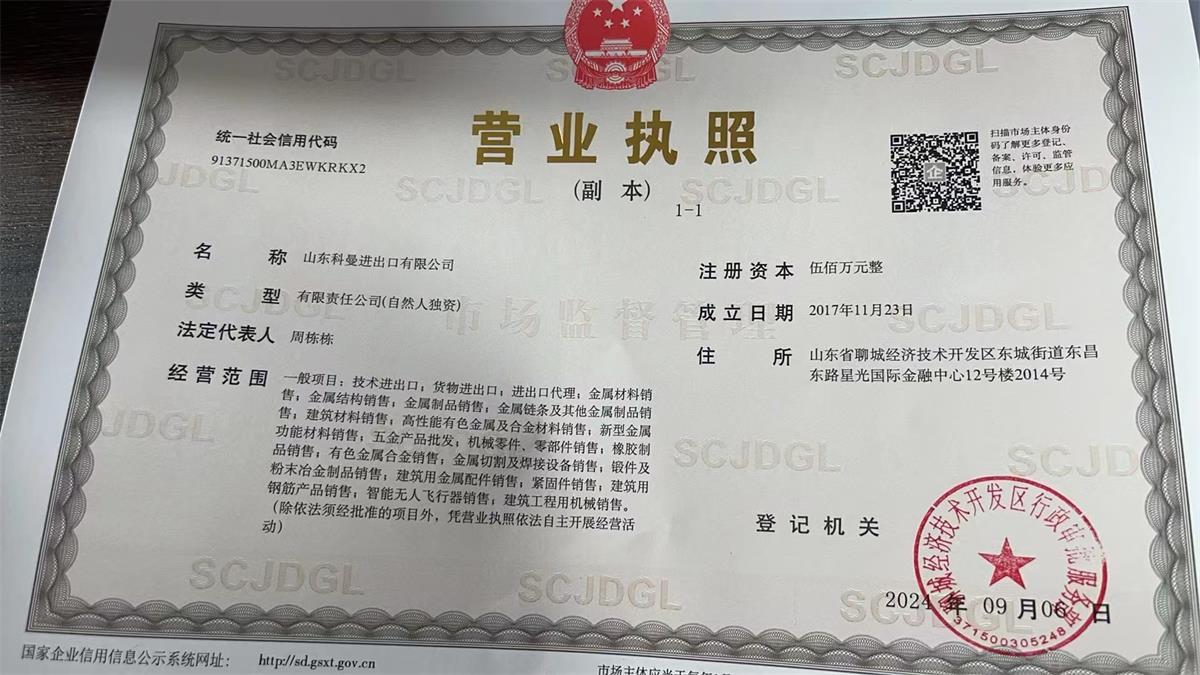
Address:Shandong Keman Import and Export Co., Ltd.

Unleashing Strength: The Advantages of New B500 Steel Reinforcement
Release time:
2026-06-10
Unleashing Strength: The Advantages of New B500 Steel Reinforcement Table of Contents 1. Introduction to B500 Steel Reinforcement 2. What is B500 Steel Reinforcement? 3. Advantages of B500 Steel Reinforcement 3.1 Superior Strength and Durability 3.2 Cost-Effectiveness in Construction 3.3 Reduced Environmental Impact 4. Applicat
Unleashing Strength: The Advantages of New B500 Steel Reinforcement
Table of Contents
- 1. Introduction to B500 Steel Reinforcement
- 2. What is B500 Steel Reinforcement?
- 3. Advantages of B500 Steel Reinforcement
- 3.1 Superior Strength and Durability
- 3.2 Cost-Effectiveness in Construction
- 3.3 Reduced Environmental Impact
- 4. Applications of B500 Steel Reinforcement
- 5. Comparison with Other Steel Reinforcement Types
- 6. Installation Techniques for B500 Steel Reinforcement
- 7. The Future of B500 Steel Reinforcement
- 8. Frequently Asked Questions (FAQs)
- 9. Conclusion
1. Introduction to B500 Steel Reinforcement
The construction industry is continually evolving, with innovations aimed at improving structural integrity and sustainability. One of the most significant advancements in recent years is the introduction of B500 steel reinforcement. This new grade of steel offers enhanced properties that cater to the demanding requirements of modern construction projects. This article explores the myriad advantages of B500 steel reinforcement and why it stands out as a preferred choice among engineers and contractors.
2. What is B500 Steel Reinforcement?
B500 steel reinforcement, often referred to as high-strength steel reinforcement, is characterized by its high yield strength of 500 MPa. This advanced steel grade is designed to provide superior structural performance in various applications, particularly in reinforced concrete structures. The B500 designation signifies that the steel meets specific mechanical and chemical properties, making it suitable for high-stress environments.
Different from traditional rebar, B500 is manufactured using cutting-edge techniques that enhance its tensile strength and ductility. This results in steel that can withstand significant loads and resist deformation, making it a critical component in modern construction practices.
3. Advantages of B500 Steel Reinforcement
The advantages of B500 steel reinforcement are extensive and multifaceted.
3.1 Superior Strength and Durability
One of the primary benefits of B500 steel reinforcement is its **superior strength**. With a yield strength of 500 MPa, B500 can bear greater loads with less material compared to conventional steel grades. This reduction in material usage not only lowers construction costs but also enhances the overall durability of structures. The high strength-to-weight ratio of B500 allows for slimmer designs and reduced cross-sectional areas, leading to lighter structures without compromising safety or performance.
Additionally, B500 steel exhibits excellent fatigue resistance, which is crucial for structures subjected to cyclic loading, such as bridges and high-rise buildings. Its durability ensures that structures remain safe and functional for extended periods, reducing the need for frequent repairs or replacements.
3.2 Cost-Effectiveness in Construction
The incorporation of B500 steel reinforcement can lead to significant cost savings in construction. While the initial investment may be slightly higher than traditional steel, the long-term benefits far outweigh these costs. **Using less material** due to the high strength of B500 results in reduced expenses for purchasing and transporting steel. Moreover, its lightweight nature can lower labor costs, as workers can handle and install it more easily.
Furthermore, the durability of B500 steel contributes to lower maintenance costs over the life of the structure. Fewer repairs mean less downtime and a higher return on investment for construction projects, making B500 a financially savvy choice for engineers and developers.
3.3 Reduced Environmental Impact
In today's world, sustainability is a rising concern in construction. B500 steel reinforcement offers an **environmentally friendly** alternative to traditional steel. By using less material without sacrificing strength, B500 helps reduce the overall carbon footprint of construction projects. The lower energy costs associated with transporting and installing lighter materials contribute to a greener construction process.
Additionally, the longevity of structures reinforced with B500 means fewer resources are consumed over time for repairs and reconstructions. This long-lasting performance aligns with global efforts to create more sustainable infrastructure.
4. Applications of B500 Steel Reinforcement
B500 steel reinforcement is versatile and suitable for a variety of applications in the construction sector. Its **strength and durability** make it ideal for:
- **High-rise buildings**: Where structural integrity and safety are paramount.
- **Bridges**: Allowing for long spans with reduced material usage.
- **Dams and water structures**: Maintaining stability under varying loads.
- **Industrial structures**: Such as warehouses and manufacturing plants, where heavy machinery is present.
By utilizing B500 steel reinforcement, engineers can ensure the reliability and safety of these critical structures, meeting modern demands while adhering to industry standards.
5. Comparison with Other Steel Reinforcement Types
When evaluating B500 steel reinforcement against other types of steel, several factors come into play. Traditional mild steel, for instance, lacks the tensile strength and fatigue resistance that B500 offers. Comparatively, high-strength low-alloy (HSLA) steels provide enhanced properties, but they may not achieve the same balance of cost-effectiveness and environmental benefits as B500.
Furthermore, the **ductility** of B500 steel allows it to absorb energy during seismic events, making it a superior choice for regions prone to earthquakes. This unique combination of strength, ductility, and cost savings sets B500 apart as a leading choice in the industry.
6. Installation Techniques for B500 Steel Reinforcement
The installation of B500 steel reinforcement requires specific techniques to maximize its benefits. Proper handling and placement are critical for achieving the desired structural performance. Here are some key considerations:
- **Handling with Care**: Due to its high strength and reduced thickness, B500 must be handled carefully to avoid any deformation or damage during transportation and installation.
- **Correct Placement**: Ensuring that B500 is placed in accordance with design specifications is crucial. This involves using accurate tie techniques and ensuring proper coverage with concrete.
- **Welding and Bending**: While B500 can be welded, it requires specific techniques due to its strength. Proper equipment and methods should be employed to ensure integrity.
By adhering to these techniques, contractors can ensure that the advantages of B500 steel reinforcement are fully realized in the final structure.
7. The Future of B500 Steel Reinforcement
As the construction industry continues to evolve, the demand for innovative materials like B500 steel reinforcement is expected to grow. Ongoing research and development are likely to enhance its properties further, improving performance in various environmental conditions.
The integration of B500 steel into smart construction practices, such as prefabrication and modular building methods, will also contribute to its popularity. The ability to customize reinforcement solutions to meet specific project requirements will drive its adoption in both commercial and residential sectors.
8. Frequently Asked Questions (FAQs)
What are the key properties of B500 steel reinforcement?
B500 steel reinforcement is characterized by its high yield strength of 500 MPa, excellent ductility, and fatigue resistance, making it ideal for various construction applications.
How does B500 compare to traditional steel reinforcement?
B500 offers superior strength and durability compared to traditional mild steel, allowing for reduced material usage and enhanced structural performance.
Is B500 steel environmentally friendly?
Yes, B500 steel reinforcement is more environmentally friendly due to its reduced material usage, lower transportation costs, and longer lifespan, which minimizes the need for repairs.
What types of structures benefit most from B500 steel reinforcement?
High-rise buildings, bridges, dams, and industrial structures particularly benefit from the strength and durability of B500 steel reinforcement.
Are there specific installation techniques for B500 steel reinforcement?
Yes, proper handling, placement according to design specifications, and specific welding techniques are crucial to maximizing the benefits of B500 steel reinforcement during installation.
9. Conclusion
B500 steel reinforcement represents a significant advancement in construction materials, offering unparalleled strength, cost-effectiveness, and environmental benefits. As the demand for robust and sustainable construction solutions continues to rise, B500 stands out as a leading choice for engineers and contractors. By embracing this innovative material, the construction industry can pave the way for safer, more efficient, and environmentally conscious structures that meet the challenges of modern infrastructure needs.
Latest News
Innovative Applications of Carbon Steel Plates in Building Designs
Innovative Applications of Carbon Steel Plates in Building Designs Carbon steel plates have emerged as a cornerstone material in the construction industry, gaining acclaim for their versatility, strength, and aesthetic potential. As the demand for innovative design solutions escalates, architects and builders are increasingly incorporating carbon steel plates into their projects. This article expl
2026-09-22
Understanding A514 Carbon Steel Plate: Key Characteristics and Applications
A514 Carbon Steel Plate is a high-yield strength steel that has become a preferred choice in various industrial applications, particularly in the fields of metallurgy and energy. This type of steel is known for its excellent mechanical properties, making it suitable for demanding environments where strength and durability are paramount. One of the key characteristics of A514 Carbon Steel Plate is
2026-09-17
How A387 Carbon Alloy Steel Plate Enhances Structural Integrity in Construction
How A387 Carbon Alloy Steel Plate Enhances Structural Integrity in Construction Table of Contents 1. Introduction to A387 Carbon Alloy Steel Plate 2. What is A387 Carbon Alloy Steel? 3. Key Properties of A387 Carbon Alloy Steel Plates 4. Manufacturing Process of A387 Steel Plates 5. Applications of A387 Carbon Alloy Steel Plates 6. Advantages of Using A387 Carbon Alloy Ste
2026-09-12
Understanding A285 Carbon Steel Pressure Plates: Essential Insights for Construction and Design
A285 Carbon Steel Pressure Plates are primarily used in pressure vessel fabrication and construction applications. This type of steel is known for its good weldability and formability, making it a favorable choice for various structural components. The ASTM A285 standard specifically governs the specifications for carbon steel plates intended for low-pressure service. One of the key characteristic
2026-09-07
The Role of 5A05 Aluminum Plate in Enhancing Building Aesthetics
The Role of 5A05 Aluminum Plate in Enhancing Building Aesthetics Table of Contents 1. Introduction to 5A05 Aluminum Plates 2. Properties of 5A05 Aluminum Plates 3. Applications of 5A05 Aluminum Plates in Architecture 4. Aesthetic Advantages of Using 5A05 Aluminum Plates 5. Sustainability and Environmental Impact 6. Installation and Maintenance of 5A05 Aluminum Plates 7
2026-09-02
Understanding B500 Steel Reinforcement: Key Insights for Professionals in Construction Machinery
B500 steel reinforcement is a critical component in the construction industry, particularly in manufacturing and processing machinery for engineering and construction projects. This high-strength steel bar is widely used in reinforced concrete structures, providing the necessary tensile strength to support heavy loads and withstand various stresses. One of the defining characteristics of B500 stee
2026-08-28


Copyright 2025 : Shandong Keman Import and Export Co., Ltd. Powered by:CEglobal SEO BUSINESS LICENSE