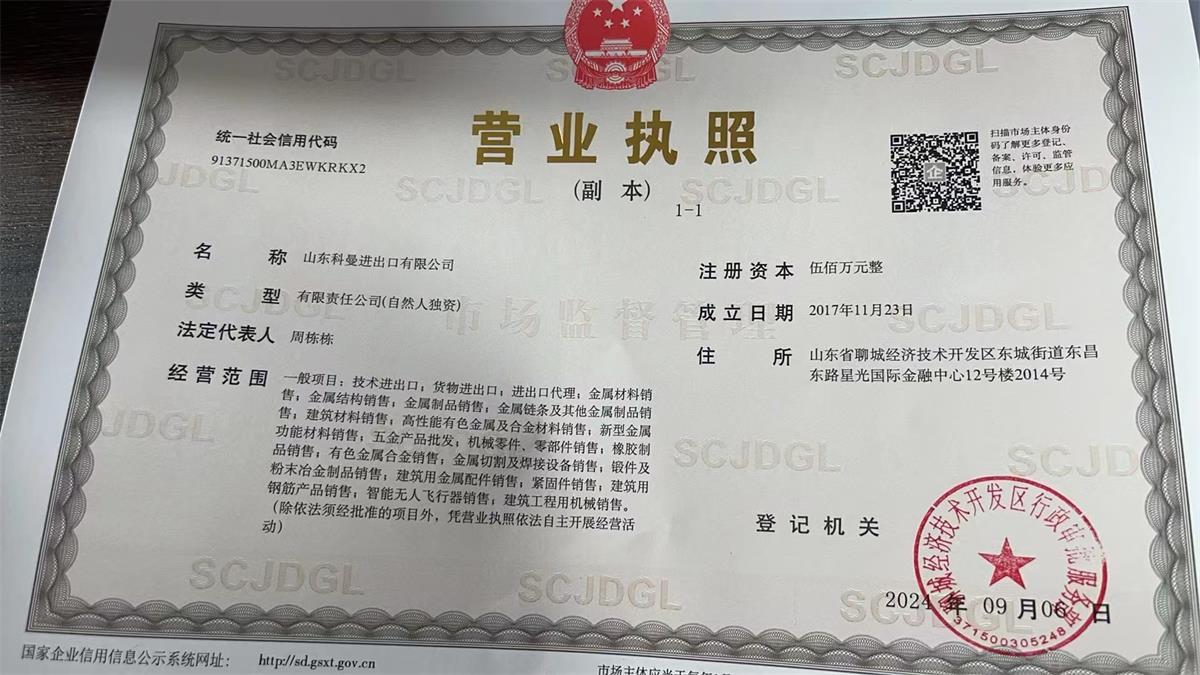
Address:Shandong Keman Import and Export Co., Ltd.

Transform Your Projects with New Equal Thickness Tinplate: A Game Changer in the Building and Decorating Materials Industry
Release time:
2026-06-28
Transform Your Projects with New Equal Thickness Tinplate Introduction to Equal Thickness Tinplate In the rapidly evolving construction and decoration materials industry, **equal thickness tinplate** has emerged as a formidable contender, revolutionizing how we approach various building projects. This article delves into the characteristics of equal thickness tinplate, its unique advantages, and h
Transform Your Projects with New Equal Thickness Tinplate
Introduction to Equal Thickness Tinplate
In the rapidly evolving construction and decoration materials industry, **equal thickness tinplate** has emerged as a formidable contender, revolutionizing how we approach various building projects. This article delves into the characteristics of equal thickness tinplate, its unique advantages, and how it can transform your building endeavors.
Understanding Equal Thickness Tinplate
Equal thickness tinplate is a type of steel sheet that undergoes a special manufacturing process to ensure uniform thickness across its surface. This consistency in thickness is paramount, as it allows for **better performance** in applications requiring precision and reliability. The process involves cold rolling, which enhances the metal's mechanical properties while maintaining a lightweight structure.
Why is Thickness Uniformity Important?
Uniform thickness plays a crucial role in various applications, including:
- **Structural Integrity**: Consistent thickness reduces the risk of weak points within the material, enhancing the overall durability of structures.
- **Fabrication Efficiency**: Uniform pieces are easier to work with, leading to increased speed and reduced waste during fabrication.
- **Aesthetic Appeal**: Equal thickness ensures a smooth finish, contributing to a professional appearance in visible applications.
The Benefits of Using Equal Thickness Tinplate
Integrating equal thickness tinplate into your projects offers numerous benefits, making it a preferred choice for architects, builders, and designers.
1. Enhanced Strength and Durability
One of the most significant advantages of equal thickness tinplate is its strength. The uniformity in thickness contributes to enhanced tensile strength, making it ideal for structural applications where resilience is critical. This durability translates into longer-lasting projects, reducing the need for frequent repairs or replacements.
2. Improved Workability and Fabrication
The ease of fabrication associated with equal thickness tinplate cannot be overstated. Its consistent thickness allows for smooth cutting, bending, and welding processes. This efficiency not only saves time but also minimizes material waste, contributing to more sustainable building practices.
3. Versatility Across Applications
Equal thickness tinplate is remarkably versatile, finding applications in a broad spectrum of industries, including:
- **Construction**: Used in roofing, wall panels, and structural components.
- **Automotive**: Essential in manufacturing parts that require precise dimensions and strength.
- **Consumer Goods**: Utilized in packaging, appliances, and decorative items due to its aesthetic qualities.
4. Corrosion Resistance
Modern equal thickness tinplate often comes with protective coatings that enhance its corrosion resistance. This means that structures made from this material can withstand harsh environmental conditions, prolonging their lifespan and maintaining their integrity.
5. Cost-Effectiveness
While the initial investment in equal thickness tinplate may be higher than other materials, its durability and reduced maintenance costs lead to significant savings over time. Builders and contractors can benefit from lower total project costs, making it an economically sound choice.
Applications of Equal Thickness Tinplate in Construction
Understanding how to effectively implement equal thickness tinplate can elevate your projects significantly. Here are some common applications:
1. Roofing Systems
Equal thickness tinplate is increasingly used in roofing systems due to its durability and ability to withstand various weather conditions. Its uniform thickness ensures that roofs not only look good but also perform reliably over time.
2. Wall Panels
When it comes to wall panels, equal thickness tinplate offers a sleek and modern appearance. Its strength makes it an ideal choice for both indoor and outdoor applications, allowing for innovative architectural designs.
3. Structural Components
The robustness of equal thickness tinplate makes it suitable for structural components such as beams and columns. Its predictable performance under various loads ensures safety and reliability in construction.
Best Practices for Working with Equal Thickness Tinplate
To maximize the benefits of equal thickness tinplate, consider the following best practices:
1. Proper Handling and Storage
Ensure that tinplate sheets are stored in a dry environment to prevent corrosion. Handle them with care to avoid bending or damaging the material.
2. Precision Cutting and Fabrication
Utilize specialized tools for cutting and shaping equal thickness tinplate. Precision ensures that the finished product meets design specifications accurately.
3. Regular Maintenance
While equal thickness tinplate is durable, regular maintenance checks can help identify any potential issues before they become significant problems. This proactive approach contributes to the longevity of your projects.
Environmental Impact of Equal Thickness Tinplate
Sustainability is a critical consideration in modern construction practices. Equal thickness tinplate offers several environmental advantages:
1. Recyclability
Tinplate is 100% recyclable, making it an environmentally friendly choice. Incorporating recycled materials into new projects reduces waste and conserves natural resources.
2. Energy Efficiency
The manufacturing process for equal thickness tinplate has become increasingly energy-efficient, further reducing its environmental footprint. By choosing this material, builders can align with sustainable building practices.
Frequently Asked Questions (FAQs)
1. What is equal thickness tinplate?
Equal thickness tinplate is a type of steel sheet that has been processed to ensure uniform thickness across its surface, enhancing its strength and durability.
2. What are the primary benefits of using equal thickness tinplate in construction?
The main benefits include improved strength, better workability, versatility in applications, corrosion resistance, and long-term cost-effectiveness.
3. Can equal thickness tinplate be used in outdoor applications?
Yes, equal thickness tinplate is suitable for outdoor applications, particularly when protected with appropriate coatings to enhance corrosion resistance.
4. How does equal thickness tinplate compare to other building materials?
Equal thickness tinplate offers superior strength, durability, and aesthetic appeal compared to many alternative materials, making it a preferred choice for various construction projects.
5. Is equal thickness tinplate environmentally friendly?
Yes, equal thickness tinplate is recyclable and produced using energy-efficient processes, making it a sustainable choice for modern construction practices.
Conclusion
Equal thickness tinplate is more than just a building material; it is a transformative element that can redefine how we approach construction and design. By understanding its benefits and applications, builders and contractors can harness its strengths to create durable, sustainable projects that stand the test of time. As you consider your next project, integrating equal thickness tinplate could be the key to achieving exceptional results.
Latest News
Innovative Applications of Carbon Steel Plates in Building Designs
Innovative Applications of Carbon Steel Plates in Building Designs Carbon steel plates have emerged as a cornerstone material in the construction industry, gaining acclaim for their versatility, strength, and aesthetic potential. As the demand for innovative design solutions escalates, architects and builders are increasingly incorporating carbon steel plates into their projects. This article expl
2026-09-22
Understanding A514 Carbon Steel Plate: Key Characteristics and Applications
A514 Carbon Steel Plate is a high-yield strength steel that has become a preferred choice in various industrial applications, particularly in the fields of metallurgy and energy. This type of steel is known for its excellent mechanical properties, making it suitable for demanding environments where strength and durability are paramount. One of the key characteristics of A514 Carbon Steel Plate is
2026-09-17
How A387 Carbon Alloy Steel Plate Enhances Structural Integrity in Construction
How A387 Carbon Alloy Steel Plate Enhances Structural Integrity in Construction Table of Contents 1. Introduction to A387 Carbon Alloy Steel Plate 2. What is A387 Carbon Alloy Steel? 3. Key Properties of A387 Carbon Alloy Steel Plates 4. Manufacturing Process of A387 Steel Plates 5. Applications of A387 Carbon Alloy Steel Plates 6. Advantages of Using A387 Carbon Alloy Ste
2026-09-12
Understanding A285 Carbon Steel Pressure Plates: Essential Insights for Construction and Design
A285 Carbon Steel Pressure Plates are primarily used in pressure vessel fabrication and construction applications. This type of steel is known for its good weldability and formability, making it a favorable choice for various structural components. The ASTM A285 standard specifically governs the specifications for carbon steel plates intended for low-pressure service. One of the key characteristic
2026-09-07
The Role of 5A05 Aluminum Plate in Enhancing Building Aesthetics
The Role of 5A05 Aluminum Plate in Enhancing Building Aesthetics Table of Contents 1. Introduction to 5A05 Aluminum Plates 2. Properties of 5A05 Aluminum Plates 3. Applications of 5A05 Aluminum Plates in Architecture 4. Aesthetic Advantages of Using 5A05 Aluminum Plates 5. Sustainability and Environmental Impact 6. Installation and Maintenance of 5A05 Aluminum Plates 7
2026-09-02
Understanding B500 Steel Reinforcement: Key Insights for Professionals in Construction Machinery
B500 steel reinforcement is a critical component in the construction industry, particularly in manufacturing and processing machinery for engineering and construction projects. This high-strength steel bar is widely used in reinforced concrete structures, providing the necessary tensile strength to support heavy loads and withstand various stresses. One of the defining characteristics of B500 stee
2026-08-28


Copyright 2025 : Shandong Keman Import and Export Co., Ltd. Powered by:CEglobal SEO BUSINESS LICENSE