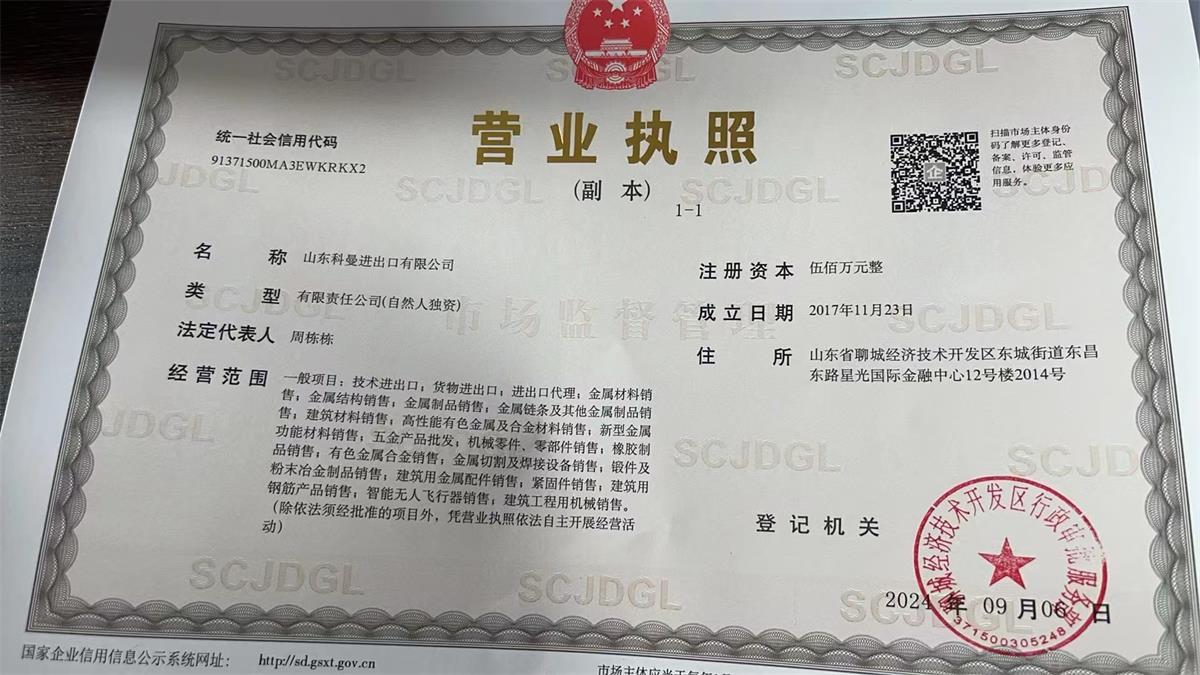
Address:Shandong Keman Import and Export Co., Ltd.

Understanding Galvanized Plates: Their Role in the Metallurgy and Energy Industry
Release time:
2026-08-08
Galvanized plates, commonly known for their corrosion-resistant properties, are steel sheets coated with a layer of zinc. This coating serves as a protective barrier against moisture and environmental factors, preventing rust and extending the lifespan of the material. In the metallurgy and energy sectors, galvanized plates are highly valued for their durability and strength, making them ideal for
The process of galvanization typically involves either hot-dip galvanizing or electro-galvanizing. In hot-dip galvanizing, steel plates are immersed in molten zinc, resulting in a thick, robust coating. This method is favored for its ability to provide a strong, long-lasting protection layer that adheres well to the steel surface. On the other hand, electro-galvanizing applies a thinner zinc layer through electrochemical processes, offering a smoother finish and more uniform coating. Both techniques have their advantages, and the choice often depends on the specific requirements of the application.
Galvanized plates are widely used in construction, automotive manufacturing, and energy generation. In construction, they serve as roofing materials, wall cladding, and structural components, significantly enhancing the durability of buildings. In the automotive industry, galvanized plates are used in body panels and undercarriages, where protection from rust is crucial for vehicle longevity. In energy sectors, particularly in renewable energy sources like wind and solar, galvanized plates are employed in support structures and mounting systems, ensuring resilience against harsh environmental conditions.
Another significant advantage of galvanized plates is their cost-effectiveness. While the initial investment may be higher than non-coated steel, the long-term savings from reduced maintenance and replacement costs often justify the expense. Additionally, their recyclability makes galvanized plates an environmentally friendly choice, aligning with sustainability goals prevalent in modern industries.
In summary, galvanized plates are a vital material in the metallurgy and energy sectors, offering exceptional protection against corrosion and contributing to the longevity of products. Understanding their properties and applications can assist industry professionals in making informed decisions that enhance operational efficiency and product reliability. Whether in construction, automotive, or energy applications, the use of galvanized plates is a testament to the importance of innovation in materials science.
Latest News
Innovative Applications of Carbon Steel Plates in Building Designs
Innovative Applications of Carbon Steel Plates in Building Designs Carbon steel plates have emerged as a cornerstone material in the construction industry, gaining acclaim for their versatility, strength, and aesthetic potential. As the demand for innovative design solutions escalates, architects and builders are increasingly incorporating carbon steel plates into their projects. This article expl
2026-09-22
Understanding A514 Carbon Steel Plate: Key Characteristics and Applications
A514 Carbon Steel Plate is a high-yield strength steel that has become a preferred choice in various industrial applications, particularly in the fields of metallurgy and energy. This type of steel is known for its excellent mechanical properties, making it suitable for demanding environments where strength and durability are paramount. One of the key characteristics of A514 Carbon Steel Plate is
2026-09-17
How A387 Carbon Alloy Steel Plate Enhances Structural Integrity in Construction
How A387 Carbon Alloy Steel Plate Enhances Structural Integrity in Construction Table of Contents 1. Introduction to A387 Carbon Alloy Steel Plate 2. What is A387 Carbon Alloy Steel? 3. Key Properties of A387 Carbon Alloy Steel Plates 4. Manufacturing Process of A387 Steel Plates 5. Applications of A387 Carbon Alloy Steel Plates 6. Advantages of Using A387 Carbon Alloy Ste
2026-09-12
Understanding A285 Carbon Steel Pressure Plates: Essential Insights for Construction and Design
A285 Carbon Steel Pressure Plates are primarily used in pressure vessel fabrication and construction applications. This type of steel is known for its good weldability and formability, making it a favorable choice for various structural components. The ASTM A285 standard specifically governs the specifications for carbon steel plates intended for low-pressure service. One of the key characteristic
2026-09-07
The Role of 5A05 Aluminum Plate in Enhancing Building Aesthetics
The Role of 5A05 Aluminum Plate in Enhancing Building Aesthetics Table of Contents 1. Introduction to 5A05 Aluminum Plates 2. Properties of 5A05 Aluminum Plates 3. Applications of 5A05 Aluminum Plates in Architecture 4. Aesthetic Advantages of Using 5A05 Aluminum Plates 5. Sustainability and Environmental Impact 6. Installation and Maintenance of 5A05 Aluminum Plates 7
2026-09-02
Understanding B500 Steel Reinforcement: Key Insights for Professionals in Construction Machinery
B500 steel reinforcement is a critical component in the construction industry, particularly in manufacturing and processing machinery for engineering and construction projects. This high-strength steel bar is widely used in reinforced concrete structures, providing the necessary tensile strength to support heavy loads and withstand various stresses. One of the defining characteristics of B500 stee
2026-08-28


Copyright 2025 : Shandong Keman Import and Export Co., Ltd. Powered by:CEglobal SEO BUSINESS LICENSE