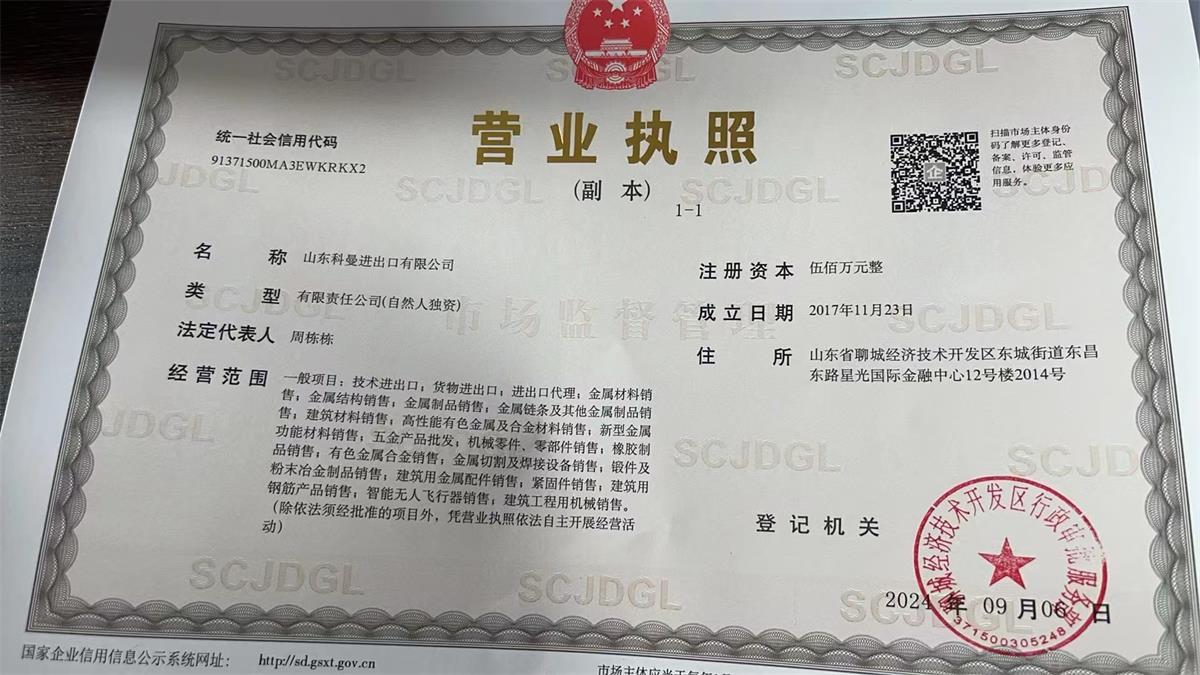
Address:Shandong Keman Import and Export Co., Ltd.

The Science Behind Hastelloy Alloy Plate: What Makes It Unique?
Release time:
2026-08-13
The Science Behind Hastelloy Alloy Plate: What Makes It Unique? Hastelloy alloys are well-regarded in various industries for their exceptional resistance to both corrosion and heat. These nickel-based alloys are typically used in extreme environments where other metals fail to perform. In this article, we will delve into the unique properties that make Hastelloy alloy plates stand out, their compo
The Science Behind Hastelloy Alloy Plate: What Makes It Unique?
Hastelloy alloys are well-regarded in various industries for their exceptional resistance to both corrosion and heat. These nickel-based alloys are typically used in extreme environments where other metals fail to perform. In this article, we will delve into the unique properties that make Hastelloy alloy plates stand out, their composition, applications, and the science behind their remarkable durability.
Understanding Hastelloy: A Brief Overview
Hastelloy is a registered trademark of Haynes International, Inc., encompassing a series of high-performance alloys primarily composed of nickel, molybdenum, and chromium. These components contribute to Hastelloy's outstanding resistance to oxidation, pitting, and stress corrosion cracking.
The Composition of Hastelloy Alloys
Different grades of Hastelloy exist, each tailored for specific applications and environments. The most common grades include Hastelloy C-276, C-22, and B-2.
- Hastelloy C-276: Contains nickel (57%), molybdenum (15%), and chromium (15%), making it highly resistant to pitting and stress corrosion cracking.
- Hastelloy C-22: With added tungsten, it offers enhanced resistance to localized corrosion.
- Hastelloy B-2: Focuses on hydrochloric acid applications with a high molybdenum content (27%).
Each alloy's unique formulation plays a crucial role in determining its performance in specific environments.
Key Properties of Hastelloy Alloy Plates
Hastelloy alloy plates exhibit several unique properties that make them suitable for extreme conditions.
1. Exceptional Corrosion Resistance
Hastelloy alloys provide excellent resistance to a wide range of corrosive media, including:
- Chlorides
- Acids
- Oxidizing agents
This makes them ideal for industries such as chemical processing, oil and gas, and power generation.
2. High-Temperature Stability
Hastelloy can withstand high temperatures without losing its structural integrity. This property is particularly beneficial in applications such as:
- Jet engines
- Gas turbines
- Heat exchangers
The alloy's ability to perform under extreme heat reduces the risk of failure and prolongs the lifespan of the components.
3. Excellent Fabricability
Hastelloy alloy plates can be easily fabricated into various shapes and forms. This versatility allows for:
- Welding
- Machining
- Forming
The ability to work with Hastelloy makes it a preferred choice for many manufacturers.
Applications of Hastelloy Alloy Plates
The unique properties of Hastelloy alloys make them suitable for a wide array of applications across different sectors.
Chemical Processing Industry
In chemical processing, Hastelloy is used for:
- Reactors
- Heat exchangers
- Pipes and fittings
These components often come into contact with highly corrosive substances, such as sulfuric acid and hydrochloric acid.
Oil and Gas Industry
Hastelloy alloys are vital in the oil and gas sector, specifically for:
- Downhole tubing
- Subsea components
- Production equipment
The ability to withstand harsh environments, including high pressures and temperatures, makes Hastelloy invaluable.
Power Generation
In power generation, Hastelloy is essential for:
- Gas turbine applications
- Heat recovery steam generators
- Fossil fuel power plants
These systems benefit from the alloy’s thermal resistance and durability.
The Manufacturing Process of Hastelloy Alloy Plates
Creating Hastelloy alloy plates involves several precise manufacturing processes to ensure their unique properties are preserved.
1. Melting and Casting
The production begins with the melting of raw materials in an electric arc furnace. This step must be carefully controlled to avoid contamination and ensure the right chemical composition.
2. Hot Working
Following melting, the alloy is hot worked, typically through processes such as rolling or forging. This process enhances the mechanical properties, including strength and ductility.
3. Solution Annealing
To relieve stresses and optimize the microstructure, Hastelloy plates undergo solution annealing. This heating process is crucial for enhancing corrosion resistance.
4. Cold Working and Finishing
Finally, cold working techniques are applied, followed by finishing processes that improve surface quality. This ensures that the plates are ready for end-use applications.
Comparing Hastelloy to Other Alloys
While Hastelloy is an excellent choice for many applications, it’s essential to compare it with other alloys to understand its advantages.
Inconel vs. Hastelloy
Inconel, another nickel-based alloy, is often compared to Hastelloy. While both offer corrosion resistance and high-temperature stability, Hastelloy generally has better resistance against reducing environments.
Stainless Steel vs. Hastelloy
Stainless steel is a common alternative to Hastelloy for many applications. However, Hastelloy far surpasses stainless steel in terms of corrosion resistance, especially in harsh chemical environments.
Why Choose Hastelloy Alloy Plates?
Choosing Hastelloy alloy plates comes with several advantages:
- Longevity: The durability of Hastelloy reduces the need for frequent replacements.
- Safety: Its resistance to stress corrosion cracking enhances operational safety.
- Performance: Hastelloy's high performance in extreme conditions ensures reliability and efficiency.
Choosing the right material can significantly impact the success of projects in harsh environments.
FAQs About Hastelloy Alloy Plates
1. What industries use Hastelloy alloy plates?
Hastelloy alloy plates are used in various industries, including chemical processing, oil and gas, and power generation.
2. How does Hastelloy resist corrosion?
Hastelloy’s unique composition, including nickel, molybdenum, and chromium, provides outstanding resistance to a wide range of corrosive substances.
3. Can Hastelloy be welded?
Yes, Hastelloy can be welded, and specific techniques are recommended to maintain its properties.
4. What are the temperature limits for Hastelloy alloys?
Hastelloy alloys can typically withstand temperatures up to 2200°F (1204°C), depending on the specific grade.
5. How do I choose the right Hastelloy grade for my application?
Choosing the right grade involves considering the specific environmental conditions and types of corrosive substances involved.
Conclusion
Hastelloy alloy plates are unique materials that stand out in their ability to resist corrosion, endure high temperatures, and maintain their structural integrity in extreme environments. Understanding the science behind these alloys helps industries make informed choices that enhance safety, performance, and longevity. As we continue to explore advancements in metallurgy, Hastelloy remains at the forefront, providing solutions that meet the demanding needs of various sectors. By choosing Hastelloy, businesses not only invest in quality but also secure their operations against the challenges posed by harsh environments.
Latest News
Innovative Applications of Carbon Steel Plates in Building Designs
Innovative Applications of Carbon Steel Plates in Building Designs Carbon steel plates have emerged as a cornerstone material in the construction industry, gaining acclaim for their versatility, strength, and aesthetic potential. As the demand for innovative design solutions escalates, architects and builders are increasingly incorporating carbon steel plates into their projects. This article expl
2026-09-22
Understanding A514 Carbon Steel Plate: Key Characteristics and Applications
A514 Carbon Steel Plate is a high-yield strength steel that has become a preferred choice in various industrial applications, particularly in the fields of metallurgy and energy. This type of steel is known for its excellent mechanical properties, making it suitable for demanding environments where strength and durability are paramount. One of the key characteristics of A514 Carbon Steel Plate is
2026-09-17
How A387 Carbon Alloy Steel Plate Enhances Structural Integrity in Construction
How A387 Carbon Alloy Steel Plate Enhances Structural Integrity in Construction Table of Contents 1. Introduction to A387 Carbon Alloy Steel Plate 2. What is A387 Carbon Alloy Steel? 3. Key Properties of A387 Carbon Alloy Steel Plates 4. Manufacturing Process of A387 Steel Plates 5. Applications of A387 Carbon Alloy Steel Plates 6. Advantages of Using A387 Carbon Alloy Ste
2026-09-12
Understanding A285 Carbon Steel Pressure Plates: Essential Insights for Construction and Design
A285 Carbon Steel Pressure Plates are primarily used in pressure vessel fabrication and construction applications. This type of steel is known for its good weldability and formability, making it a favorable choice for various structural components. The ASTM A285 standard specifically governs the specifications for carbon steel plates intended for low-pressure service. One of the key characteristic
2026-09-07
The Role of 5A05 Aluminum Plate in Enhancing Building Aesthetics
The Role of 5A05 Aluminum Plate in Enhancing Building Aesthetics Table of Contents 1. Introduction to 5A05 Aluminum Plates 2. Properties of 5A05 Aluminum Plates 3. Applications of 5A05 Aluminum Plates in Architecture 4. Aesthetic Advantages of Using 5A05 Aluminum Plates 5. Sustainability and Environmental Impact 6. Installation and Maintenance of 5A05 Aluminum Plates 7
2026-09-02
Understanding B500 Steel Reinforcement: Key Insights for Professionals in Construction Machinery
B500 steel reinforcement is a critical component in the construction industry, particularly in manufacturing and processing machinery for engineering and construction projects. This high-strength steel bar is widely used in reinforced concrete structures, providing the necessary tensile strength to support heavy loads and withstand various stresses. One of the defining characteristics of B500 stee
2026-08-28


Copyright 2025 : Shandong Keman Import and Export Co., Ltd. Powered by:CEglobal SEO BUSINESS LICENSE