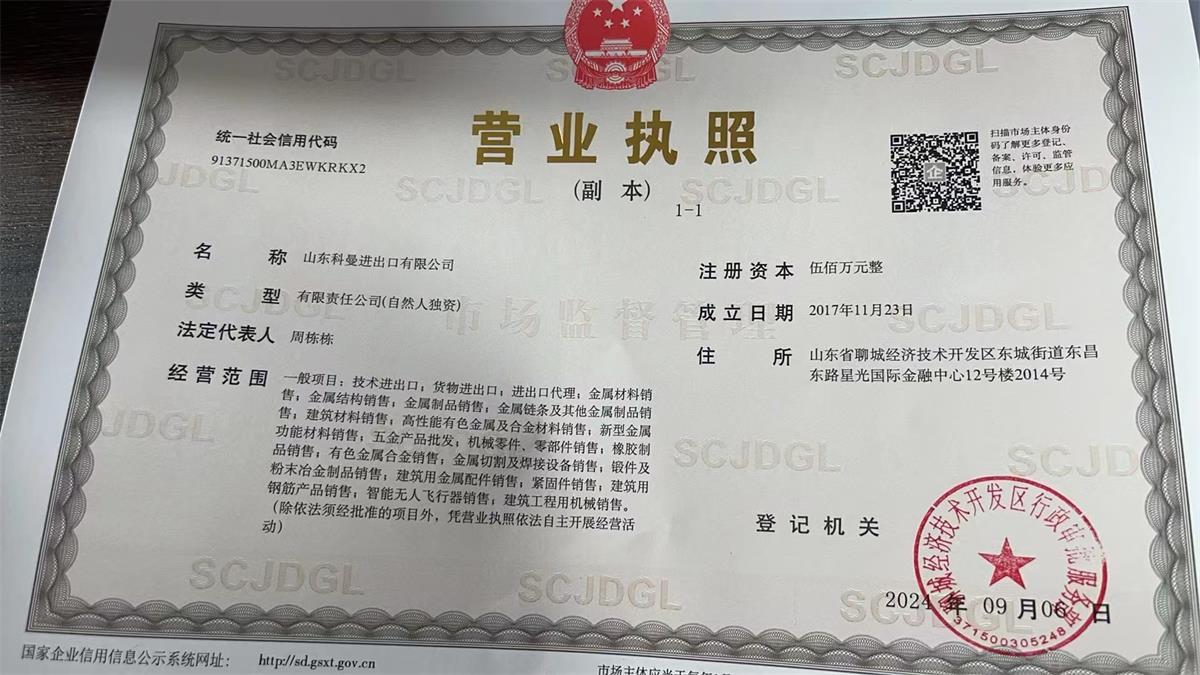
Address:Shandong Keman Import and Export Co., Ltd.

How A387 Carbon Alloy Steel Plate Enhances Structural Integrity in Construction
Release time:
2026-09-12
How A387 Carbon Alloy Steel Plate Enhances Structural Integrity in Construction Table of Contents 1. Introduction to A387 Carbon Alloy Steel Plate 2. What is A387 Carbon Alloy Steel? 3. Key Properties of A387 Carbon Alloy Steel Plates 4. Manufacturing Process of A387 Steel Plates 5. Applications of A387 Carbon Alloy Steel Plates 6. Advantages of Using A387 Carbon Alloy Ste
How A387 Carbon Alloy Steel Plate Enhances Structural Integrity in Construction
Table of Contents
- 1. Introduction to A387 Carbon Alloy Steel Plate
- 2. What is A387 Carbon Alloy Steel?
- 3. Key Properties of A387 Carbon Alloy Steel Plates
- 4. Manufacturing Process of A387 Steel Plates
- 5. Applications of A387 Carbon Alloy Steel Plates
- 6. Advantages of Using A387 Carbon Alloy Steel Plates
- 7. Comparison with Other Steel Types
- 8. Impact of A387 Steel on Structural Integrity
- 9. Frequently Asked Questions
- 10. Conclusion
1. Introduction to A387 Carbon Alloy Steel Plate
In the realm of construction and engineering, the materials used are critical to the success and safety of any project. Among these materials, **A387 carbon alloy steel plates** stand out due to their remarkable strength and durability. As projects demand more robust materials capable of withstanding harsh conditions, understanding the properties and applications of A387 steel becomes essential for professionals in the industry.
2. What is A387 Carbon Alloy Steel?
A387 carbon alloy steel is a type of steel that is primarily used in high-pressure and high-temperature environments. It is made from a combination of carbon and various alloying elements, which enhance its properties, making it suitable for demanding applications. This steel is particularly valued in sectors such as **oil and gas**, **power generation**, and **chemical processing** due to its excellent **corrosion resistance** and **high strength**.
Understanding the Composition of A387 Steel
A387 steel plates are categorized into various grades, with each grade offering distinct properties based on its chemical composition. The common elements include:
- **Chromium**: Enhances oxidation resistance and strength at high temperatures.
- **Molybdenum**: Increases hardenability and resistance to creep.
- **Carbon**: Provides strength and hardness to the steel.
3. Key Properties of A387 Carbon Alloy Steel Plates
A387 carbon alloy steel plates exhibit several key properties that contribute to their effectiveness in structural applications:
3.1. High Strength
A387 plates offer remarkable tensile strength, enabling them to support heavy loads without deforming. This strength is crucial for construction projects that involve significant structural demands.
3.2. Excellent Toughness
The toughness of A387 steel allows it to withstand impact and stress, reducing the likelihood of cracking under pressure. This property is essential in industries where safety is paramount.
3.3. Temperature Resistance
A387 steel can endure high temperatures, making it suitable for environments where temperature fluctuations are common. This characteristic is particularly important in power plants and oil refineries.
3.4. Corrosion Resistance
Due to its alloying elements, A387 steel has enhanced resistance to corrosion, extending its lifespan and reducing maintenance costs. This property is vital in corrosive environments where traditional steels may fail.
4. Manufacturing Process of A387 Steel Plates
The manufacturing process of A387 carbon alloy steel plates involves several stages that ensure the final product meets strict industry standards:
4.1. Melting and Casting
The first step involves melting raw materials in a furnace, followed by casting into slabs or ingots. This process ensures a uniform chemical composition throughout the steel.
4.2. Hot Rolling
Once cast, the steel is hot rolled to achieve the desired thickness and shape. This process also enhances the mechanical properties of the steel by refining its microstructure.
4.3. Heat Treatment
Heat treatment processes such as quenching and tempering are applied to increase strength and toughness. This treatment is critical in delivering the performance characteristics expected from A387 steel.
4.4. Finishing Processes
Finally, finishing processes like surface treatment and inspection are conducted to ensure that the plates meet all required specifications before being delivered to manufacturers or construction sites.
5. Applications of A387 Carbon Alloy Steel Plates
A387 carbon alloy steel plates are versatile and find applications across various industries, including:
5.1. Power Generation
In power plants, A387 plates are used in boiler components and piping systems, where they must withstand high pressures and temperatures.
5.2. Oil and Gas
The oil and gas industry utilizes A387 steel for constructing pipelines, storage tanks, and pressure vessels due to its superior strength and corrosion resistance.
5.3. Chemical Processing
Chemical refineries often employ A387 plates in reactors and heat exchangers, where resistance to corrosive substances is essential for operational safety.
5.4. Shipbuilding
In shipbuilding, A387 steel plates are used in the fabrication of hulls and other structural components, providing durability and strength against harsh marine environments.
6. Advantages of Using A387 Carbon Alloy Steel Plates
Using A387 carbon alloy steel plates offers several advantages that can significantly enhance project outcomes:
6.1. Cost-Effectiveness
While the initial cost of A387 steel plates may be higher than other materials, their **durability** and **reduced maintenance** needs contribute to long-term cost savings.
6.2. Enhanced Safety
The robust properties of A387 steel provide confidence in its performance, reducing the risk of structural failures and enhancing safety for personnel and equipment.
6.3. Versatility
A387 steel plates can be customized to various thicknesses and dimensions, making them suitable for a wide range of applications across different industries.
7. Comparison with Other Steel Types
When compared to other types of steel, A387 carbon alloy steel exhibits distinct advantages that make it a preferred choice in many applications:
7.1. A36 vs A387
While A36 steel is widely used in construction for its good weldability, it lacks the high-temperature resistance and corrosion properties of A387, making A387 the better option for demanding environments.
7.2. 304 Stainless Steel vs A387
304 stainless steel is known for its corrosion resistance, but A387 offers superior strength and temperature endurance, which is crucial for high-pressure applications.
8. Impact of A387 Steel on Structural Integrity
The structural integrity of a building or infrastructure depends on the materials used. A387 carbon alloy steel plates positively contribute to this integrity through:
8.1. Load-Bearing Capacity
Their high strength allows A387 steel plates to bear substantial loads without deformation, ensuring that structures can support intended uses safely.
8.2. Resistance to Environmental Factors
A387 steel's resilience against environmental stresses, such as corrosion and temperature extremes, contributes to the longevity and reliability of structures.
8.3. Structural Flexibility
The toughness of A387 allows for some flexibility under stress, preventing sudden failure and ensuring a gradual response to extreme loads.
9. Frequently Asked Questions
9.1. What grades are available in A387 carbon alloy steel?
A387 steel comes in various grades, including Gr 2, Gr 11, Gr 22, and Gr 9, each offering unique properties suitable for different applications.
9.2. Can A387 steel be welded?
Yes, A387 carbon alloy steel plates can be welded, but it is essential to use the appropriate welding techniques and filler materials to maintain the integrity of the weld.
9.3. What industries primarily use A387 steel?
A387 steel is predominantly used in the power generation, oil and gas, chemical processing, and shipbuilding industries.
9.4. How does A387 steel compare to carbon steel?
While both A387 and carbon steel are strong, A387 offers superior high-temperature resistance and corrosion resistance, making it more suitable for challenging environments.
9.5. What are the environmental benefits of using A387 steel?
A387 steel's durability reduces the need for frequent replacements, lowering the environmental impact associated with manufacturing and disposal.
10. Conclusion
In summary, A387 carbon alloy steel plates are integral to maintaining structural integrity in various demanding applications. Their exceptional properties, including high strength, toughness, and corrosion resistance, make them a preferred choice in industries that require reliability and safety. Understanding the composition, manufacturing processes, and advantages of A387 steel equips professionals with the knowledge to make informed decisions for their projects, ultimately contributing to safer and more durable structures. As the construction landscape evolves, A387 carbon alloy steel will undoubtedly play a crucial role in shaping a resilient future.
Latest News
Innovative Applications of Carbon Steel Plates in Building Designs
Innovative Applications of Carbon Steel Plates in Building Designs Carbon steel plates have emerged as a cornerstone material in the construction industry, gaining acclaim for their versatility, strength, and aesthetic potential. As the demand for innovative design solutions escalates, architects and builders are increasingly incorporating carbon steel plates into their projects. This article expl
2026-09-22
Understanding A514 Carbon Steel Plate: Key Characteristics and Applications
A514 Carbon Steel Plate is a high-yield strength steel that has become a preferred choice in various industrial applications, particularly in the fields of metallurgy and energy. This type of steel is known for its excellent mechanical properties, making it suitable for demanding environments where strength and durability are paramount. One of the key characteristics of A514 Carbon Steel Plate is
2026-09-17
How A387 Carbon Alloy Steel Plate Enhances Structural Integrity in Construction
How A387 Carbon Alloy Steel Plate Enhances Structural Integrity in Construction Table of Contents 1. Introduction to A387 Carbon Alloy Steel Plate 2. What is A387 Carbon Alloy Steel? 3. Key Properties of A387 Carbon Alloy Steel Plates 4. Manufacturing Process of A387 Steel Plates 5. Applications of A387 Carbon Alloy Steel Plates 6. Advantages of Using A387 Carbon Alloy Ste
2026-09-12
Understanding A285 Carbon Steel Pressure Plates: Essential Insights for Construction and Design
A285 Carbon Steel Pressure Plates are primarily used in pressure vessel fabrication and construction applications. This type of steel is known for its good weldability and formability, making it a favorable choice for various structural components. The ASTM A285 standard specifically governs the specifications for carbon steel plates intended for low-pressure service. One of the key characteristic
2026-09-07
The Role of 5A05 Aluminum Plate in Enhancing Building Aesthetics
The Role of 5A05 Aluminum Plate in Enhancing Building Aesthetics Table of Contents 1. Introduction to 5A05 Aluminum Plates 2. Properties of 5A05 Aluminum Plates 3. Applications of 5A05 Aluminum Plates in Architecture 4. Aesthetic Advantages of Using 5A05 Aluminum Plates 5. Sustainability and Environmental Impact 6. Installation and Maintenance of 5A05 Aluminum Plates 7
2026-09-02
Understanding B500 Steel Reinforcement: Key Insights for Professionals in Construction Machinery
B500 steel reinforcement is a critical component in the construction industry, particularly in manufacturing and processing machinery for engineering and construction projects. This high-strength steel bar is widely used in reinforced concrete structures, providing the necessary tensile strength to support heavy loads and withstand various stresses. One of the defining characteristics of B500 stee
2026-08-28


Copyright 2025 : Shandong Keman Import and Export Co., Ltd. Powered by:CEglobal SEO BUSINESS LICENSE