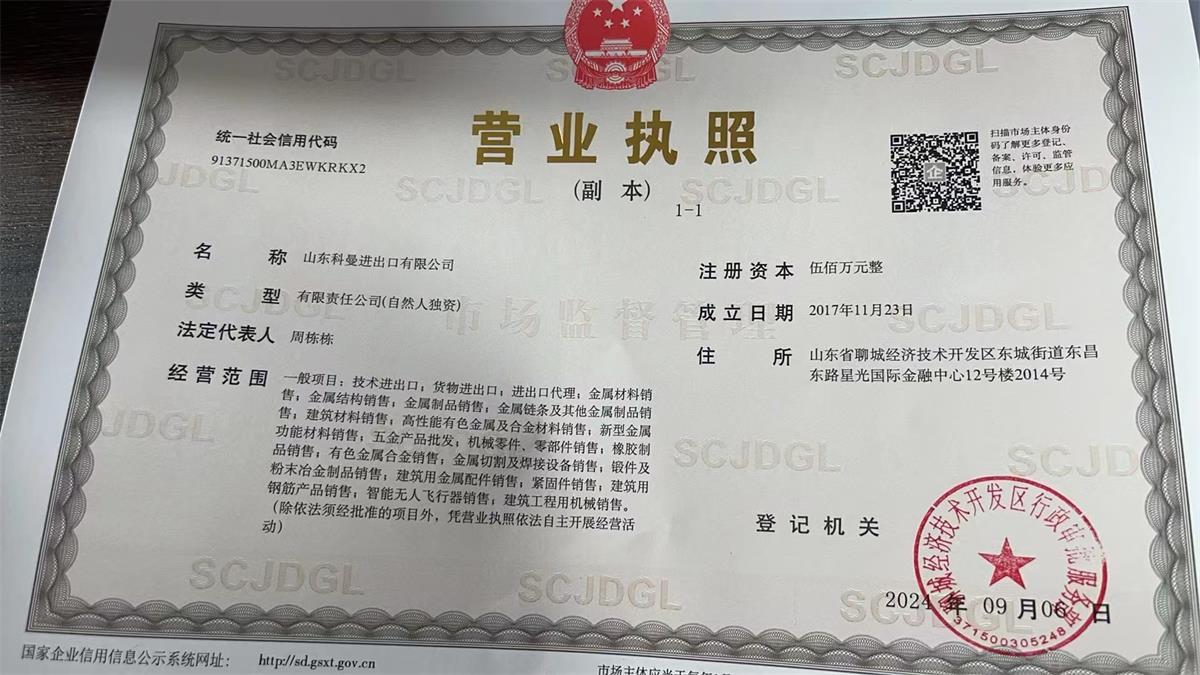
Address:Shandong Keman Import and Export Co., Ltd.

Understanding Galvanized Plates: A Comprehensive Guide for Industry Professionals
Release time:
2026-09-27
Galvanized plates, commonly known as galvanized steel sheets, are a vital component in various industries, particularly in metallurgy and energy sectors. These plates are coated with a layer of zinc, which serves as a protective barrier against corrosion, enhancing their durability and lifespan. The galvanization process involves either hot-dip galvanizing or electro-galvanizing, each method offer
One of the primary benefits of using galvanized plates is their excellent corrosion resistance. The zinc coating acts as a sacrificial anode, meaning it will corrode before the underlying steel does. This property significantly extends the longevity of the material, making it an ideal choice for outdoor applications and environments exposed to moisture. Industries such as construction, automotive, and appliance manufacturing rely heavily on galvanized plates due to their ability to withstand harsh conditions.
Additionally, galvanized plates have strong structural integrity, making them suitable for a wide range of applications. In construction, for instance, they are used in roofing, siding, and framing. Their lightweight nature, combined with high strength, allows for easier handling and installation, reducing labor costs and time. In the automotive sector, galvanized plates are utilized for body panels and components, offering not only protection from rust but also aesthetic appeal through paintability.
Moreover, the environmental impact of galvanized plates is worth noting. The galvanization process itself can be designed to be more environmentally friendly, utilizing less energy and producing fewer emissions compared to other forms of surface treatment. This aspect is increasingly important as industries strive to implement sustainable practices.
When selecting galvanized plates for a specific application, it is essential to consider factors such as coating thickness, surface finish, and mechanical properties. These characteristics can vary significantly, influencing both performance and cost. Therefore, understanding the specific requirements of your project will guide you in choosing the right type of galvanized plate.
In conclusion, galvanized plates play an indispensable role in various industries by offering unparalleled corrosion resistance, strength, and versatility. As professionals in the metallurgy and energy sectors, leveraging this knowledge can lead to more informed material choices, ultimately enhancing the quality and durability of your products and structures. Whether for construction, manufacturing, or energy applications, galvanized plates offer a reliable solution that meets the demands of modern industry.
Latest News
Understanding Galvanized Plates: A Comprehensive Guide for Industry Professionals
Galvanized plates, commonly known as galvanized steel sheets, are a vital component in various industries, particularly in metallurgy and energy sectors. These plates are coated with a layer of zinc, which serves as a protective barrier against corrosion, enhancing their durability and lifespan. The galvanization process involves either hot-dip galvanizing or electro-galvanizing, each method offer
2026-09-27
Innovative Applications of Carbon Steel Plates in Building Designs
Innovative Applications of Carbon Steel Plates in Building Designs Carbon steel plates have emerged as a cornerstone material in the construction industry, gaining acclaim for their versatility, strength, and aesthetic potential. As the demand for innovative design solutions escalates, architects and builders are increasingly incorporating carbon steel plates into their projects. This article expl
2026-09-22
Understanding A514 Carbon Steel Plate: Key Characteristics and Applications
A514 Carbon Steel Plate is a high-yield strength steel that has become a preferred choice in various industrial applications, particularly in the fields of metallurgy and energy. This type of steel is known for its excellent mechanical properties, making it suitable for demanding environments where strength and durability are paramount. One of the key characteristics of A514 Carbon Steel Plate is
2026-09-17
How A387 Carbon Alloy Steel Plate Enhances Structural Integrity in Construction
How A387 Carbon Alloy Steel Plate Enhances Structural Integrity in Construction Table of Contents 1. Introduction to A387 Carbon Alloy Steel Plate 2. What is A387 Carbon Alloy Steel? 3. Key Properties of A387 Carbon Alloy Steel Plates 4. Manufacturing Process of A387 Steel Plates 5. Applications of A387 Carbon Alloy Steel Plates 6. Advantages of Using A387 Carbon Alloy Ste
2026-09-12
Understanding A285 Carbon Steel Pressure Plates: Essential Insights for Construction and Design
A285 Carbon Steel Pressure Plates are primarily used in pressure vessel fabrication and construction applications. This type of steel is known for its good weldability and formability, making it a favorable choice for various structural components. The ASTM A285 standard specifically governs the specifications for carbon steel plates intended for low-pressure service. One of the key characteristic
2026-09-07
The Role of 5A05 Aluminum Plate in Enhancing Building Aesthetics
The Role of 5A05 Aluminum Plate in Enhancing Building Aesthetics Table of Contents 1. Introduction to 5A05 Aluminum Plates 2. Properties of 5A05 Aluminum Plates 3. Applications of 5A05 Aluminum Plates in Architecture 4. Aesthetic Advantages of Using 5A05 Aluminum Plates 5. Sustainability and Environmental Impact 6. Installation and Maintenance of 5A05 Aluminum Plates 7
2026-09-02


Copyright 2025 : Shandong Keman Import and Export Co., Ltd. Powered by:CEglobal SEO BUSINESS LICENSE