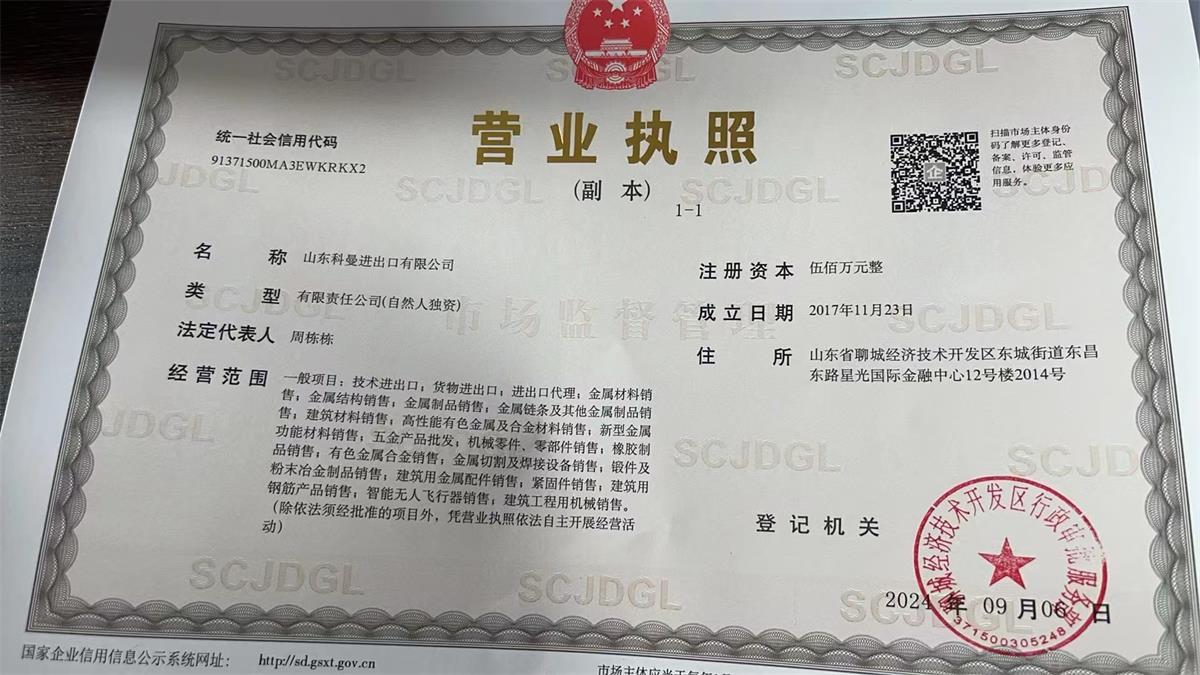
Address:Shandong Keman Import and Export Co., Ltd.
PRODUCTS

Inconel alloys are high-performance nickel/chromium superalloys developed for high temperatures, corrosive environments, and oxidation resistance. They are used in the harshest environments such as: in chemical processing reaction chambers/valves, polymer granule manufacture, military applications, gas turbine components, oil fields, and high-grade marine applications.</br> Inconel alloys include:</br> Inconel 600: solid solution reinforcement</br> Inconel601</br> Inconel 625: Acid resistance, good weldability. The LCF version is commonly used for bellows.</br> Inconel 690: Low cobalt content and low resistivity for nuclear applications</br> Inconel 713C: Precipitation-hardened nickel-chromium base cast alloy Inconel 718: Gamma double prime reinforced with good weldability</br> Inconel 751: Increased aluminum content to increase fracture strength in the 1600 °F range</br> Inconel 792: Increased aluminum content to improve high-temperature corrosion performance, especially for gas turbines</br> Inconel 939: Gamma prime reinforced to improve weldability
Monel refers to a group of nickel alloys that have copper as the main alloying element. In addition to these two primary metals, Monel alloys may also contain small amounts of iron, manganese, carbon, silicon, sulfur, aluminum, and titanium. The specific composition of a Monel alloy depends on its desired properties and applications. In general, Monel alloys are known for their high strength and resistance to corrosion in both fresh and saltwater while also having excellent high and low-temperature resistance.
Hastelloy is a kind of nickel based alloy. Hastelloy Alloy can be divided into two groups; one contains more molybdenum and the other contains more chromium. They all have excellent resistance to strong oxidizing solutions and high durability in reducing agents. Because of the low carbon content and less carbide precipitation during welding, they also have the ability to resist intergranular corrosion.
The term nickel alloy refers to a metal that has nickel as one of its primary elements. Some types of nickel alloys are referred to as superalloys because of their superior oxidation and creep resistance, allowing them to be used at temperatures of more than half their melting points. Nickel alloys can be machined and welded but tend to pose some processing difficulties, as some alloys will work harden during machining, and their high melting points can make them difficult to weld.
Aluminum 6061 alloy can be easily formed and worked in the annealed condition.</br> Aluminum 6061 alloy has excellent weldability. Thinner sections can be welded using the gas tungsten arc welding technique. Heavier sections can be welded using the gas metal arc welding technique. </br> Aluminum 6061 alloy is used in the following applications:Truck and marine components,Furniture,General structural and high-pressure applications,Pipelines,Heavy-duty structures,Railroad cars,Tank fittings.


Copyright 2025 : Shandong Keman Import and Export Co., Ltd. Powered by:CEglobal SEO BUSINESS LICENSE