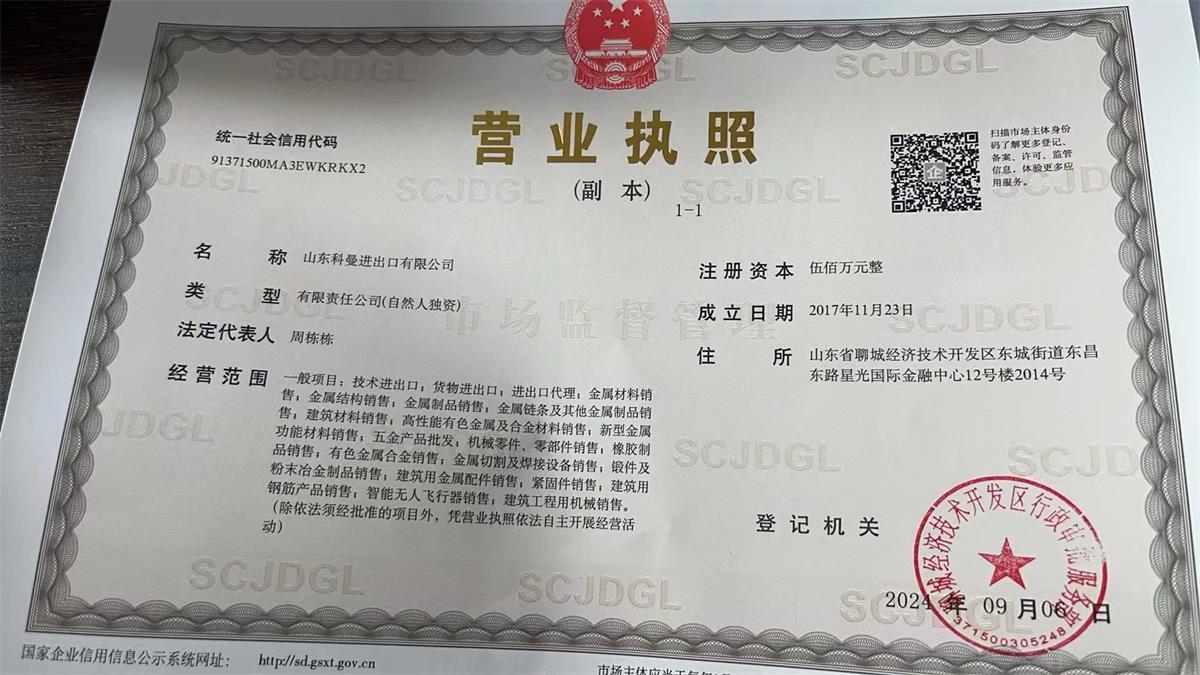
Address:Shandong Keman Import and Export Co., Ltd.

Understanding SAE/AISI 4000 Series Alloy Steel: Properties and Applications
Release time:
2025-09-21
SAE/AISI 4000 Series Alloy Steel, commonly referred to as chromium-molybdenum steel, is a group of high-strength alloys that has gained prominence in the metallurgy and energy sectors. One of the defining features of this series is its enhanced hardness, strength, and toughness compared to standard carbon steels. The addition of chromium and molybdenum plays a crucial role in these enhancements, p
SAE/AISI 4000 Series Alloy Steel, commonly referred to as chromium-molybdenum steel, is a group of high-strength alloys that has gained prominence in the metallurgy and energy sectors. One of the defining features of this series is its enhanced hardness, strength, and toughness compared to standard carbon steels. The addition of chromium and molybdenum plays a crucial role in these enhancements, providing greater resistance to wear, corrosion, and high temperatures.
Typically, the SAE/AISI 4000 Series includes alloys such as 4130, 4140, and 4150, each tailored for specific applications. For instance, 4130 is often used in the aerospace and automotive industries due to its excellent weldability, while 4140 is favored for its high tensile strength and toughness, making it suitable for heavy-duty applications such as gears, shafts, and various structural components.
One of the significant advantages of the SAE/AISI 4000 Series is its ability to be heat treated. Heat treatment processes, such as quenching and tempering, can significantly improve the mechanical properties of these alloys, allowing manufacturers to achieve the desired hardness and strength for specific applications. This adaptability makes them ideal for components subjected to high stress and heavy loads.
In addition to mechanical properties, the SAE/AISI 4000 Series offers good machinability, allowing for efficient processing and fabrication. This is particularly advantageous in manufacturing environments where precision and efficiency are paramount. The alloys can be easily shaped into intricate designs and components, making them suitable for a wide range of industrial applications, including automotive parts, machinery, and energy sector components.
Furthermore, these alloys are often employed in applications that require high fatigue strength and impact resistance. This includes areas such as oil and gas drilling equipment, construction machinery, and automotive racing components. The versatility of the SAE/AISI 4000 Series allows engineers and manufacturers to utilize these materials in diverse environments and conditions.
In conclusion, the SAE/AISI 4000 Series Alloy Steel presents a compelling option for industries seeking strength, durability, and adaptability. Understanding the properties and applications of these alloys can significantly enhance decision-making processes in material selection for various engineering projects. Embracing the advantages of these high-performance materials can lead to improved product reliability and longevity, paving the way for innovation in manufacturing and engineering solutions.
Latest News
A Comprehensive Guide to A285 Carbon Steel Pressure Plates in Construction
A285 Carbon Steel Pressure Plates are widely used in various construction applications due to their unique properties and structural integrity. These plates are made from low carbon steel, which provides them with excellent weldability and formability, making them ideal for use in pressure vessels and structural components. One of the key characteristics of A285 Carbon Steel is its ability to with
2026-11-20
Durability and Strength: The Key Features of 5A05 Aluminum Plate
Understanding 5A05 Aluminum Plate: An Overview In the competitive landscape of building materials, the 5A05 aluminum plate stands out due to its impressive durability and strength. This alloy, part of the 5xxx series, is renowned for its high resistance to corrosion and excellent weldability. Given its unique characteristics, it is widely utilized in various sectors, including construction, mari
2026-11-15
Understanding B500 Steel Reinforcement: Key Insights for Manufacturing and Construction
B500 steel reinforcement is a crucial component in the construction and manufacturing sectors, particularly within engineering and building projects. As a high-strength reinforcing steel, B500 offers a combination of durability, flexibility, and resistance to environmental factors, making it an ideal choice for various applications. Understanding its properties and uses is essential for profession
2026-11-10
How Tin Plated Coil Revolutionizes Modern Construction Techniques
How Tin Plated Coil Revolutionizes Modern Construction Techniques Table of Contents 1. Introduction to Tin Plated Coils 2. The Unique Properties of Tin Plated Steel 3. Why Tin Plated Coils Are Essential in Modern Construction 3.1. Enhanced Corrosion Resistance 3.2. Lightweight Yet Durable 3.3. Superior Aesthetic Appeal 4. Applications of Tin Plated Coils in Construction 4.1. Roofing Systems 4.2. W
2026-10-12
Understanding Inconel Alloy Plates: Properties, Applications, and Benefits
Inconel alloy plates are specialized materials that play a critical role in various industries, particularly in metallurgy, mining, and energy sectors. Known for their exceptional resistance to extreme environments, Inconel alloys primarily consist of nickel along with chromium and iron, which contribute to their unique properties. These plates offer a range of benefits, making them suitable for d
2026-10-07
Hastelloy Alloy Plate: The Ultimate Solution for Extreme Environmental Conditions
Hastelloy Alloy Plate: A Solution for Extreme Conditions In today's world, where industries demand materials that can withstand extreme conditions, Hastelloy alloy plates emerge as a vital solution. Known for their remarkable resistance to corrosion and heat, these alloys are indispensable in various applications, from chemical processing to aerospace engineering. Understanding Hastelloy Alloy
2026-10-02


Copyright 2025 : Shandong Keman Import and Export Co., Ltd. Powered by:CEglobal SEO BUSINESS LICENSE