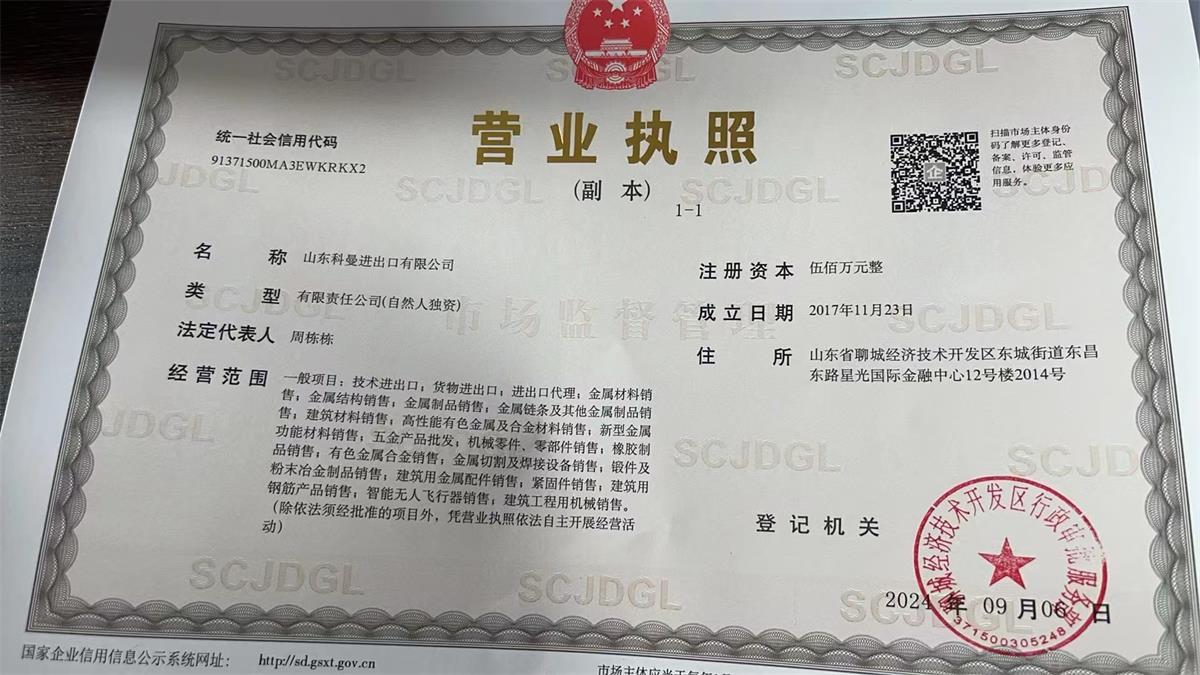
Address:Shandong Keman Import and Export Co., Ltd.

The Comprehensive Manufacturing Process Behind SAE/AISI 4000 Series Alloy Steel
Release time:
2025-09-11
The Manufacturing Process Behind SAE/AISI 4000 Series Alloy Steel Introduction to SAE/AISI 4000 Series Alloy Steel SAE/AISI 4000 Series Alloy Steel is renowned for its unique combination of strength, toughness, and wear resistance. Commonly used in the automotive, aerospace, and construction industries, this alloy possesses properties that make it ideal for a variety of applications. Understanding
The Manufacturing Process Behind SAE/AISI 4000 Series Alloy Steel
Introduction to SAE/AISI 4000 Series Alloy Steel
SAE/AISI 4000 Series Alloy Steel is renowned for its unique combination of strength, toughness, and wear resistance. Commonly used in the automotive, aerospace, and construction industries, this alloy possesses properties that make it ideal for a variety of applications. Understanding the **manufacturing process** behind this alloy is crucial for professionals in metallurgy and energy sectors, as it highlights the importance of each stage in creating high-quality steel.
Understanding Alloy Steel: Definition and Composition
Alloy steel is categorized based on its alloying elements, which enhance its mechanical properties compared to carbon steel. The SAE/AISI 4000 Series primarily consists of chromium, molybdenum, and other elements that improve hardness and strength. The typical composition includes:
- **Carbon (C)**: 0.30% to 0.50%
- **Chromium (Cr)**: 0.80% to 1.20%
- **Molybdenum (Mo)**: 0.15% to 0.50%
- **Manganese (Mn)**: 0.60% to 1.00%
This blend not only contributes to the alloy's mechanical properties but also influences its **corrosion resistance and hardenability**.
The Key Stages of Manufacturing SAE/AISI 4000 Series Alloy Steel
The manufacturing process of SAE/AISI 4000 Series Alloy Steel involves several critical stages that ensure the final product meets industry standards. Each step plays a vital role in determining the alloy's properties and performance.
1. Raw Material Selection
The first stage begins with the careful selection of raw materials, which include iron ore and various alloying elements. The quality and purity of these materials significantly impact the characteristics of the final product. **Recycled steel** is also a common source, as it is both cost-effective and environmentally friendly.
2. Melting Process
The melting of steel is performed in an electric arc furnace (EAF) or a basic oxygen furnace (BOF). In the EAF, recycled scrap metals are the primary feedstock. The melting process typically involves:
- **Charging the furnace** with the selected raw materials.
- **Applying heat** through electric arcs, reaching temperatures around 1,600°C (2,912°F).
- **Refining the metal** by adjusting the chemical composition, ensuring the desired alloying elements are present in the correct proportions.
This stage is crucial as it sets the foundation for the alloy's properties.
3. Casting the Alloy Steel
Once the molten metal reaches the correct temperature and composition, it is cast into various shapes—typically slabs, billets, or blooms. This step can be performed using:
- **Continuous casting**: A process where molten steel is continuously poured into a mold, allowing for efficient production.
- **Ingot casting**: Traditional method where molten steel is poured into ingots that are later processed.
The casting method chosen affects the **microstructure** and quality of the steel.
4. Primary Processing: Hot Working
Hot working involves deforming the cast steel at high temperatures, which helps refine its grain structure and enhances its mechanical properties. This process may include:
- **Rolling**: Reducing the thickness and achieving desired shapes.
- **Forging**: Shaping the steel under compressive forces, which improves strength and toughness.
Hot working can significantly reduce the size of the steel and is essential for achieving specific dimensions.
5. Heat Treatment: Optimizing Properties
Heat treatment is a critical step in the manufacturing process of SAE/AISI 4000 Series Alloy Steel. It enhances its hardness, strength, and ductility. The most common heat treatment processes include:
- **Austenitizing**: Heating the steel to form austenite, which is essential for subsequent hardening.
- **Quenching**: Rapidly cooling the austenitized steel, transforming it into martensite, which is much harder.
- **Tempering**: Reheating the quenched steel to reduce brittleness while maintaining strength.
This stage is vital for tailoring the alloy's properties to specific applications.
6. Secondary Processing: Cold Working
After heat treatment, cold working further refines the alloy's mechanical properties. This process involves deforming the steel at room temperature, leading to increased yield strength and improved surface finish. Methods include:
- **Cold rolling**: Reducing thickness and enhancing surface quality.
- **Drawing**: Producing wire or rod by pulling the steel through a die.
Cold working is essential for producing final products that meet stringent tolerances.
7. Surface Treatment and Finishing
The final stages in the manufacturing process involve surface treatments to enhance corrosion resistance and improve aesthetics. Common treatments include:
- **Coating**: Applying protective layers such as zinc or chrome.
- **Polishing**: Achieving a smooth finish that enhances the alloy's appearance.
These processes are crucial for ensuring the longevity and performance of the alloy in various environments.
8. Quality Control and Testing
Quality control is paramount throughout the manufacturing process. Rigorous testing ensures that the SAE/AISI 4000 Series Alloy Steel meets the necessary standards for mechanical properties and chemical composition. Tests may include:
- **Tensile testing**: Assessing strength and ductility.
- **Hardness testing**: Measuring resistance to deformation.
- **Microstructure analysis**: Evaluating grain structure for consistency.
Quality assurance is essential for maintaining the reputation of manufacturers in the competitive market.
Applications of SAE/AISI 4000 Series Alloy Steel
The unique properties of SAE/AISI 4000 Series Alloy Steel make it suitable for a wide range of applications, including:
- **Automotive components**: Gears, axles, and shafts due to its strength and wear resistance.
- **Aerospace parts**: Critical components that require high strength-to-weight ratios.
- **Machine tools**: Tools that endure high stress and require durability.
These applications highlight the versatility and significance of this alloy in modern industries.
Summary of the Manufacturing Process
In summary, the manufacturing process of SAE/AISI 4000 Series Alloy Steel involves careful selection of raw materials, advanced melting techniques, casting, hot and cold working, heat treatment, surface finishing, and strict quality control. Each stage is critical in ensuring that the final product meets the high standards required for its diverse applications.
FAQs About SAE/AISI 4000 Series Alloy Steel
1. What are the key properties of SAE/AISI 4000 Series Alloy Steel?
SAE/AISI 4000 Series Alloy Steel exhibits high strength, good toughness, wear resistance, and excellent hardenability. These properties make it suitable for demanding applications.
2. How does alloying affect the performance of SAE/AISI 4000 Series Steel?
Alloying elements enhance the mechanical properties of steel, improving strength, ductility, and corrosion resistance, making the alloy suitable for various industrial applications.
3. What industries commonly use SAE/AISI 4000 Series Alloy Steel?
This alloy is widely used in the automotive, aerospace, oil and gas, and construction industries due to its exceptional mechanical properties.
4. What is the significance of heat treatment in the manufacturing process?
Heat treatment optimizes the hardness, strength, and ductility of the alloy, allowing manufacturers to tailor its properties for specific applications.
5. Can SAE/AISI 4000 Series Alloy Steel be recycled?
Yes, this alloy can be recycled, making it an environmentally friendly option while maintaining its essential properties.
Conclusion
The manufacturing process behind SAE/AISI 4000 Series Alloy Steel is a complex journey that transforms raw materials into a high-performance product. Through meticulous attention to each stage, from melting to finishing, manufacturers can create alloy steel that meets the specific demands of various industries. Understanding this process not only enhances our appreciation of alloy steel but also aids in making informed decisions when selecting materials for engineering applications.
Latest News
Innovative Applications of Carbon Steel Plates in Building Designs
Innovative Applications of Carbon Steel Plates in Building Designs Carbon steel plates have emerged as a cornerstone material in the construction industry, gaining acclaim for their versatility, strength, and aesthetic potential. As the demand for innovative design solutions escalates, architects and builders are increasingly incorporating carbon steel plates into their projects. This article expl
2026-09-22
Understanding A514 Carbon Steel Plate: Key Characteristics and Applications
A514 Carbon Steel Plate is a high-yield strength steel that has become a preferred choice in various industrial applications, particularly in the fields of metallurgy and energy. This type of steel is known for its excellent mechanical properties, making it suitable for demanding environments where strength and durability are paramount. One of the key characteristics of A514 Carbon Steel Plate is
2026-09-17
How A387 Carbon Alloy Steel Plate Enhances Structural Integrity in Construction
How A387 Carbon Alloy Steel Plate Enhances Structural Integrity in Construction Table of Contents 1. Introduction to A387 Carbon Alloy Steel Plate 2. What is A387 Carbon Alloy Steel? 3. Key Properties of A387 Carbon Alloy Steel Plates 4. Manufacturing Process of A387 Steel Plates 5. Applications of A387 Carbon Alloy Steel Plates 6. Advantages of Using A387 Carbon Alloy Ste
2026-09-12
Understanding A285 Carbon Steel Pressure Plates: Essential Insights for Construction and Design
A285 Carbon Steel Pressure Plates are primarily used in pressure vessel fabrication and construction applications. This type of steel is known for its good weldability and formability, making it a favorable choice for various structural components. The ASTM A285 standard specifically governs the specifications for carbon steel plates intended for low-pressure service. One of the key characteristic
2026-09-07
The Role of 5A05 Aluminum Plate in Enhancing Building Aesthetics
The Role of 5A05 Aluminum Plate in Enhancing Building Aesthetics Table of Contents 1. Introduction to 5A05 Aluminum Plates 2. Properties of 5A05 Aluminum Plates 3. Applications of 5A05 Aluminum Plates in Architecture 4. Aesthetic Advantages of Using 5A05 Aluminum Plates 5. Sustainability and Environmental Impact 6. Installation and Maintenance of 5A05 Aluminum Plates 7
2026-09-02
Understanding B500 Steel Reinforcement: Key Insights for Professionals in Construction Machinery
B500 steel reinforcement is a critical component in the construction industry, particularly in manufacturing and processing machinery for engineering and construction projects. This high-strength steel bar is widely used in reinforced concrete structures, providing the necessary tensile strength to support heavy loads and withstand various stresses. One of the defining characteristics of B500 stee
2026-08-28


Copyright 2025 : Shandong Keman Import and Export Co., Ltd. Powered by:CEglobal SEO BUSINESS LICENSE