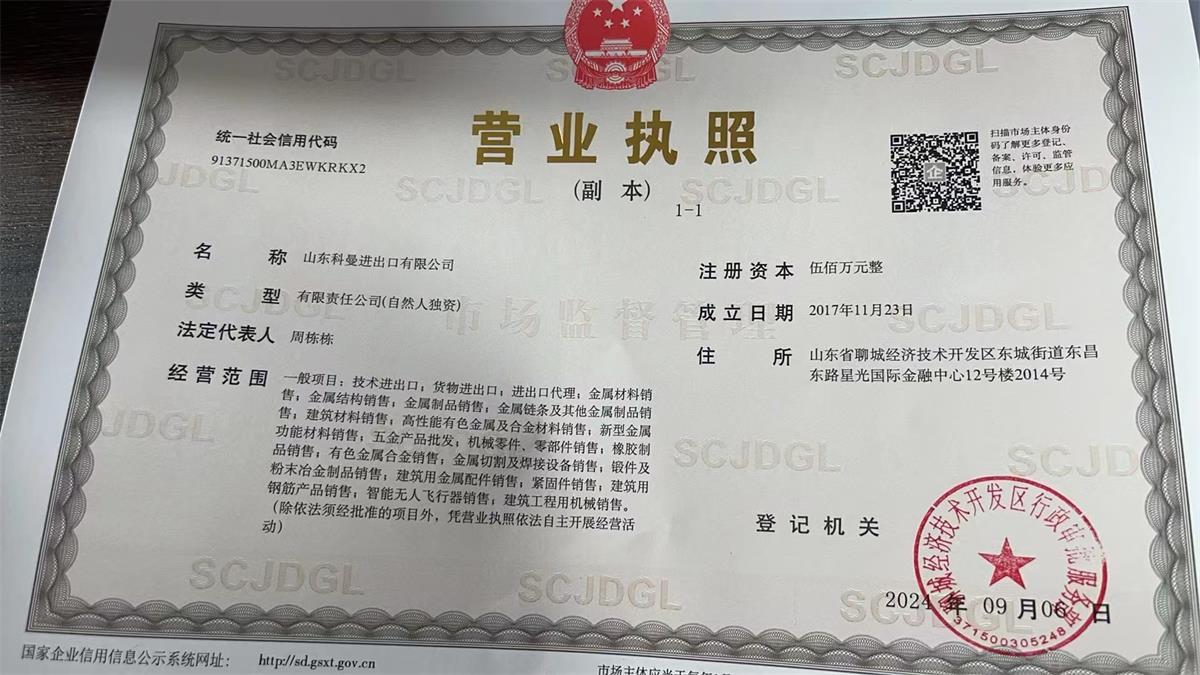
Address:Shandong Keman Import and Export Co., Ltd.

B500 Steel Reinforcement: Key Features That Enhance Structural Integrity
Release time:
2025-09-12
B500 Steel Reinforcement: Key Features That Enhance Structural Integrity Table of Contents 1. Introduction to B500 Steel Reinforcement 2. What is B500 Steel Reinforcement? 3. Key Features of B500 Steel Reinforcement 3.1 High Strength and Load-Bearing Capacity 3.2 Ductility and Flexibility 3.3 Corrosion Resistance 3.4 Weldability
B500 Steel Reinforcement: Key Features That Enhance Structural Integrity
Table of Contents
- 1. Introduction to B500 Steel Reinforcement
- 2. What is B500 Steel Reinforcement?
- 3. Key Features of B500 Steel Reinforcement
- 3.1 High Strength and Load-Bearing Capacity
- 3.2 Ductility and Flexibility
- 3.3 Corrosion Resistance
- 3.4 Weldability and Fabrication
- 3.5 Cost-Effectiveness
- 4. Applications of B500 Steel Reinforcement
- 5. Advantages of Using B500 Steel Reinforcement
- 6. B500 Steel vs. Other Steel Reinforcements
- 7. Frequently Asked Questions
- 8. Conclusion
1. Introduction to B500 Steel Reinforcement
B500 steel reinforcement has become a cornerstone in modern engineering, particularly in construction projects requiring enhanced structural integrity. As urban environments grow and the demand for resilient infrastructure rises, understanding the unique features of B500 steel is crucial for engineers and builders alike. This article delves into the characteristics of B500 reinforcement, its applications, and the advantages it offers in various construction scenarios.
2. What is B500 Steel Reinforcement?
B500 steel reinforcement is a type of high-strength steel bar commonly used in reinforced concrete structures. The "B" in B500 denotes its yield strength of 500 megapascals, making it a robust choice for a variety of applications. This steel is specifically designed to provide superior load-bearing capacity, ductility, and corrosion resistance, making it ideal for constructing buildings, bridges, and other infrastructure.
3. Key Features of B500 Steel Reinforcement
3.1 High Strength and Load-Bearing Capacity
One of the standout features of B500 steel reinforcement is its high yield strength. With a yield strength of 500 MPa, it is capable of supporting substantial loads without experiencing deformation. This characteristic is particularly beneficial in scenarios where structures must withstand heavy weights or external forces, such as seismic activities or high winds.
3.2 Ductility and Flexibility
Ductility refers to a material's ability to undergo significant deformation before breaking. B500 steel exhibits excellent ductility, allowing it to absorb energy and deform without fracturing. This flexibility is crucial during natural disasters, as it helps structures maintain their integrity under extreme stress conditions. The ductile nature of B500 steel ensures that even under unexpected loads, the material will yield rather than fail, providing an additional layer of safety.
3.3 Corrosion Resistance
Corrosion poses a significant threat to the longevity of structural materials. B500 steel reinforcement is engineered to resist corrosion, thanks to its coating and alloying elements. This resistance extends the lifespan of the steel, reducing maintenance costs and the need for frequent replacements. In coastal or humid environments, where exposure to moisture is high, B500 steel reinforcement remains a reliable choice, ensuring structural stability over time.
3.4 Weldability and Fabrication
The ability to weld B500 steel reinforcement effectively makes it a versatile option for various construction projects. Its favorable mechanical properties allow for seamless integration with other materials during the fabrication process. Engineers appreciate the ease with which B500 can be cut, bent, and welded to suit specific design requirements, enabling innovative structural solutions.
3.5 Cost-Effectiveness
Investing in B500 steel reinforcement can lead to long-term cost savings. While its initial price may be higher than other types of steel, the benefits it offers in terms of durability, lower maintenance needs, and reduced failure rates justify the expenditure. By minimizing the likelihood of repairs and extending the life of structures, B500 steel ultimately proves to be a cost-effective choice for construction projects.
4. Applications of B500 Steel Reinforcement
B500 steel reinforcement is widely used across various sectors, including:
1. **Residential Construction**: In homes and apartment complexes, B500 bars enhance structural integrity, ensuring safety and comfort for residents.
2. **Commercial Buildings**: High-rise buildings and commercial spaces benefit from B500's strength and durability, accommodating large foot traffic and heavy use.
3. **Infrastructure Projects**: Bridges, tunnels, and highways utilize B500 steel to withstand demanding environmental conditions and heavy loads.
4. **Industrial Structures**: Factories and warehouses often require robust reinforcement, making B500 an ideal choice for industrial applications.
5. **Specialized Construction**: In areas with specific seismic or environmental challenges, B500 steel provides the necessary resilience and adaptability.
5. Advantages of Using B500 Steel Reinforcement
The advantages of using B500 steel reinforcement extend beyond its physical properties. Some of the key benefits include:
- **Increased Safety**: The high strength and ductility reduce the risk of structural failure, ensuring safety for occupants.
- **Longevity**: The corrosion-resistant properties mean structures can last longer, providing better value over time.
- **Flexibility in Design**: The weldability and adaptability of B500 allow engineers to explore innovative designs without compromising safety.
- **Sustainability**: As structures last longer and require fewer replacements, B500 steel contributes to more sustainable building practices.
6. B500 Steel vs. Other Steel Reinforcements
When comparing B500 steel reinforcement to other types, such as B400 or epoxy-coated steel, several distinctions emerge. B400, while adequate for many applications, does not offer the same level of strength and ductility as B500. Epoxy-coated steel, on the other hand, provides excellent corrosion resistance but may lack the load-bearing capacity found in B500.
Choosing B500 steel preparation can lead to superior structural performance, especially in critical applications where safety and longevity are paramount.
7. Frequently Asked Questions
1. What makes B500 steel reinforcement different from other steel types?
B500 is specifically designed with a yield strength of 500 MPa, providing enhanced strength and ductility compared to many other steel reinforcements.
2. Is B500 steel suitable for all construction types?
Yes, B500 steel can be used in residential, commercial, and industrial applications, making it versatile for various construction projects.
3. How does corrosion resistance affect the lifespan of B500 steel?
Corrosion resistance significantly extends the lifespan of B500 steel by preventing deterioration, leading to lower maintenance and repair costs.
4. Can B500 steel be welded?
Yes, B500 steel is designed for easy welding, allowing for versatile applications and integration with other materials.
5. What are the cost implications of using B500 steel reinforcement?
While the initial investment in B500 steel may be higher, its durability and reduced maintenance needs often result in long-term cost savings.
8. Conclusion
B500 steel reinforcement stands out as a premier choice for enhancing structural integrity in modern construction. With its high strength, exceptional ductility, corrosion resistance, and cost-effectiveness, it meets the diverse demands of today's engineering projects. By embracing the unique features of B500 steel, builders and engineers can ensure the safety, durability, and longevity of their structures, paving the way for a more resilient built environment. Investing in B500 steel is not just a choice; it's a commitment to quality and excellence in construction.
Latest News
Understanding A285 Carbon Steel Pressure Plates: Properties and Applications
A285 Carbon Steel Pressure Plates are versatile components widely utilized in the construction and structural engineering sectors. These plates are manufactured from carbon steel, which is known for its excellent mechanical properties and cost-effectiveness. The primary allure of A285 pressure plates lies in their ability to withstand various pressures and environmental conditions, making them sui
2025-09-15
B500 Steel Reinforcement: Key Features That Enhance Structural Integrity
B500 Steel Reinforcement: Key Features That Enhance Structural Integrity Table of Contents 1. Introduction to B500 Steel Reinforcement 2. What is B500 Steel Reinforcement? 3. Key Features of B500 Steel Reinforcement 3.1 High Strength and Load-Bearing Capacity 3.2 Ductility and Flexibility 3.3 Corrosion Resistance 3.4 Weldability
2025-09-12
The Comprehensive Manufacturing Process Behind SAE/AISI 4000 Series Alloy Steel
The Manufacturing Process Behind SAE/AISI 4000 Series Alloy Steel Introduction to SAE/AISI 4000 Series Alloy Steel SAE/AISI 4000 Series Alloy Steel is renowned for its unique combination of strength, toughness, and wear resistance. Commonly used in the automotive, aerospace, and construction industries, this alloy possesses properties that make it ideal for a variety of applications. Understanding
2025-09-11
How A285 Carbon Steel Pressure Plates Enhance Structural Integrity
How A285 Carbon Steel Pressure Plates Enhance Structural Integrity Table of Contents Introduction to A285 Carbon Steel Pressure Plates What is A285 Carbon Steel? Properties of A285 Carbon Steel Pressure Plates Applications of A285 Pressure Plates in Construction Benefits of Using A285 Carbon Steel Pressure Plates A285 vs Other Steel Grades: A Comparison Maintenance and Care for A2
2025-09-11
Understanding B500 Steel Reinforcement: A Key to Structural Integrity
B500 steel reinforcement, commonly referred to as rebar, plays a crucial role in the construction and manufacturing industries, particularly in the context of engineering and building machinery. This material is characterized by its high yield strength, which typically ranges around 500 MPa, making it an excellent choice for reinforcing concrete structures. The strength and reliability of B500 ste
2025-09-11
Exploring the Benefits and Applications of A128 X120Mn13 Manganese Plate
The A128 X120Mn13 manganese plate is a high-manganese steel alloy that contains approximately 12% to 14% manganese. This specific composition endows the material with outstanding work hardening properties, making it exceptionally robust and resistant to wear and impact. As the material is subjected to stress, it hardens in response, which allows it to maintain its structural integrity even in the
2025-09-09


Copyright 2025 : Shandong Keman Import and Export Co., Ltd. Powered by:CEglobal SEO BUSINESS LICENSE